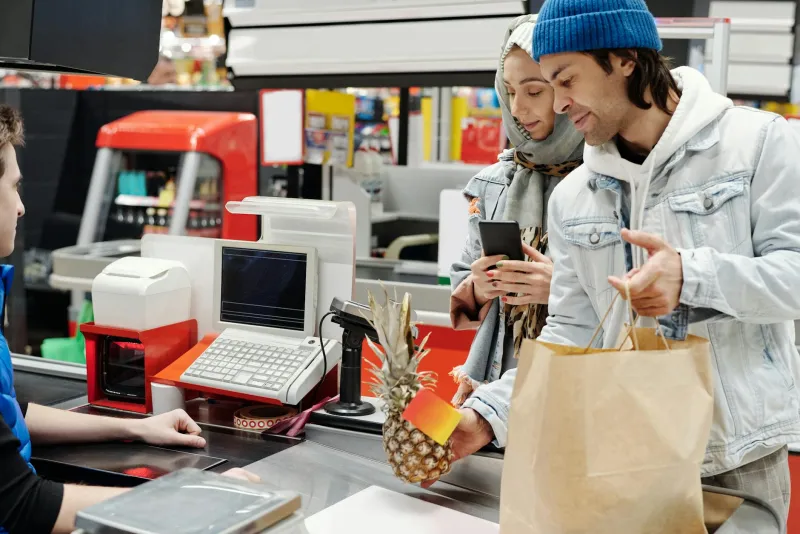
Your smartphone just buzzed with a notification: "Your paycheck of $3,247.83 has been deposited." You glance at your balance, transfer some money to savings, and pay a bill — all while waiting for your coffee order. The entire transaction takes 30 seconds.
Your grandfather would have needed half a day off work to accomplish the same thing.
The Banking Ritual That Ruled America
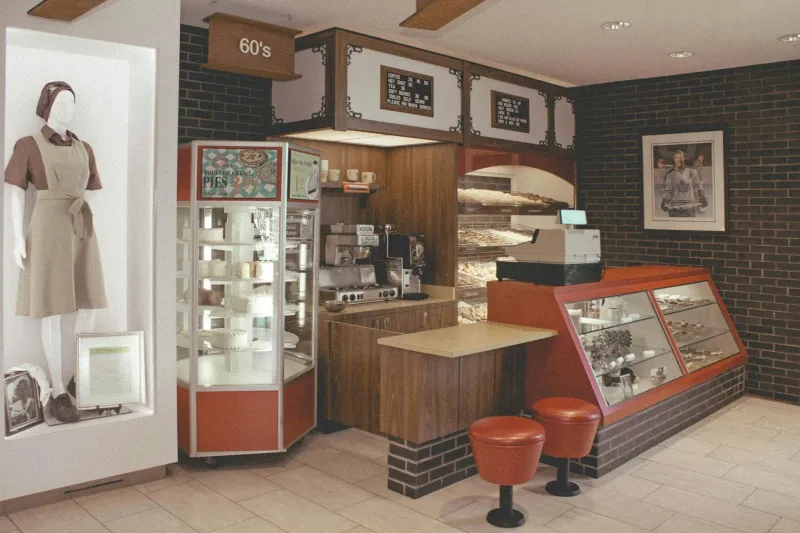
For most of the 20th century, American banking operated like an exclusive club with very specific hours and very rigid rules. Banks were typically open from 9 AM to 3 PM, Monday through Friday. That's it. No evenings, no weekends, no exceptions.
If you wanted to know your account balance, you had one option: show up during those six hours, wait in line, and ask a human teller to look it up in a ledger. The teller would flip through pages of handwritten entries, run calculations on an adding machine, and tell you a number that was current as of whenever they last updated your account — which might have been yesterday, or might have been last week.
The Great Payday Pilgrimage
Payday meant chaos. Every other Friday, workers across America would rush from their jobs to the bank during their lunch break, creating lines that stretched around the block. Factory workers, office clerks, and shop employees all had the same 30-minute window to deposit their paychecks before the bank closed.
Many employers actually scheduled early lunch breaks on payday, understanding that their workers needed time to get to the bank. Missing that window meant your paycheck sat in your wallet until Monday — assuming you could get away from work again.
John Morrison, who worked at a Detroit auto plant in the 1960s, later recalled the Friday bank rush: "You'd see the same faces every two weeks, all of us practically running from the factory to First National. If you didn't make it by 2:30, you were out of luck. I kept my paycheck in my work shirt pocket for an entire weekend more times than I can count."
The Mystery of Your Own Money
Living without real-time account information created a constant low-level anxiety that's hard to imagine today. Families balanced checkbooks by hand every month, trying to reconcile their records with the bank's statement. Mistakes were common, and discovering them required another trip to the bank during business hours.
Writing a check was an act of faith. You had to trust your mental math and hope you hadn't forgotten about any recent expenses. Bounced checks carried serious consequences — hefty fees, embarrassment, and sometimes damaged relationships with merchants who might refuse to accept your checks in the future.
Women faced additional barriers. Many banks required a husband's signature for wives to open accounts or conduct certain transactions. A woman might know exactly how much money her family had but still need permission to access it.
The ATM Revolution That Nobody Saw Coming
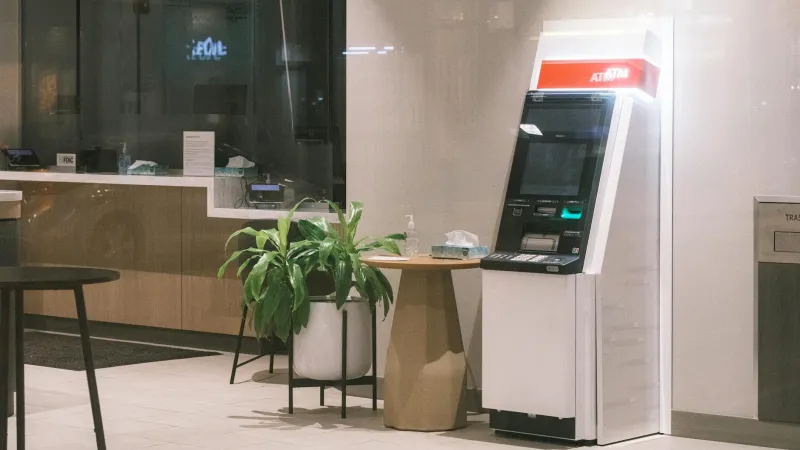
The first Automated Teller Machine appeared at Chemical Bank in Rockville Centre, New York, in 1969. The bank promoted it with the slogan "On Sept. 2 our bank will open at 9:00 and never close again."
Americans were skeptical. Why would you trust a machine with your money? What if it made a mistake? What if it ate your card? Early ATMs could only dispense cash in preset amounts — usually $10 or $20 — and only if you had enough money in your account. They couldn't tell you your balance or accept deposits.
But slowly, the convenience won out. By 1985, there were 60,000 ATMs across America. Suddenly, you could get cash at 11 PM on a Sunday. You could check your balance without talking to anyone. The machine would even give you a printed receipt showing your current balance — information that had previously required a personal audience with a bank teller.
The Internet Changes Everything (Again)
Online banking arrived in the 1990s, but adoption was slow. People worried about security, about typing their account numbers into a computer, about hackers stealing their money through the phone line.
Those concerns seem quaint now. Today, Americans check their bank balances more than 20 times per month on average. We get instant notifications for every transaction. We can transfer money, pay bills, deposit checks, and apply for loans without ever speaking to a human being.
Your phone contains more banking capability than entire bank branches offered in 1970. You can send $50 to a friend in another state instantly, split a restaurant bill eight ways with a few taps, or check your spending patterns for the past six months while standing in line at the grocery store.
The Anxiety We've Traded Away
Modern banking has eliminated a specific type of stress that defined financial life for generations. No more wondering if your paycheck cleared. No more guessing whether you have enough money for groceries. No more Friday afternoon bank runs or bounced check embarrassment.
But we've traded those anxieties for new ones. Constant account monitoring can create its own stress. Real-time spending notifications make every purchase feel more immediate and guilt-inducing. The ease of digital transactions can make money feel less real, leading to overspending.
When Banking Was a Social Institution
Old-school banking was inefficient, but it was also deeply personal. Tellers knew their customers by name. Bank managers were community figures who made lending decisions based on character and local knowledge, not credit algorithms.
Walter Jenkins worked as a bank teller in small-town Iowa for 30 years, starting in 1955. He remembered customers' children's names, knew who was saving for a house, and could spot a forged signature from across the lobby. "Banking was about relationships," he said in a 1995 interview. "You weren't just managing money, you were part of people's lives."
The Revolution in Your Pocket
Today's banking convenience would seem like science fiction to Americans from just 50 years ago. The idea that you could know your exact account balance at any moment, transfer money across the country instantly, or deposit a check by taking a picture would have been impossible to imagine.
We've gained incredible convenience and control over our financial lives, but we've lost something too — the rhythm and ritual that once made banking a shared community experience. Whether that trade-off was worth it depends on whether you remember what it was like to plan your entire week around a six-hour banking window.
The next time your phone buzzes with a balance notification, remember that simple piece of information once required a personal visit, a wait in line, and the hope that the bank was open when you needed it most.