The Road Trip That Once Broke Men Now Breaks Nothing But Boredom
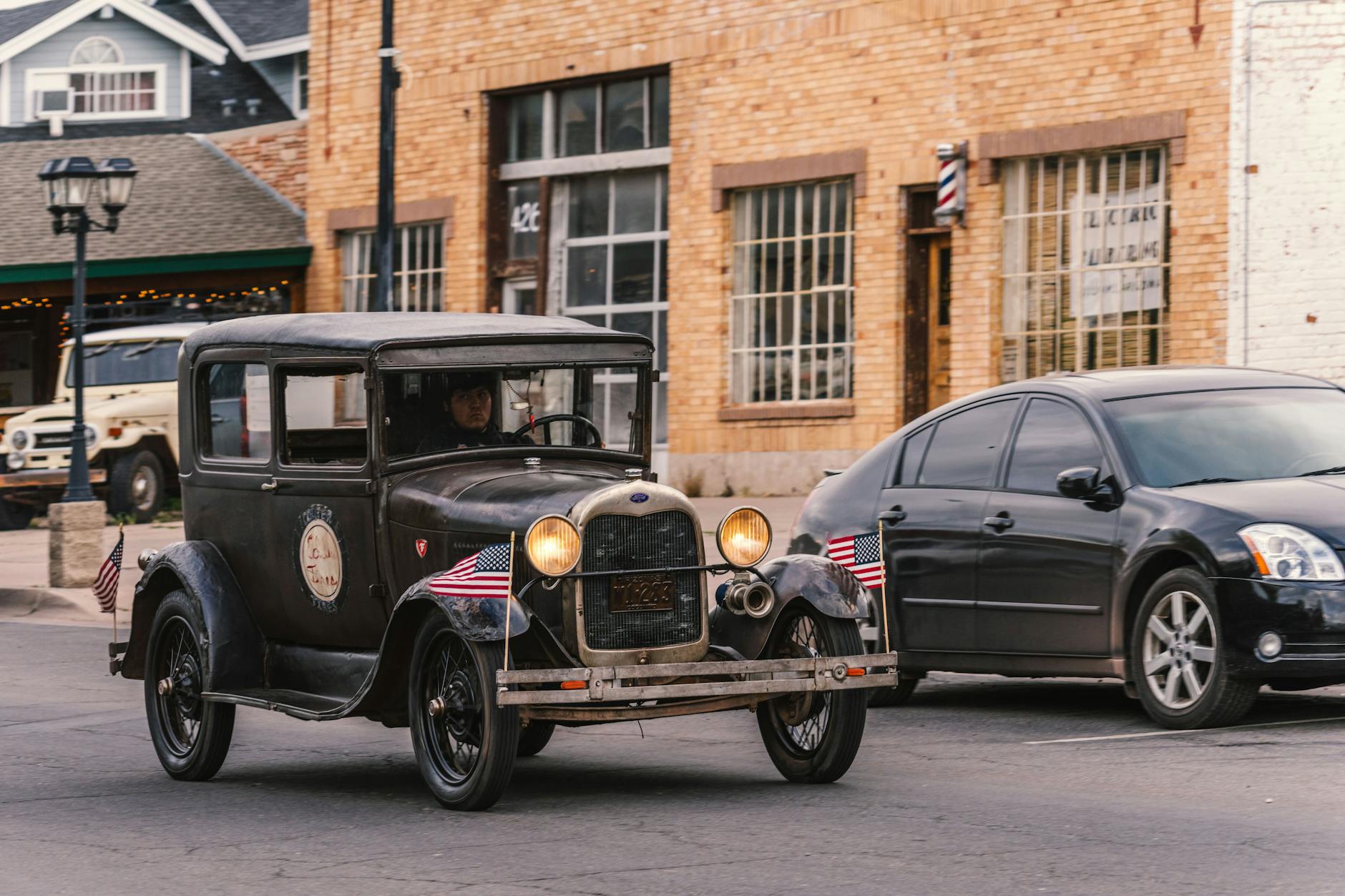
The Road Trip That Once Broke Men Now Breaks Nothing But Boredom
Picture this: It's 1923. You've decided to drive from New York City to Los Angeles. You've packed spare tires — plural, because you'll need them. You've got a hand-drawn map that may or may not be accurate. You've told your family you'll be back in roughly six weeks, give or take. And you've quietly made peace with the fact that the car might not make it.
That was the reality of coast-to-coast road travel in early 20th-century America. What we now casually call a road trip was, for that generation, closer to an expedition.
Mud, Dust, and the Roads That Weren't Really Roads
Before the federal government got serious about highways, American roads were a patchwork disaster. Most were unpaved, maintained — if at all — by local counties with wildly inconsistent standards. A stretch of decent gravel in Ohio might give way to a muddy cattle track in Kansas. Rain didn't just slow you down; it could strand you for days.
The Lincoln Highway, established in 1913 and often celebrated as the first transcontinental road, was more of a concept than a construction. Large sections were dirt paths barely wide enough for two cars to pass. Early motorists crossing the country often had to hire local farmers with horses to haul their vehicles out of ditches. That wasn't unusual — it was practically a scheduled stop.
The cars themselves weren't helping. A Model T Ford, the people's vehicle of the era, topped out around 40 miles per hour on a good surface, which drivers rarely encountered. Flat tires happened multiple times per day on rough terrain. Breakdowns were so common that carrying a basic toolkit wasn't optional — it was survival knowledge.
Average crossing time? Roughly 30 to 40 days, if things went reasonably well.
The Moment Everything Changed
The transformation didn't happen overnight, but one date stands out: June 29, 1956. That's when President Dwight D. Eisenhower signed the Federal Aid Highway Act, authorizing the construction of 41,000 miles of interstate highway. Eisenhower had seen Germany's Autobahn during World War II and came home convinced that America needed something similar — not just for commerce, but for national defense.
What followed was the largest public works project in American history. Over the next three decades, the interstate system stitched the country together with wide, smooth, standardized roads. No more wondering whether the next county had bothered to fill its potholes. No more praying the bridge could hold your weight.
By the 1970s, a driver could realistically cross the country in four to five days of steady driving. By the 1990s, with better cars and better roads, three days was entirely doable for someone motivated enough to push through long stretches.
Today, Google Maps will tell you the New York to LA drive takes approximately 40 hours of pure driving time. Most people split it into a four- or five-day trip — not because they have to, but because they want to enjoy it.
The Car Became a Different Machine
The roads didn't transform alone. The American automobile went through its own quiet revolution. Air conditioning, once a luxury option that appeared in the late 1950s, became standard equipment by the 1980s. Power steering, radial tires, fuel injection, cruise control — each innovation chipped away at the physical and mental toll of long-distance driving.
Modern vehicles are engineered to cover 500 miles without complaint. Tire blowouts, once a near-daily annoyance on a long trip, are now genuinely surprising events. Roadside assistance apps mean that when something does go wrong, help is typically 30 minutes away rather than dependent on whether a friendly farmer happens to drive by.
Navigation alone tells the whole story. In 1923, you needed paper maps, local knowledge, and a willingness to ask strangers for directions and trust their answers. Today, a phone mounted to your dashboard recalculates your route in real time, warns you about traffic 50 miles ahead, and finds the nearest gas station when your tank hits a quarter full.
Roadside America: From Necessity to Nostalgia
The culture that grew up alongside the highway is its own fascinating chapter. The 1950s and 60s gave America the motor lodge, the drive-in diner, and the roadside attraction — giant balls of twine, dinosaur statues, mystery spots — all designed to pull travelers off the highway and into their towns.
Route 66, running from Chicago to Santa Monica, became the most romanticized stretch of asphalt in the country. Steinbeck called it "the mother road." It carried Depression-era migrants west and postwar families on vacation. It was lined with diners, motels, and neon signs that felt like a promise of something just ahead.
Much of that world faded when the interstates bypassed the small towns that had depended on through traffic. But the romance never fully died. Today, driving Route 66 is a deliberate act of nostalgia, a way of reaching back toward a slower version of the journey.
From Ordeal to Option
The coast-to-coast road trip didn't just get faster and easier. It changed what it meant to choose it. In 1923, you drove across America because flying wasn't available and trains were slow. Today, you drive across America because you want to — because there's something about watching the landscape shift from the Atlantic coast through the plains and over the Rockies to the Pacific that still feels worth doing slowly.
The expedition became a vacation. The ordeal became a choice. And somewhere in that shift, the open road became one of the most enduring symbols of American freedom — not despite how easy it's gotten, but partly because of it.