Your Grandmother Didn't Need a New Recipe Every Week — She Had Five and She Fed Everyone
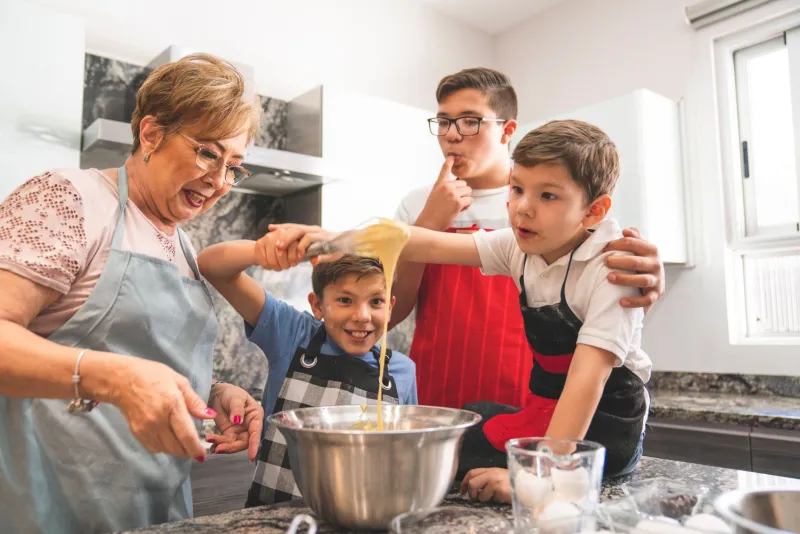
Somewhere in a kitchen drawer, or maybe a shoebox in a closet, a lot of Americans have an index card. It's written in someone else's handwriting — a grandmother's, a great-aunt's, a neighbor who moved away decades ago. On it are the instructions for something like a pot roast, or a casserole, or a pie crust. The measurements are approximate. Some steps are missing entirely, because whoever wrote it assumed you already knew. And that dish, made from that card, probably tasted better than anything you've made from a food blog.
That's not sentiment talking. That's repetition. That's mastery. And it's something the modern approach to cooking has almost completely abandoned.
The Old Way: Fewer Recipes, Deeper Knowledge
For most of the twentieth century, American home cooking operated on a simple principle: you learned a manageable number of dishes, you made them often, and you got good at them. A typical household might rotate through ten or fifteen meals across a month. Sunday pot roast. Wednesday's meatloaf. The Friday fish that nobody especially loved but everyone ate without complaint.
Cookbooks existed, but they were reference tools rather than entertainment. Betty Crocker's original cookbook, first published in 1950, sold tens of millions of copies — not because it offered novelty, but because it was reliable. Families returned to the same pages so often that the spines cracked and the margins filled with handwritten notes. The goal wasn't variety. The goal was feeding people well, consistently, without drama.
The result of all that repetition was genuine skill. A woman who made biscuits every Sunday morning for thirty years didn't need to measure the flour. She knew by feel when the dough was right. That kind of embodied knowledge — the sort that lives in your hands rather than your phone screen — takes time to develop. It requires doing the same thing over and over until the doing becomes automatic.
What Happened When the Internet Got Into the Kitchen
The transition was gradual, then suddenly overwhelming. Food television started expanding palates and ambitions in the 1990s. The internet brought recipe websites. Then came Pinterest, which turned dinner planning into a visual mood board exercise. Then YouTube cooking channels, Instagram food culture, and eventually TikTok, which reduced entire culinary traditions to sixty-second videos optimized for maximum visual impact.
At some point — and it's hard to pinpoint exactly when — cooking shifted from a domestic skill to a form of entertainment consumption. The question stopped being "what are we eating this week" and became "what should I try next." The focus moved from execution to discovery.
The numbers reflect this shift in strange ways. Americans today have access to more recipes than any previous generation could have imagined — by some estimates, tens of millions of indexed recipes are available online. Cooking-related content generates billions of views annually across social platforms. And yet home cooking rates in the US have been declining for decades. Fewer Americans cook regularly now than did in the 1960s, despite — or perhaps because of — having infinite inspiration at their fingertips.
The Paradox of Too Many Options
Psychologists have a name for what happens when choices multiply beyond a certain point: decision fatigue. The more options you face, the harder each decision becomes, and the less satisfied you tend to feel with whatever you choose. Barry Schwartz wrote about this extensively in The Paradox of Choice, and while his focus was broader than dinner planning, the kitchen is one of the most relatable arenas for the phenomenon.
Stand in front of your open refrigerator at 6 p.m., aware that there are fourteen thousand pasta recipes on the internet and approximately forty-three ingredients in your pantry, and you'll recognize the feeling immediately. The abundance doesn't liberate you. It paralyzes you. You scroll through options, none of them quite right, increasingly frustrated, until you close the app and order pizza.
Your grandmother didn't have this problem. She knew what she was making on Tuesday because she'd made it on the last twelve Tuesdays. The decision had already been made, essentially permanently, and the energy that would have gone into choosing was redirected into cooking.
What We Lost Along With the Boredom
There's a version of this story where constant culinary variety sounds like pure progress — more flavors, more cultures represented, more creativity in the kitchen. And that part is real. American home cooking is genuinely more diverse and adventurous than it was fifty years ago, and that's worth celebrating.
But something else got lost in the shuffle. The old repetition-based approach to cooking wasn't just efficient — it was connective. When you make your mother's lasagna, you're not just making lasagna. You're maintaining a thread of continuity between generations. The dish carries history. It carries memory. It carries the specific, unreproducible knowledge of someone who made it a hundred times before you.
Algorithm-fed cooking culture doesn't really support that kind of inheritance. It's oriented toward novelty and engagement, not continuity. Each new recipe is a discrete experience, optimized for the scroll, not designed to be made again and again until it becomes part of who you are as a cook. The dishes that go viral on social media are often the most visually dramatic, not the most nourishing or most repeatable.
The result is a generation of home cooks who are constantly inspired and chronically under-practiced. People who own beautiful Dutch ovens they've used twice. People who have bookmarked four hundred recipes and mastered approximately none of them.
The Case for Cooking Boring Food Again
There's a quiet counter-movement worth paying attention to. Across American food culture, there are signs of a return to simplicity — not as deprivation, but as intention. Meal planning has made a comeback, not as a nostalgic quirk but as a genuine stress-reduction strategy. The appeal of "five dinners, same five dinners, every week" is finding an audience among people exhausted by the performance of perpetual novelty.
Some home cooks are deliberately narrowing their focus — picking ten dishes they actually love and committing to making them well, repeatedly, until the measuring spoons become unnecessary. That's not limitation. That's how mastery works.
Your grandmother wasn't bored. She was skilled. There's a difference — and it's one worth relearning.