Your Great-Grandfather's Three Shirts Lasted Decades. Your Closet Has 87 Things You've Worn Once.
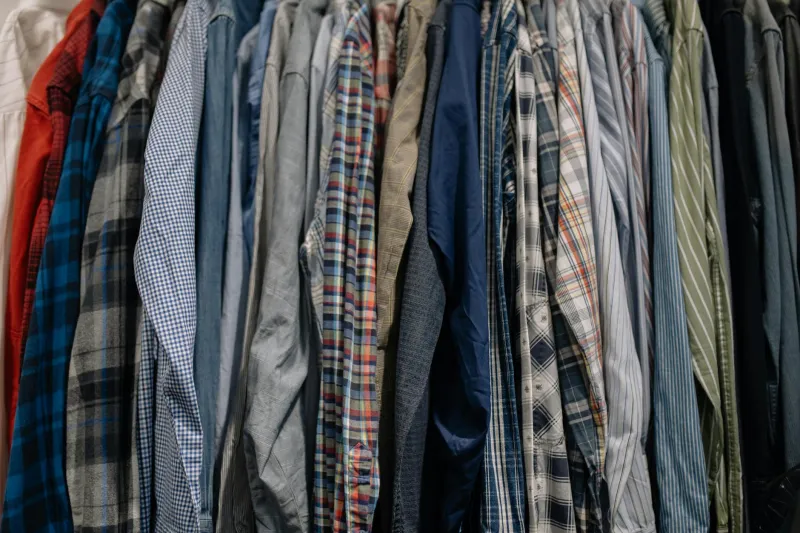
Open your closet and count the items you haven't worn in the past year. Now count the ones you've worn only once or twice. If you're like most Americans, you just counted through about 60% of your wardrobe.
Your great-grandfather would be baffled by this scenario — not because he couldn't afford clothes, but because the entire concept of disposable fashion didn't exist. In his world, clothing was an investment comparable to buying furniture today. You bought it expecting it to last decades, and you took care of it accordingly.
The Three-Shirt Wardrobe
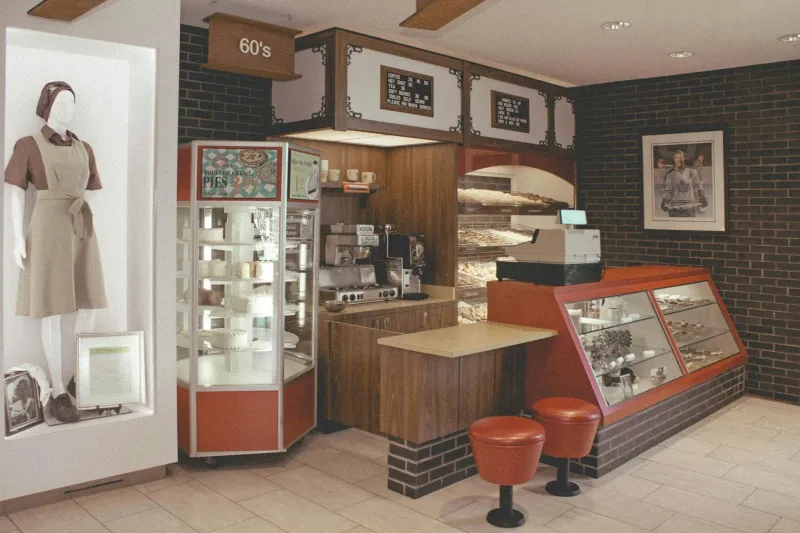
A typical working man in 1920 owned three shirts: one for work, one for Sunday church, and one being washed. That was it. These weren't cheap cotton blends from overseas factories — they were substantial garments made from heavy cotton or wool, sewn with the expectation that they'd be worn hundreds of times.
Women's wardrobes weren't much larger. A middle-class woman might own five dresses: one for housework, two for daily wear, one for special occasions, and perhaps one fancy dress for weddings or important social events. These dresses were often made at home or by local seamstresses, customized to fit perfectly and built to endure years of wear.
The idea of having "nothing to wear" while standing in front of a full closet would have been incomprehensible. When you only owned a few pieces of clothing, you knew exactly what you had and when you'd last worn each item.
When Clothes Were Investments
In 1950, the average American spent about 12% of their income on clothing. Today, despite having exponentially more garments, we spend less than 3%. This shift reveals how dramatically the economics of fashion have changed.
Clothes used to be expensive because they were built to last. Seams were reinforced. Buttons were sewn on with thick thread. Fabrics were chosen for durability rather than cheapness. A quality suit could cost the equivalent of $2,000 in today's money — but it was expected to last twenty years with proper care.
Families had strategies for maximizing clothing lifespan that would seem obsessive today. Shirts were rotated systematically to ensure even wear. Clothes were carefully mended at the first sign of damage. Children's garments were passed down through multiple siblings, often lasting long enough to reach cousins.
The Mending Culture
Every household had a sewing kit, and everyone knew how to use it. Darning socks wasn't a quaint hobby — it was economic necessity. A small hole in a sock meant an evening of careful repair work, not a trip to the store for a new pack.
Tailors and seamstresses weren't luxury services; they were essential community resources. Taking a garment to be altered, repaired, or updated was as common as taking a car to the mechanic today. The phrase "make do and mend" wasn't just a wartime slogan — it was a way of life.
Even wealthy families followed these practices. Having money didn't mean buying new clothes constantly; it meant buying higher-quality clothes that would last even longer. Conspicuous consumption through clothing was limited to special occasions, not daily life.
The Fast Fashion Revolution
Everything changed in the 1990s when globalization and synthetic fabrics converged to create fast fashion. Suddenly, clothing could be manufactured overseas for pennies, shipped globally, and sold at prices that made replacement cheaper than repair.
Zara pioneered the model of releasing new designs every few weeks instead of seasonal collections. H&M and Forever 21 followed, training consumers to expect constantly changing inventory and rock-bottom prices. The average American now buys 68 new garments per year — more than one per week.
This transformation happened gradually enough that we barely noticed. Each individual purchase seemed reasonable — a $12 shirt here, a $25 dress there. But collectively, these small purchases created wardrobes that would have seemed impossibly extravagant to previous generations.
The Hidden Costs
What we gained in variety and affordability, we lost in quality and environmental impact. Modern garments are designed to fall apart after minimal wear. Seams split after a few washes. Colors fade rapidly. Synthetic fabrics pill and lose their shape.
The environmental cost has been staggering. Americans now discard 85 pounds of clothing per person annually. Most of these garments end up in landfills, where synthetic fabrics can take centuries to decompose. The fashion industry has become one of the world's largest polluters, second only to oil.
Meanwhile, we've lost the skills that made the old system work. Most Americans can't sew on a button, let alone darn a sock or alter a hemline. When something breaks, we replace it rather than repair it — often because replacement is actually cheaper.
The Psychology of Choice Overload
Paradoxically, having more clothing options has made getting dressed more stressful, not easier. Studies show that people with packed closets spend more time deciding what to wear and feel less satisfied with their choices.
Your great-grandfather never experienced decision fatigue about clothing. With limited options, getting dressed was a simple, automatic process. Today's abundance of choice has turned a basic daily task into a complex decision-making process that many people find overwhelming.
Signs of Change
Interestingly, some Americans are rediscovering the wisdom of the old approach. Minimalist wardrobes, "capsule collections," and "buy nothing new" challenges reflect a growing awareness that more stuff doesn't equal more satisfaction.
High-quality, durable clothing brands are experiencing a renaissance as consumers tire of constantly replacing cheap garments. The "cost per wear" calculation — dividing a garment's price by how many times you'll wear it — is helping people rediscover the economic logic of buying better quality items.
Sewing classes are seeing unexpected popularity among young adults who want to repair and customize their clothes. The "slow fashion" movement advocates for buying fewer, better pieces and taking care of them properly.
What We Lost and Gained
The shift from a three-shirt wardrobe to today's overflowing closets represents both progress and loss. We gained variety, affordability, and the freedom to express ourselves through fashion. But we lost the satisfaction that comes from truly knowing and caring for our possessions.
Perhaps most significantly, we lost the connection between our choices and their consequences. When clothes were expensive and built to last, every purchase mattered. Today's cheap, disposable fashion has disconnected us from the true cost of our consumption habits.
The next time you stand in front of your packed closet claiming you have "nothing to wear," remember your great-grandfather's three shirts. Sometimes having less really was having more.