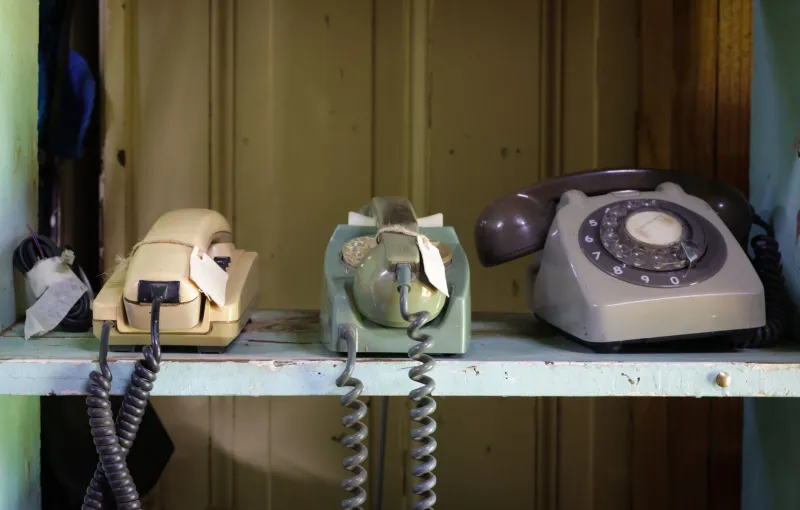
The Lost Art of Remembering Everything — When Your Brain Was Your Only Hard Drive
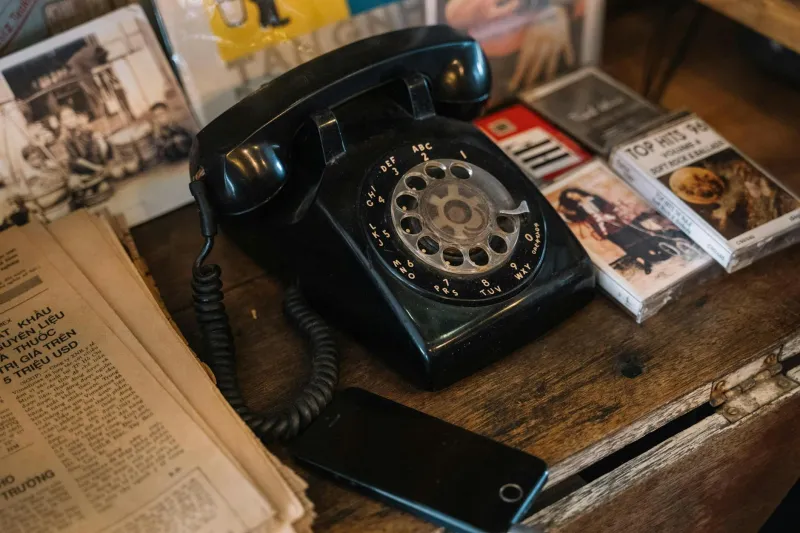
When Your Brain Had No Choice But to Work
There was a time, not so long ago, when the average American carried an entire social network in their head. Not on their phone — in their actual brain. Phone numbers, addresses, birthdays, directions to every important place in town, and the complete roster of who lived where and how to reach them.
This wasn't some impressive party trick. It was survival. If you wanted to call your best friend, your doctor, or your mother-in-law, you either remembered their number or you didn't make the call. There was no backup, no search function, no "Hey Siri, call Mom." Your memory was your only database, and it had better be accurate.
The Rotary Phone Olympics
Picture the mental gymnastics required for a simple social life in 1975. You'd memorize your own number (obviously), your parents' number, your work number, your best friend's number, the pizza place, the doctor's office, the dentist, your kids' school, and at least a dozen friends and relatives. That's just the basics.
Then came the advanced level: remembering which numbers had changed recently, whose family had moved, and which businesses had new locations. Phone books were updated annually, but life happened daily. A good memory meant staying socially connected. A bad memory meant isolation.
Mary Rodriguez, now 78, grew up in Chicago during the era when memorizing phone numbers was as essential as knowing how to tie your shoes. "I could tell you the phone number of every family on my block," she says. "My kids think it's some kind of superhuman ability, but back then, if you couldn't remember numbers, you couldn't function."
The Great Outsourcing Project
Something remarkable happened between 1990 and 2010. We collectively decided to stop remembering things. Not consciously — it just happened gradually, as our devices got smarter and our brains got lazier. First, we stopped memorizing phone numbers because we had speed dial. Then we stopped learning directions because we had GPS. Then we stopped remembering birthdays, appointments, grocery lists, and eventually, even our own phone numbers.
Cognitive scientists call this "digital amnesia" or the "Google effect" — our tendency to forget information we know we can easily access later. It's not that we can't remember things anymore; it's that we've trained our brains not to bother trying.
Dr. Merlin Donald, a cognitive neuroscientist at Queen's University, has studied how external memory tools change human cognition. "We're witnessing the largest shift in human memory systems since the invention of writing," he explains. "But unlike writing, which supplemented memory, digital devices are replacing it entirely."
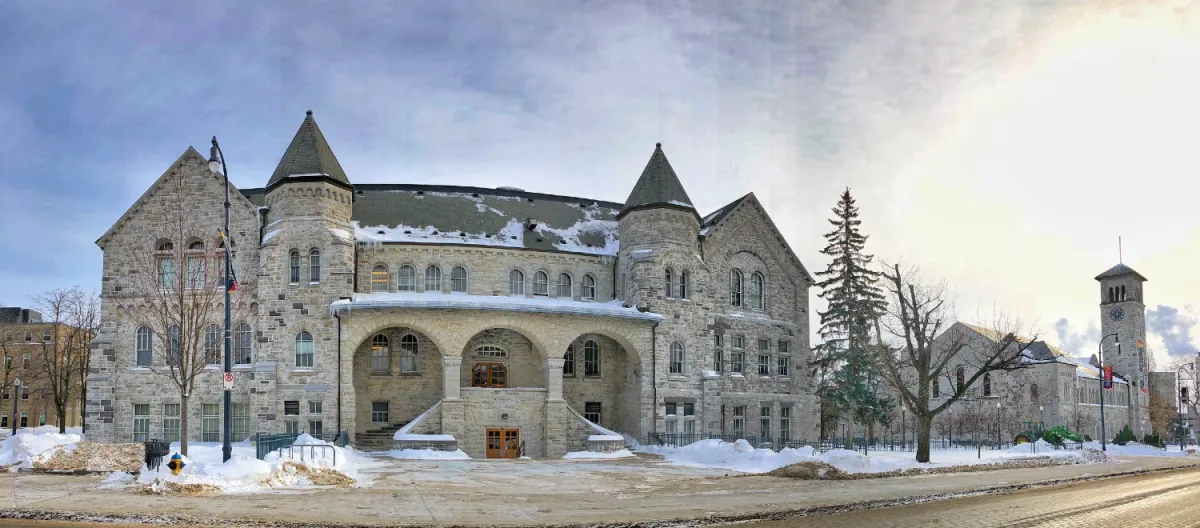 Photo: Queen's University, via photos.applyboard.com
 Photo: Dr. Merlin Donald, via i.pinimg.com
What Your Grandfather's Brain Could Do
The pre-smartphone brain was a marvel of efficiency and organization. People developed elaborate mental filing systems, associating phone numbers with addresses, birthdays with anniversaries, and directions with landmarks. They created memory palaces without knowing what memory palaces were.
Consider the cognitive load of planning a simple dinner party in 1985: You'd need to remember who was invited, their dietary restrictions, their phone numbers to confirm attendance, the grocery list (written from memory), directions to the store and back, and the recipe measurements. No backup systems, no digital assistants, no "I'll just Google it later."
Your grandfather's generation didn't just remember more information — they remembered it differently. Numbers weren't abstract digits stored in contacts; they were rhythmic patterns embedded in muscle memory. You didn't just know your best friend's number; you could dial it in the dark, your fingers dancing across the rotary dial in a familiar sequence.
The Skills We Didn't Know We Were Losing
Modern neuroscience suggests we may have traded something valuable for convenience. The act of memorizing information doesn't just store facts — it builds cognitive infrastructure. When you memorize a phone number, you're not just learning digits; you're exercising pattern recognition, sequential memory, and mental organization skills.
People who grew up memorizing phone numbers tend to be better at remembering other numerical sequences, from credit card numbers to important dates. Their brains developed robust systems for encoding and retrieving information that serve them well beyond telecommunications.
Moreover, the effort of remembering created stronger neural pathways. Information you worked to memorize became more deeply embedded than information you simply looked up. Your grandfather's phone numbers weren't just stored in his memory — they were woven into his neural architecture.
The Anxiety of Empty Pockets
Here's the strange irony: we now carry more information in our pockets than the entire Library of Congress contained in 1950, yet we feel more helpless than ever when that device isn't available. Dead battery anxiety is real, and it's a direct result of outsourcing our basic cognitive functions to machines.
A 2023 study found that 73% of Americans couldn't remember their spouse's phone number without looking it up. Even more striking: 41% couldn't remember their own number. We've become cognitively dependent on devices in ways that would have seemed inconceivable to previous generations.
The Memory Muscle We've Let Atrophy
This isn't a nostalgic plea to return to rotary phones and paper maps. Smartphones and GPS have objectively improved our lives in countless ways. But like any tool, they come with trade-offs we're only beginning to understand.
The human brain evolved to remember vast amounts of information because that's what survival required. When we stop exercising that capacity, we don't just lose the information — we lose the cognitive strength that comes from the exercise itself.
Your grandfather's ability to remember dozens of phone numbers wasn't just impressive; it was evidence of a brain that had to work harder and, as a result, worked better. In outsourcing our memory to devices, we may have gained convenience but lost a fundamental human capability that took millennia to develop.
The next time your phone dies and you realize you can't call anyone because you don't remember any numbers, you're experiencing firsthand what might be the most dramatic cognitive shift in human history — the moment we decided our brains didn't need to remember anything anymore.