One Salary, One House, One Life — The Deal America Quietly Cancelled
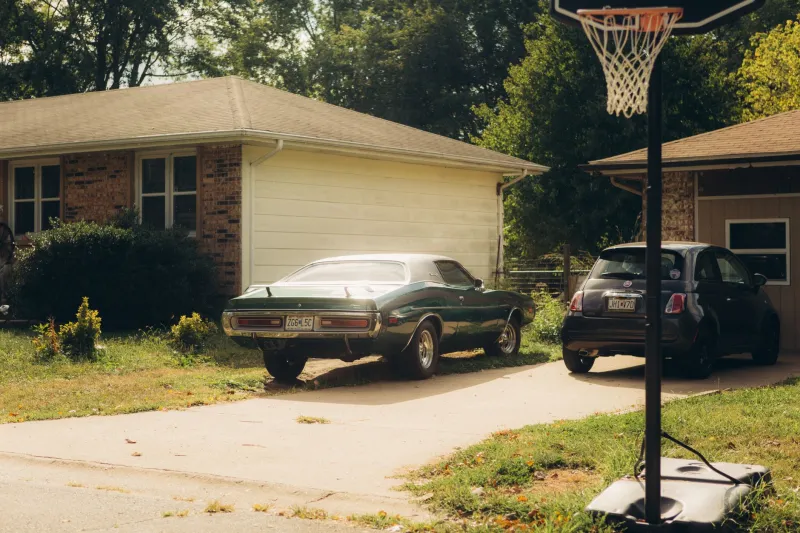
Somewhere in a box of old photographs, there's probably a picture of your grandparents standing in front of a modest house with a wide front porch. Maybe it was in Ohio, or outside of Dallas, or in a suburb of Philadelphia. Your grandfather worked at a factory, a school, or an insurance office. Your grandmother may or may not have worked outside the home. Either way, they owned that house.
That wasn't luck. That was just how the math worked.
Today, that same math looks like a different language entirely.
What the Numbers Actually Looked Like
Back in the early 1970s, the median home price in the United States sat at roughly two to three times the median annual household income. That ratio — often called the price-to-income multiple — is the number that really tells you whether regular people can afford to buy homes. And for most of the postwar period, it stayed in a range that made ownership genuinely accessible.
If you earned $12,000 a year in 1975, a $25,000 home wasn't a fantasy. It was a plan. You saved, you borrowed modestly, and within a few years you had equity and a deed.
Fast-forward to today. The median home price in the US has surpassed $400,000 in many markets, while median household income hovers around $75,000. That puts the price-to-income multiple somewhere between five and six nationally — and in cities like San Francisco, Denver, or Austin, it climbs well past ten. The gap between what people earn and what homes cost has never been wider in the modern era.
This isn't just a statistic. It's a complete restructuring of how American life is sequenced.
The Forces That Broke the Formula
No single villain caused this shift. It was a collision of forces that compounded quietly over decades.
Wage growth, for most working Americans, stalled somewhere in the 1980s when adjusted for inflation. Productivity kept rising, corporate profits kept rising, but the paycheck of the average worker didn't keep pace. Meanwhile, the cost of building homes climbed — driven by rising land prices, stricter zoning regulations in high-demand areas, and the increasing expense of materials and skilled labor.
Then came a factor that previous generations never had to compete with: investment capital flooding into the residential market. Institutional buyers — large real estate investment firms, hedge funds, and short-term rental platforms — began purchasing single-family homes at scale during the 2010s. In some markets, investors were buying a quarter or more of available homes, often in cash, often above asking price. The family trying to buy their first home with a conventional mortgage simply couldn't compete.
Low interest rates through the 2010s temporarily masked the problem by making monthly payments feel manageable even as prices climbed. But when rates rose sharply in 2022 and 2023, both the price problem and the payment problem arrived at the same time. The result was one of the most locked-up housing markets in American history.
How This Changed More Than Just Housing
Here's the part that doesn't always make the financial news: when home ownership becomes structurally inaccessible, it doesn't just affect where people live. It reshapes everything.
Marriage timelines shifted. Couples who might have married in their mid-twenties in 1985 are now waiting until their early thirties, in part because financial instability makes the traditional sequence — job, marriage, house, kids — feel unreachable. The house used to be the foundation that made the rest feel possible. Now it's the obstacle.
Geography changed, too. Entire generations of Americans moved away from the cities and coasts where they grew up, not for opportunity, but for affordability. Remote work accelerated this, but the housing crisis made it a financial necessity for millions. People aren't necessarily choosing Boise or Knoxville or Tulsa because those are their dream destinations. They're choosing them because that's where the math still works, at least for now.
Renting became a permanent condition rather than a temporary one. In the 1960s and 70s, renting was what you did while you saved up. Today, for a growing share of Americans, it's simply where life happens — indefinitely. The psychological impact of that shift is hard to quantify but easy to feel. Ownership carries a sense of rootedness, of stake, of permanence. Long-term renting, particularly in markets where rents can spike at lease renewal, creates a kind of chronic low-grade uncertainty that previous generations didn't carry.
The Thing Nobody Talks About at the Dinner Table
There's an awkward generational tension buried in all of this. Many of the people who bought homes in the 1970s, 80s, and 90s at those favorable multiples have watched their net worth climb dramatically as home values appreciated. Their wealth grew, largely passively, because they happened to be born at the right time to buy at the right price.
Their children and grandchildren, working just as hard and often carrying far more education debt, are locked out of the same mechanism. The wealth-building tool that worked so reliably for one generation simply isn't available to the next in the same way.
That's not anyone's fault, exactly. But it is a rupture in the American story — the one that said if you worked steadily and played by the rules, a home of your own was part of the deal.
Progress Doesn't Always Move in One Direction
The housing story is a reminder that not every chapter of American economic life has been one of steady improvement. Some things that were easier for your parents genuinely are harder now, and pretending otherwise doesn't help anyone plan their life.
What changed the math wasn't laziness or a failure of ambition. It was a structural shift in how the economy distributes its rewards — and how the housing market evolved in ways nobody fully anticipated or designed.
The porch in that old photograph wasn't a miracle. It was a different era with a different deal. Acknowledging that clearly is probably the first step toward building something better.