The Great Unfolding Ritual
Picture this: You're driving through unfamiliar territory, and something's not right. The landmarks don't match your expectations, the road numbers seem wrong, and that sinking feeling in your stomach confirms what you've been denying for the past twenty minutes – you have absolutely no idea where you are.
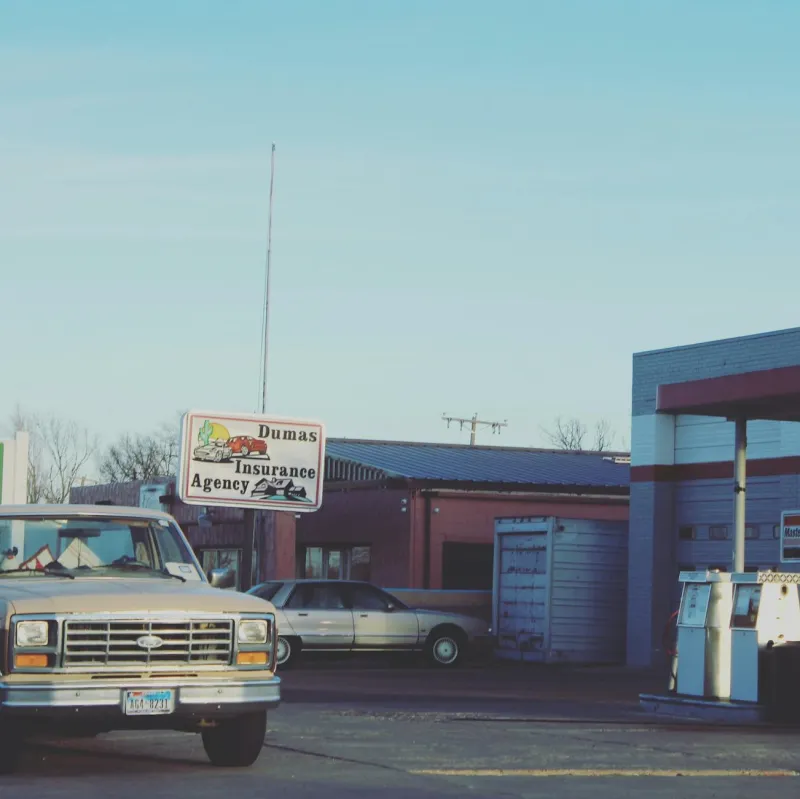
So you pull over at the nearest gas station, pop the hood (because that's where you stored the map), and begin the great unfolding ritual. These weren't the cute, pocket-sized maps you might find in a tourist center today. These were enormous, accordion-folded beasts that fought back when you tried to open them, covered an area roughly the size of a dining room table, and seemed designed by someone who had never actually tried to read a map while standing next to a car in 90-degree heat.
The gas station attendant – remember when those existed? – would often wander over, not because corporate policy demanded customer service, but because watching someone wrestle with a Texas state highway map was genuinely entertaining. "Where you trying to get to?" became the opening line of countless roadside conversations that connected strangers across the vast American landscape.
The Art of Asking for Directions
Being lost meant talking to people. Not texting, not calling, not consulting the internet – actually walking up to strangers and admitting you needed help. This required a particular kind of social courage that we've almost entirely bred out of modern life.
Gas station clerks became accidental geography professors, sketching routes on napkins with the confidence of seasoned explorers. "Take this road about fifteen miles until you see the big red barn – can't miss it – then hang a left where the Dairy Queen used to be." These directions relied on local knowledge, shared landmarks, and a faith that the person asking would figure it out somehow.
The most memorable directions always came from locals who had lived in the area their entire lives. They didn't think in terms of highway numbers or GPS coordinates – they thought in stories. "Go past where the Miller farm burned down in '78, turn right at the church with the crooked steeple, and keep going until you smell the paper mill." These weren't directions; they were oral histories disguised as navigation.
When Wrong Turns Led to Right Discoveries
Getting lost wasn't always a problem to be solved – sometimes it was the best part of the trip. Without the tyranny of optimal routes and real-time traffic updates, wrong turns led to unexpected discoveries that no algorithm would ever suggest.
That detour through the small town where you stopped for lunch at a diner that hadn't changed its menu since 1962. The scenic overlook you stumbled across while trying to find the interstate. The antique shop where you found the perfect gift for your mother, hidden on a back road that GPS would never consider worth traveling.
These weren't inefficiencies in your travel plan – they were the travel plan. The journey mattered as much as the destination because you never knew what you might find along the way. Serendipity was built into the system, not optimized out of it.
The Shared Vocabulary of Navigation Anxiety
Every American family had their own version of the same navigation drama. Dad insisting he knew where he was going while Mom quietly worried they'd run out of gas in the middle of nowhere. Kids in the backseat asking "Are we there yet?" with increasing urgency as the scenery became less familiar and more concerning.
The phrase "I think we should stop and ask for directions" carried weight that's impossible to understand today. It represented surrender, the admission that human pride had been defeated by geography and poor signage. But it also represented hope – the belief that somewhere nearby, another human being would help you find your way home.
Road atlases lived in glove compartments like emergency equipment, their pages worn soft at the folds from years of desperate consultation. AAA TripTiks – remember those? – were personalized navigation scrolls that travel agents would create by hand, highlighting your route with yellow marker like a treasure map designed specifically for your journey.
The GPS Revolution and Its Discontents
The first GPS units seemed like magic, but they were expensive magic – luxury items that only serious road warriors could justify purchasing. Early systems had voices that sounded like robots reading ransom notes, and they'd confidently direct you to drive through lakes or make impossible left turns across six lanes of traffic.
But they worked. Slowly, then suddenly, the ancient art of navigation became obsolete. Map reading joined cursive writing and mental arithmetic as skills that children would never need to learn. The glove compartment atlas became decorative, then disappeared entirely.
Today's navigation goes beyond simple directions – it predicts traffic jams before they form, suggests alternative routes based on real-time data, and warns you about speed traps ahead. Your phone knows where you're going before you've consciously decided, offering directions to work as you grab your keys on Monday morning.
What We Lost When We Stopped Getting Lost
The elimination of navigation struggle represents one of technology's most complete victories over human inconvenience. But victories always have casualties, and this one cost us more than we realized at the time.
We lost the spatial awareness that came from actually paying attention to our surroundings. When every journey becomes a series of robotic commands – "In 500 feet, turn right" – we stop building mental maps of our world. We navigate like passengers in our own lives, following instructions rather than understanding geography.
We lost the memory-making power of struggle. The family stories that began with "Remember that time we got completely lost on the way to Yellowstone?" don't exist anymore because families don't get completely lost. They get temporarily rerouted by algorithms that apologize in soothing voices and immediately suggest better alternatives.
Most significantly, we lost the human connections that formed around shared navigation challenges. The gas station conversations, the friendly strangers who drew maps on napkins, the small-town locals who took pride in helping lost travelers find their way – all of it disappeared when helping someone navigate became as simple as saying "Just use your phone."
The End of Adventure
Being lost used to be an adventure, even when it was frustrating. There was something fundamentally human about the experience of not knowing where you were, of having to rely on your wits and the kindness of strangers to find your way home. It connected us to every explorer and traveler throughout history who had faced the same basic challenge: How do I get from here to there?
Now we know where we are every second of every day. Our phones track our location with precision that would have seemed supernatural to previous generations. We're never truly lost, never genuinely surprised by where we end up, never forced to ask strangers for help or discover hidden corners of the world by accident.
We've solved the problem of getting lost so completely that we've forgotten it was never really a problem at all. It was just part of being human in a big, mysterious world that revealed itself slowly, one wrong turn at a time.