When the Sky Was a Mystery That Could Kill You Without Warning
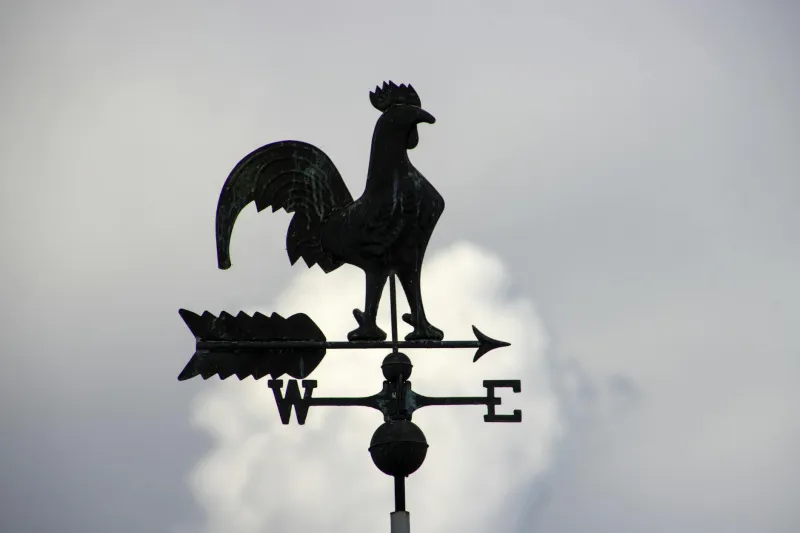
The Gamble That Every Day Used to Be
Imagine stepping outside your house in 1890 with absolutely no idea whether you'd face sunshine, torrential rain, or a life-threatening blizzard by evening. No weather app. No seven-day forecast. No emergency alerts buzzing on your phone. Just you, the morning sky, and whatever folk wisdom your grandmother had passed down about red sunrises and aching joints.
For most of human history, weather was the ultimate wild card — an unpredictable force that could make or break fortunes, ruin harvests, sink ships, and kill thousands without giving anyone more than a few hours' notice. Americans lived their entire lives making crucial decisions based on little more than educated guesses about what the atmosphere might do next.
When Weather Wisdom Was All You Had
Before satellites and radar, people developed elaborate systems for reading nature's signals. Farmers watched animal behavior, studied cloud formations, and tracked wind patterns with the intensity of modern meteorologists. They had to — their livelihoods and often their lives depended on getting it right.
"Red sky at night, sailor's delight. Red sky at morning, sailors take warning." This wasn't just a cute rhyme; it was potentially life-saving information passed down through generations of people who had no other way to predict what tomorrow might bring.
Old-timers would examine spider webs for dew (indicating clear weather), watch how smoke rose from chimneys (straight up meant high pressure and fair skies), and pay attention to their arthritic joints (which really do ache more before storms due to barometric pressure changes). These weren't superstitions — they were the best predictive tools available.
The Disasters That Nobody Saw Coming
The absence of weather prediction didn't just make daily life inconvenient — it made it deadly. The Great Hurricane of 1938 killed over 600 people along the East Coast partly because it moved so fast that traditional warning systems couldn't keep up. Residents went to work on a pleasant September morning and came home to find their towns destroyed.
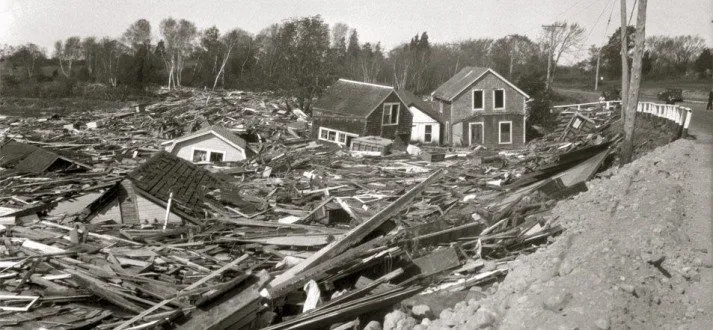 Photo: Great Hurricane of 1938, via devastatingdisasters.com
The Dust Bowl of the 1930s was exacerbated by farmers who had no way to predict the unprecedented drought that would turn the Great Plains into a wasteland. They planted crops based on recent weather patterns, with no understanding that a massive climate shift was already underway.
Even more tragic was the Schoolhouse Blizzard of 1888, which killed 235 people, many of them children, across the Midwest. The morning had been unusually warm for January, so people dressed lightly and children walked to school without heavy coats. By afternoon, temperatures had plummeted 40 degrees and winds reached 60 mph. Teachers and students were trapped in one-room schoolhouses with no warning that one of the most severe blizzards in American history was bearing down on them.
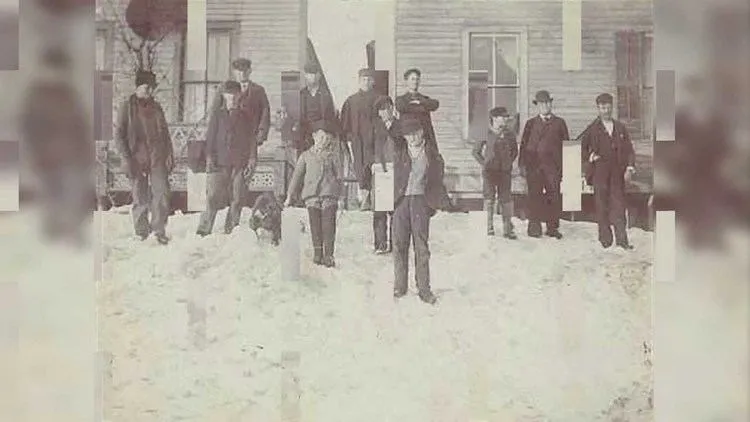 Photo: Schoolhouse Blizzard of 1888, via alchetron.com
The Revolution That Started With a Kite
Weather prediction as we know it began with a simple observation: weather patterns move. What seems obvious now was revolutionary in the 1800s. If you could track a storm system as it moved across the continent, you could warn people in its path.
The first organized weather service in America started in 1870, using telegraph networks to share observations between distant cities. Suddenly, a storm hitting Chicago could be tracked as it moved toward New York. It wasn't much — maybe 12 to 24 hours of warning — but it was enough to save lives.
The real breakthrough came with radar during World War II. Military operators noticed that weather systems showed up on their screens, and by the 1950s, meteorologists were using radar to track storms in real-time. For the first time in human history, people could actually see weather coming from hundreds of miles away.
The Satellite That Changed Everything
TIROS-1, launched in 1960, was the first weather satellite, and it fundamentally changed humanity's relationship with the sky. Suddenly, meteorologists could see massive storm systems from space, track their development, and predict their paths with unprecedented accuracy.
The technology evolved rapidly. Doppler radar could detect rotation in storms, predicting tornadoes before they formed. Supercomputers began running complex atmospheric models, extending forecast accuracy from hours to days to weeks. Satellites became more sophisticated, measuring temperature, humidity, and wind patterns across the entire globe.
By the 1990s, Americans had access to detailed weather forecasts extending a full week into the future. By 2010, they could get minute-by-minute precipitation predictions for their exact location. Today's weather apps provide more accurate information than the National Weather Service could generate just 30 years ago.
The Anxiety We've Forgotten We Used to Live With
Modern Americans plan outdoor weddings months in advance, confident they'll have at least a week's notice if bad weather threatens. We schedule flights, plan road trips, and organize outdoor events with the assumption that we'll know what's coming.
This confidence would have seemed magical to previous generations. Your great-grandmother might have spent her entire wedding day anxiously watching the sky, knowing that a surprise thunderstorm could ruin months of planning with no warning whatsoever.
Farmers once planted crops based on almanacs and folklore, gambling entire seasons on weather patterns that might or might not continue. Today's farmers use sophisticated forecasting models that predict rainfall, temperature, and growing conditions months in advance, allowing them to optimize planting times, irrigation schedules, and harvest dates with precision their ancestors couldn't have imagined.
The Warnings We Take for Granted
Your smartphone probably knows about severe weather in your area before you do. Push notifications alert you to everything from flash flood warnings to heat advisories to tornado watches. Emergency management systems can send location-specific alerts directly to your phone, warning you about dangers that are still hours away.
This level of precision and advance warning represents one of humanity's greatest victories over natural uncertainty. A hurricane that would have surprised and devastated coastal communities in 1950 now triggers evacuations days in advance, saving thousands of lives.
The National Weather Service issues over 50,000 weather warnings annually, each one representing lives potentially saved by information that simply didn't exist for most of human history.
The Sky That Used to Hold All the Secrets
The transformation of weather from an unpredictable force of nature to a trackable, predictable system represents one of the most profound changes in human experience. We've gone from living at the mercy of atmospheric whims to having hourly updates on what the sky will do for the next ten days.
Next time you check your weather app before leaving the house, consider what an extraordinary luxury that simple action represents. You're accessing information that kings and emperors would have killed for — the ability to see into the future and know what nature has planned.
The sky that once held all the secrets now tells us everything, and we've become so accustomed to this transparency that we've forgotten how recently we lived in a world where weather could ruin your life without giving you so much as an hour's warning.