The Great Saturday Expedition
Every Friday night, American families engaged in a ritual that would mystify today's grocery shoppers: they planned their weekend around food. Not around restaurants or meal delivery apps, but around the elaborate expedition required to stock their pantries for the week ahead.
The journey began at dawn on Saturday. First stop: the bakery, where you'd wait in line behind neighbors discussing their children's Little League games while the baker's wife wrapped fresh loaves in paper. The smell of yeast and flour filled the air as you made small talk about the weather, genuinely interested in the answer because these people weren't strangers – they were your community.
Next came the butcher shop, where ordering required actual conversation. "How many are you feeding tonight, Mrs. Johnson?" the butcher would ask, his hands already moving toward the cuts he knew your family preferred. He'd remember that your husband liked his steaks thick, that your youngest wouldn't eat anything with visible fat. This wasn't customer service – it was neighborhood knowledge passed down through decades of Saturday mornings.
The Art of the Weekly Haul
By the time you reached the actual grocery store – often your third or fourth stop – you'd already spent two hours and engaged in more meaningful conversation than many people have in a week today. But the real challenge was just beginning.
Shopping carts were smaller because families bought differently. Without massive refrigerators or freezer space, you purchased what you needed for the week, not the month. Every item required consideration: Will this last until Thursday? Do I have enough space in the icebox? Can I carry all this to the car?
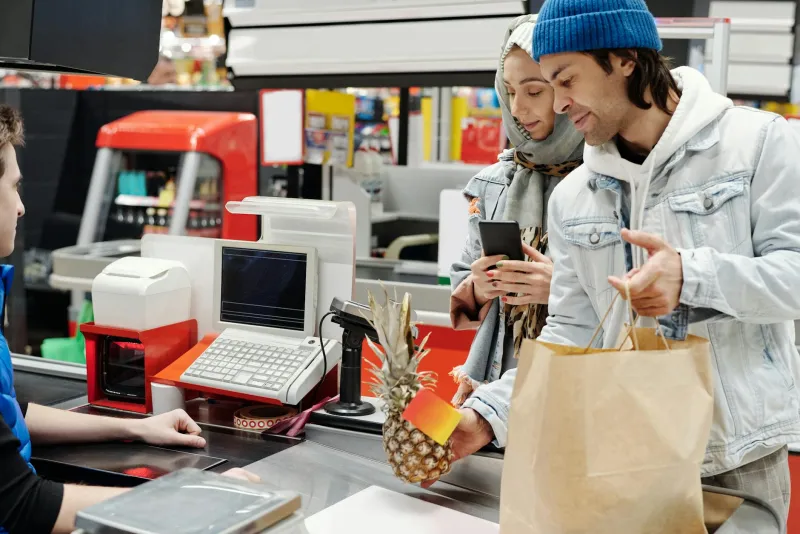
Checkout meant standing in actual lines, watching the cashier manually ring up each item on a register that sounded like a typewriter having an argument with a bell. You'd chat with other shoppers, comment on their selections, maybe discover a new brand or recipe idea. Children learned patience by default – there were no screens to occupy them, just the fascinating theater of adult grocery negotiations.
When Coupons Required Scissors and Strategy
Coupon clipping was a legitimate household skill. Every Sunday, families spread newspapers across kitchen tables, scissors in hand, carefully cutting around the dotted lines like surgeons performing delicate operations. These weren't digital codes that expired in your email – they were physical currency that required planning, organization, and perfect timing.
Women (and it was mostly women) developed elaborate filing systems, organizing coupons by expiration date and store policy. They knew which grocers doubled coupon values on Wednesdays, which brands never went on sale, and exactly when seasonal items would hit clearance. This wasn't extreme couponing for television – it was basic household economics.
The Social Fabric of Food Shopping
What we've lost isn't just time – it's the accidental community that formed around necessity. The grocery store was where you learned Mrs. Peterson's husband was in the hospital, where teenagers got their first jobs, where new neighbors introduced themselves over debates about which apples were best for pie.
Store managers knew their customers by name, not by purchase history algorithms. They'd special-order items for regular shoppers, call when your favorite brand came back in stock, and genuinely care whether you found everything you needed. The checkout clerk might remember your kids' names or ask about your vacation – not because corporate training demanded it, but because seeing the same faces every week created natural relationships.
The Two-Minute Revolution
Today's grocery experience would have seemed like magic to a 1970s shopper. Open an app, tap a few buttons, and groceries appear at your door faster than you could have driven to the store and found a parking space. Algorithms know your preferences better than you do, suggesting items based on purchase patterns you didn't even realize you had.
The efficiency is undeniable. No more weekend expeditions, no more running out of milk at 9 PM with no recourse, no more carrying heavy bags up three flights of stairs. But efficiency and convenience aren't the same as satisfaction, and they're definitely not the same as community.
What Convenience Quietly Cost Us
Somewhere between the last handwritten grocery list and the first tap of "Add to Cart," we traded something intangible for something incredibly convenient. We gained time but lost the rhythm of weekly planning. We gained selection but lost the knowledge that came from talking to people who understood food. We gained speed but lost the patient art of browsing, discovering, and being surprised by what we found.
The teenagers who once bagged groceries and learned work ethic now compete with robots and apps for entry-level employment. The elderly customers who once relied on grocery runs for social interaction now face the choice between isolation and learning to navigate digital interfaces designed for people half their age.
Maybe the most profound change isn't how we shop – it's how we think about the act of shopping itself. What was once a social ritual woven into the fabric of community life has become a logistics problem to be optimized and eliminated. We've solved the inconvenience of grocery shopping so thoroughly that we've forgotten it was never supposed to be convenient.
It was supposed to be life.