Picture this: You're walking down a muddy street in 1880s Chicago, slip on a loose cobblestone, and hear that sickening crack as your leg snaps. In 2024, you'd be annoyed about the emergency room wait and worried about missing your vacation. In 1880, you'd be writing your will.
That's not an exaggeration. A compound fracture — where the broken bone pierces through skin — killed roughly 60% of patients before the age of antibiotics. Even a simple broken leg could turn deadly if infection set in, which it often did.
The Butcher Shop Approach to Bone Repair
Early American medicine treated broken bones like a carpentry problem with surgical tools. Doctors would set the bone by feel, wrap it in whatever cloth was handy, and hope for the best. Wooden splints held everything in place, but there was no way to see inside the body to check if the bones were actually aligned.
Infection was almost guaranteed. Open wounds festered in an era before anyone understood germs existed. The "treatment" for a badly infected limb was amputation — performed without anesthesia until the 1840s, and without antiseptic practices until the 1870s.
Dr. James Marion Sims, a prominent 19th-century surgeon, wrote in his memoirs about treating a young farmer who broke both bones in his forearm. Despite the doctor's best efforts with splints and bandages, the wound became infected within days. The man died of sepsis three weeks later, leaving behind a wife and two young children.
When Breaking Your Hip Meant Breaking Your Future
Hip fractures were essentially death sentences for older Americans well into the 20th century. Without surgical intervention, patients were confined to bed for months, leading to pneumonia, blood clots, and muscle wasting. The mortality rate for hip fractures in people over 65 was around 50% in 1950.
Even if you survived the initial break, permanent disability was almost certain. Bones healed poorly when left to mend naturally, often leaving patients unable to walk normally for the rest of their lives. Many families prepared for the worst when grandpa took a tumble in the backyard.
The Revolution Hiding in Plain Sight
Today, orthopedic surgery is so routine that we barely think about it. That compound fracture that would have killed you in 1880? Modern trauma surgeons can have you walking again in six weeks.
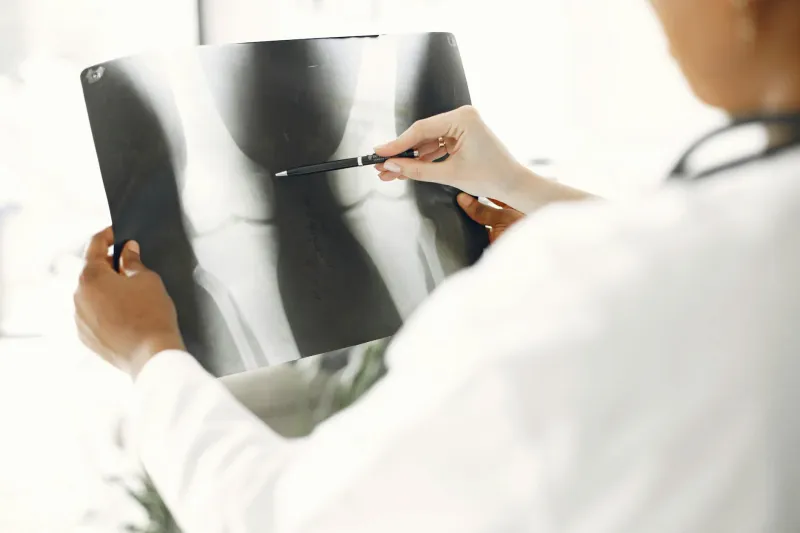
The transformation happened gradually, then all at once. X-rays, discovered in 1895, let doctors see inside the body for the first time. Antibiotics in the 1940s eliminated the infection threat. Anesthesia made complex surgeries possible. But the real game-changer was the development of internal fixation — using metal plates, screws, and rods to hold bones in perfect alignment while they heal.
The Titanium Revolution
Modern orthopedic implants are marvels of engineering that would seem like magic to doctors from even 50 years ago. Hip replacements made from titanium and ceramic can last 20 years or more. Knee joints are designed with computer precision to match each patient's anatomy. Broken bones are repaired with plates and screws so advanced that the hardware often stays in permanently without causing problems.
That hip fracture that used to be a death sentence? Today, hip replacement surgery has a 95% success rate, and most patients are walking within days of the operation. The average hospital stay is two days, compared to months of bed rest in the past.
Same-Day Miracles
Perhaps nothing illustrates the transformation better than arthroscopic surgery. Procedures that once required large incisions and weeks of recovery now happen through tiny keyhole openings. A torn ACL — the kind of injury that ended athletic careers in the 1970s — can be repaired in an outpatient procedure. Professional athletes routinely return to peak performance after surgeries that would have been impossible just a generation ago.
Even emergency fracture repair has become remarkably routine. Emergency rooms across America see thousands of broken bones every day, and the vast majority of patients go home the same day with a cast or boot, confident that their bone will heal perfectly in six to eight weeks.
The Anxiety We've Forgotten
It's hard to imagine the fear that surrounded any serious injury in the past. Families would gather at bedsides, not knowing if a broken bone would heal properly or lead to infection and death. Parents lived with constant worry that a child's playground accident could change their life forever.
Today, we complain about the inconvenience of wearing a cast or using crutches. We worry about missing work or postponing vacation plans. These are luxury problems that would have seemed absurd to Americans who watched loved ones die from injuries we now consider minor.
The Miracle We Take for Granted
The next time you see someone walking around with a cast, remember that they're experiencing something that would have been considered miraculous just 150 years ago. They'll heal completely, return to normal activity, and probably never think twice about the sophisticated medical system that made their recovery possible.
That broken bone isn't a death sentence anymore. It's not even a career-ending injury. It's just a temporary inconvenience in a world where fixing the human body has become almost routine.
The real miracle isn't just that we can repair broken bones — it's that we've become so good at it that we've forgotten how dangerous they used to be.