Picture this: You're lying back in a comfortable chair, watching Netflix on a ceiling-mounted screen while your dentist works on your tooth. You can't feel a thing thanks to local anesthesia, and the whole procedure will be over in 20 minutes. Your biggest worry is whether to get the fluoride treatment that tastes like bubblegum or mint.
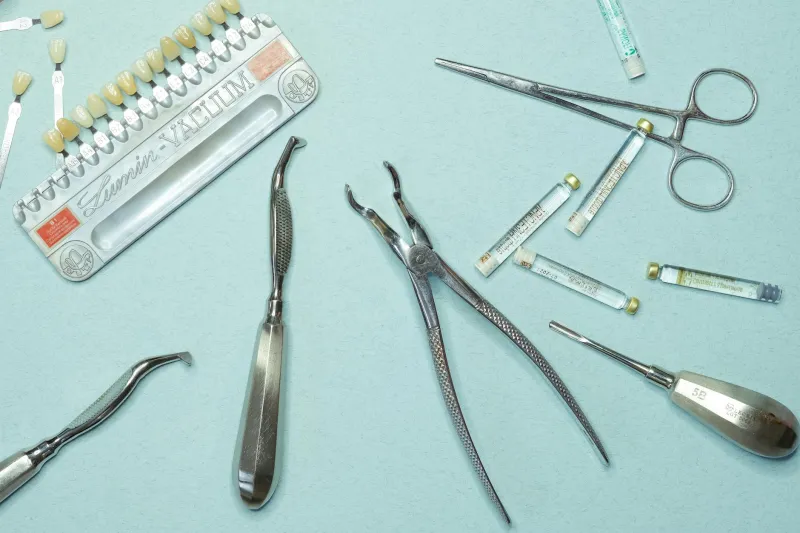
Now imagine the same scenario in 1890. You're sitting in a wooden chair in a barber shop, gripping the armrests while a man who cuts hair for a living approaches your mouth with pliers he also uses to pull horseshoe nails. There's no anesthesia. No sterilization. No understanding of infection. And if something goes wrong, that toothache could quite literally kill you.
The Barber-Surgeon Era
For most of human history, dental care fell under the purview of barber-surgeons — the same people who cut your hair also pulled your teeth. These weren't medical professionals in any modern sense. They were tradesmen who happened to own sharp tools and weren't squeamish about blood.
The process was brutally simple: grab the tooth with pliers, yank it out, and hope for the best. No examination of the surrounding tissue. No consideration of whether extraction was even necessary. Pain was just part of the deal, and patients were expected to "bite the bullet" — literally. Bullets or leather straps were placed between teeth to prevent patients from biting their tongues during the ordeal.
Blacksmiths often served the same role in smaller towns. After all, if you could shape iron with precision, surely you could handle a stubborn molar. The irony wasn't lost on anyone: the same hands that shod horses were trusted with human mouths.
When Infection Meant Death
The real danger wasn't the pain — it was what came after. Without any understanding of bacteria or sterile technique, dental procedures were essentially guaranteed to introduce infection into the bloodstream. What started as a simple toothache could spiral into sepsis within days.
Dental abscesses killed more people than we'll ever know. George Washington's famous wooden teeth weren't just uncomfortable — they were a desperate attempt to replace teeth lost to infection and crude extraction methods. Even wealthy patients with access to the "best" dental care of the era faced these risks.
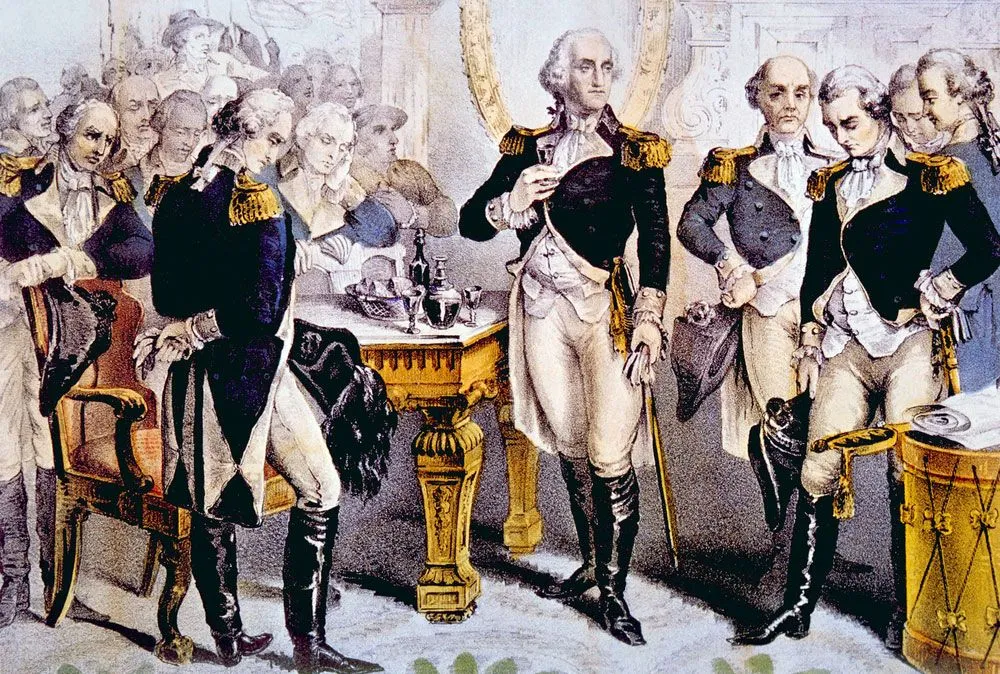 Photo: George Washington, via cdn.britannica.com
The mouth, rich with blood vessels and directly connected to the brain, made dental infections particularly dangerous. A routine extraction could lead to facial swelling, then blood poisoning, then death — all because no one had figured out that washing hands and sterilizing tools might be a good idea.
The Dawn of Modern Dentistry
Everything changed in 1846 when William Morton first demonstrated the use of ether as anesthesia. Suddenly, dental work didn't have to be a test of human endurance. Patients could sleep through procedures that had previously required restraints and prayers.
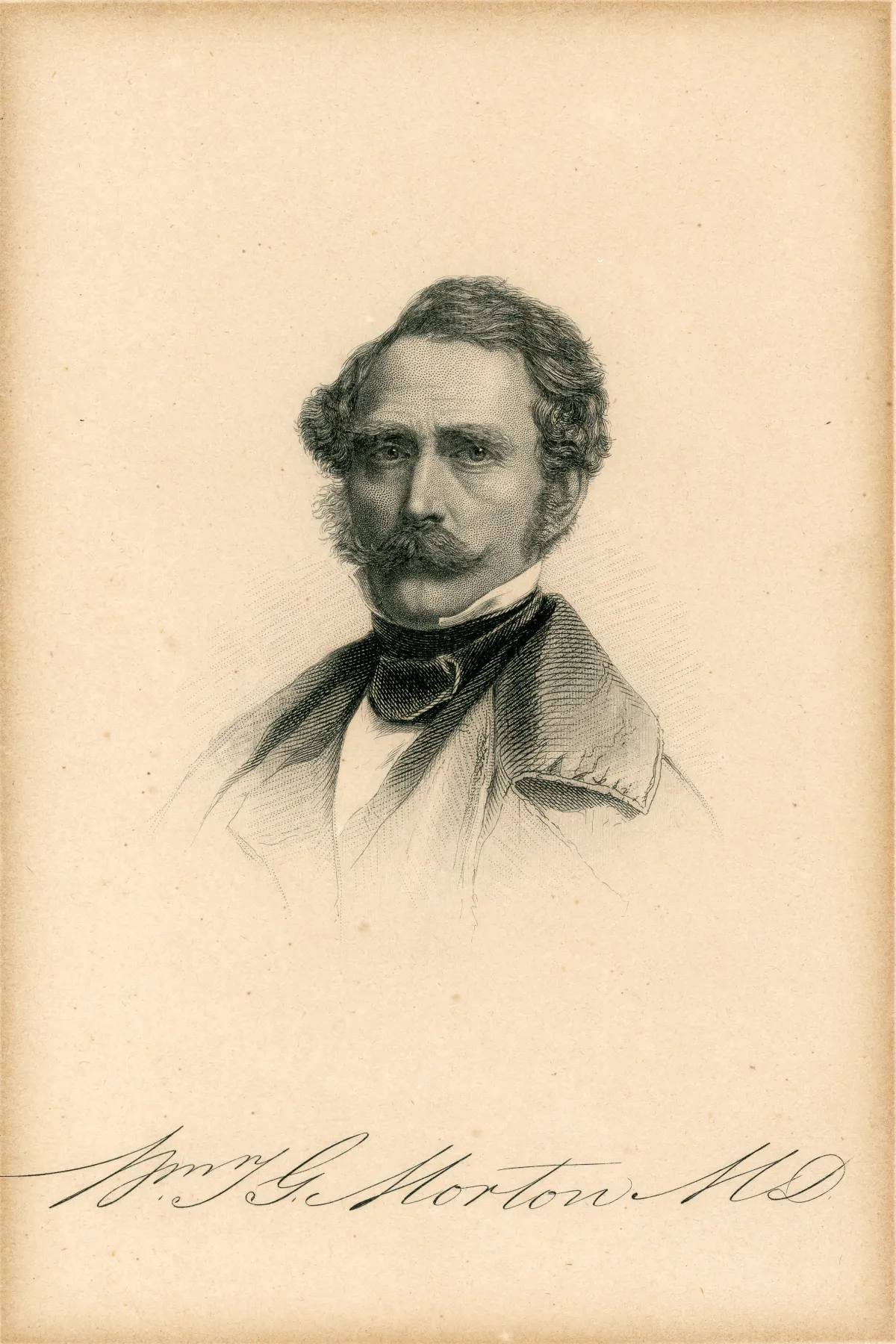 Photo: William Morton, via images.findagrave.com
But anesthesia was just the beginning. The discovery of bacteria in the 1880s revolutionized every aspect of medical care, including dentistry. Sterilization became standard practice. Purpose-built dental tools replaced borrowed blacksmith equipment. And for the first time in history, dental care became about precision rather than brute force.
The electric dental drill, invented in 1875, transformed cavity treatment from a nightmare into a manageable procedure. Instead of chiseling away decay with hand tools, dentists could now remove precise amounts of damaged tissue and fill cavities before they became infected.
Today's Dental Reality
Walk into any modern dental office and you'll find an environment that would seem like science fiction to our ancestors. Digital X-rays reveal problems before they cause pain. Laser cavity detection eliminates the need for exploratory drilling. Sedation dentistry makes even complex procedures comfortable for anxious patients.
The tools alone tell the story of progress. Modern dental drills spin at 400,000 RPM with water cooling to prevent heat damage. Ultrasonic scalers remove plaque without scraping. Even the humble dental filling has evolved from painful amalgam placement to tooth-colored composites that bond chemically with enamel.
The Transformation of Risk
Perhaps most remarkably, dental care has flipped from being one of medicine's most dangerous procedures to one of its safest. Modern dental offices have infection rates approaching zero. Serious complications are so rare they make medical journals when they occur.
The biggest risk most Americans face during dental visits today is forgetting to update their insurance information. Compare that to an era when dental problems were a leading cause of death among young adults, and the transformation becomes staggering.
Why This Matters Today
The evolution of dental care represents one of medicine's greatest success stories — and a reminder of how recently our ancestors lived with risks we can barely imagine. That routine cleaning you've been putting off? Your great-great-grandfather would have risked his life for access to such safe, effective care.
The next time you're reclining in that comfortable dental chair, watching Netflix while your dentist works painlessly on your teeth, take a moment to appreciate the centuries of innovation that made that experience possible. What was once a potentially fatal ordeal has become so routine that our biggest complaint is usually about the fluoride aftertaste.
Sometimes the most dramatic progress happens so gradually that we forget how dramatically things have changed. Dental care is proof that what seems impossible in one era can become boringly routine in the next.