In 1920, 95% of American babies were born at home. By 1970, that number had flipped completely — 95% were born in hospitals. Today, as home birth rates slowly climb back up, we're witnessing families choose what their great-grandmothers would have considered the only logical option: having babies in their own bedrooms.
This isn't a story about going backward. It's about how completely we medicalized one of humanity's most basic experiences, and why some families are now questioning whether we went too far.
When Birth Was a Neighborhood Event
Before hospitals took over, birth was a community affair. When labor began, word spread through the neighborhood. Women dropped what they were doing and hurried over to help. The local midwife — often the most experienced mother in the area — took charge while neighbors boiled water, gathered clean linens, and watched the other children.
The bedroom became a temporary medical center run by women who'd been through this before. They knew which herbs might ease pain, how to position a laboring mother, and when to worry. Most importantly, they understood that birth was usually a normal, healthy process that didn't require intervention — just patience and support.
Fathers were typically banished to another room or sent out entirely. This wasn't because they were unwelcome, but because birth was considered women's work, handled by women who understood it intimately.
The Great Hospital Migration
The shift to hospital births didn't happen because home births were dangerous — it happened because hospitals promised they'd be safer. In the early 1900s, maternal and infant mortality rates were genuinely frightening. Infection, hemorrhaging, and complications that are easily treatable today could be death sentences.
Doctors began arguing that hospitals could provide sterile environments, modern equipment, and immediate access to surgery if needed. They weren't wrong — hospital births did become statistically safer as medical technology improved. But something else was happening too: birth was being transformed from a natural process into a medical event.
By the 1940s and 50s, having a baby at home was increasingly seen as old-fashioned, even reckless. Modern women, the thinking went, deserved modern medicine. The neighborhood midwife was replaced by obstetricians with medical degrees. The familiar bedroom was replaced by sterile delivery rooms.
When Birth Became Surgery
The medicalization of childbirth brought genuine improvements. Pain medication became available. Emergency interventions saved lives. Sanitary conditions reduced infections. But it also changed the fundamental nature of birth from a normal life event into a medical procedure.
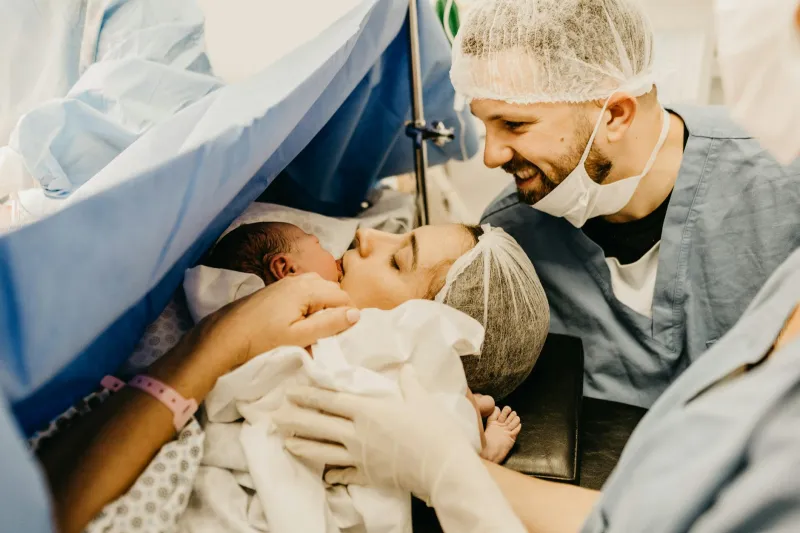
Women were wheeled into delivery rooms on gurneys, often heavily sedated. They gave birth lying on their backs — a position that's actually less efficient than upright positions but more convenient for doctors. Fathers were still banned, now for "medical" rather than traditional reasons.
The "twilight sleep" era of the 1940s and 50s saw women so heavily medicated that they often didn't remember giving birth at all. Babies were whisked away immediately to hospital nurseries. The intimate, community-supported experience of home birth was replaced by an efficient, sterile, but often impersonal medical process.
The Pendulum Swings Back
By the 1960s and 70s, some women began questioning whether birth needed to be quite so medical. The natural childbirth movement emerged, advocating for less intervention and more family involvement. Fathers were allowed back in delivery rooms. Birthing centers appeared as a compromise between home and hospital.
But home birth remained rare and often controversial. Insurance rarely covered it. Many doctors discouraged it. Women who chose home birth were often seen as hippies or health fanatics willing to risk their babies' lives for an "experience."
Today's Home Birth Renaissance
Now, home birth is experiencing a quiet renaissance. About 1.5% of American babies are born at home today — still a small percentage, but growing steadily. Modern home birth looks very different from your great-grandmother's experience, though.
Today's home birth midwives are often certified nurse-midwives with extensive medical training. They carry oxygen, IV equipment, and medications for emergencies. They have clear protocols for when to transfer to a hospital. They work with backup physicians and have established relationships with nearby hospitals.
Families choosing home birth today aren't rejecting modern medicine — they're trying to combine the best of both worlds. They want the safety net of modern medical knowledge with the intimacy and normalcy of birth at home.
What Changed and What Stayed the Same
The fundamental questions haven't changed: Where is birth safest? Who should be in charge? How much intervention is appropriate? What we've learned is that the answers depend on individual circumstances.
For high-risk pregnancies, hospitals remain the safest choice. For healthy, low-risk pregnancies, studies show that planned home births with qualified midwives can be as safe as hospital births — with lower rates of intervention and higher satisfaction rates.
What's really different is choice. Your great-grandmother had no choice — home was the only option. Your grandmother's generation often had no choice either — hospitals became the only socially acceptable option. Today's families have options their ancestors couldn't have imagined: hospitals, birthing centers, home births with medical backup, or hospitals that try to recreate the home birth experience.
The Debate That Never Really Ended
The tension between natural birth and medical intervention reflects a broader cultural question: When is medical intervention helpful, and when does it become harmful? This question applies to everything from mental health treatment to end-of-life care, but it's particularly acute around birth because it involves both mother and baby.
Some medical professionals still view home birth as unnecessarily risky. Some home birth advocates view hospital birth as unnecessarily interventionist. The truth, as usual, is more complicated. Safety depends on individual circumstances, the quality of care providers, and access to emergency backup when needed.
Full Circle
What's remarkable about today's home birth movement isn't that it's radical — it's that it would have seemed completely normal to most of human history. Your great-grandmother would recognize the basic setup: a woman laboring in her own space, surrounded by experienced women who've been through this before, with the family nearby and normal life continuing around the edges.
The difference is that today's home birth families have made an active choice to step outside the medical mainstream, while their great-grandmothers simply had no other option. Both were doing what they believed was best for their babies — they just had very different definitions of what "best" looked like.
The real lesson isn't that one approach is right and the other is wrong. It's that birth is both a medical event and a life experience, and different families will balance those aspects differently. What matters is having genuine choices, good information, and access to both the safety of modern medicine and the comfort of familiar surroundings — options that would have seemed like pure magic to women giving birth a century ago.