Your Great-Grandfather Needed Government Permission Just to Visit Canada — You Book It on Your Phone During Lunch
Last month, my friend Jake decided on a Thursday afternoon that he wanted to spend the weekend in Montreal. By Thursday evening, he'd booked his flight, reserved a hotel, and was researching poutine restaurants. Total planning time: about 45 minutes.
His great-grandfather would have needed six months and a small mountain of paperwork to attempt the same trip — assuming the government approved his request at all.
When Borders Were Actually Barriers
For most of the 20th century, international travel wasn't something you decided to do on a whim. It was a bureaucratic odyssey that required patience, connections, and often a compelling reason that satisfied government officials.
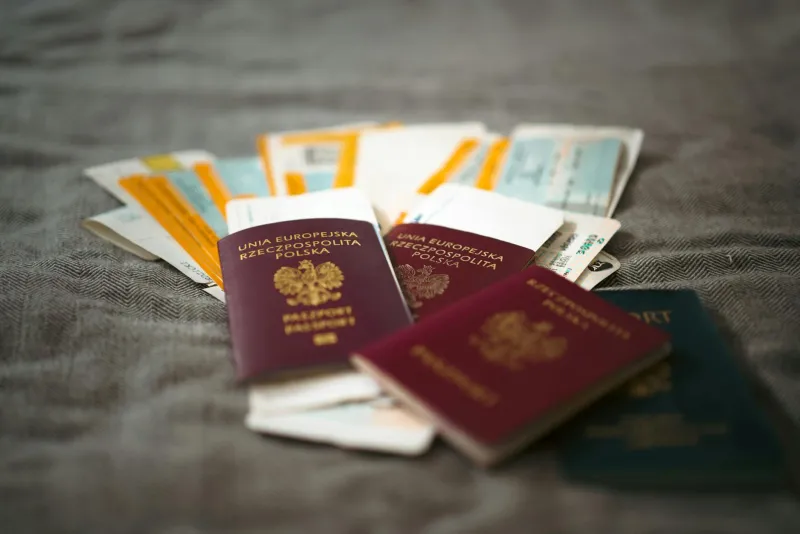
In the 1950s, if you wanted to visit Europe as an American tourist, the process began at your local post office, where you'd collect a passport application that looked more like a legal document than a travel form. You needed photographs taken by approved photographers, sworn statements from citizens who could vouch for your identity, and proof of your travel plans detailed enough to satisfy suspicious officials.
But the passport was just the beginning.
Most countries required separate visas — official permission stamps that could take weeks or months to obtain. Want to visit three countries on your European vacation? That meant three separate visa applications, three sets of fees, and three opportunities for rejection.
The visa process itself was intimidating. You'd submit your passport to foreign consulates (often by mail, with no tracking), along with detailed itineraries, proof of sufficient funds, return tickets, and sometimes letters of invitation from residents of the country you wanted to visit. Then you'd wait, often for months, with no guarantee of approval.
The Interview That Could End Your Dreams
Many visa applications required in-person interviews at consulates or embassies. These weren't friendly chats about your travel plans — they were interrogations designed to determine whether you posed any kind of threat or risk.
Consular officials would grill applicants about their jobs, their families, their political beliefs, and their reasons for travel. The wrong answer, or even the wrong impression, could result in immediate rejection with no appeal process.
"Why do you want to visit our country?" wasn't a conversation starter — it was a test with potentially trip-ending consequences.
Even traveling to neighboring countries required this bureaucratic dance. Crossing into Mexico or Canada involved paperwork, inspections, and the very real possibility of being turned away at the border for reasons that might seem arbitrary today.
When Tourism Required Proof of Wealth
Countries didn't just want to know who you were — they wanted proof you could afford to be there. Travelers had to demonstrate sufficient funds to support themselves during their entire stay, often through bank statements, traveler's checks, or letters of credit.
This wasn't just about having spending money. Countries worried about tourists becoming stranded and requiring assistance from local authorities. The financial requirements were often substantial — equivalent to thousands of dollars in today's money — effectively limiting international travel to the wealthy.
Some countries required proof of return transportation before they'd issue a visa. You couldn't just show up and figure out how to get home later; your exit strategy had to be planned and paid for in advance.
The Communication Blackout
Once you submitted your passport and visa applications, you entered a communication blackout that could last months. There were no tracking numbers, no online portals, no customer service hotlines. Your passport would disappear into a consular office somewhere, and you'd simply wait for it to return — hopefully with the required stamps.
Families would plan vacations a year in advance, not because they wanted to, but because the visa process demanded it. The spontaneous weekend trip to Paris was literally impossible for most Americans.
Business travel was equally complex. Companies employed full-time staff whose job was managing the visa requirements for employees who needed to travel internationally. A business trip to three countries could require months of advance planning and hundreds of dollars in fees.
The Transformation Nobody Noticed
The change happened gradually, which is probably why most Americans don't realize how dramatically travel freedom has expanded.
The Visa Waiver Program, which began in the 1980s and has expanded steadily since, allows Americans to visit 40 countries without obtaining advance visas. You can literally decide on Tuesday to spend the weekend in London, book your ticket, and be sipping tea in Covent Garden by Thursday afternoon.
E-passports with embedded chips have streamlined border crossings. Global Entry and similar programs let pre-approved travelers bypass traditional immigration lines entirely. Many European airports now have automated gates that scan your passport and let you through without speaking to a human.
The European Union's Schengen Agreement eliminated border controls between 27 countries, meaning you can drive from Germany to Italy without stopping for passport checks — something that would have seemed impossible in 1960.
The Numbers Are Staggering
In 1960, about 1.6 million Americans traveled internationally for leisure. Last year, that number exceeded 76 million — and that's not counting business travel or visits to Canada and Mexico.
The average processing time for a U.S. passport has dropped from several months to 6-8 weeks for routine service, or as little as 24-48 hours for emergency processing. Many visa applications that once required in-person interviews are now processed online in days or hours.
Some countries have eliminated visa requirements entirely for American tourists, while others offer "visa on arrival" — you literally get your entry permit at the airport when you land.
Your Phone Is Your Travel Agent
Today's travelers carry more travel-planning power in their pocket than entire travel agencies possessed 50 years ago. Apps can book flights, reserve hotels, translate languages, navigate foreign cities, convert currencies, and even help you order dinner in restaurants where you don't speak the language.
The same phone that books your flight can store your boarding pass, your hotel reservation, your rental car confirmation, and even serve as your room key. Services like Mobile Passport Control let you complete customs declarations before you even land.
Real-time flight tracking means you know about delays before the airline does. Google Translate can turn foreign menus into English instantly. Your bank card works at ATMs worldwide without advance notice.
The Freedom We Take for Granted
What strikes me most about this transformation is how invisible it's become. Americans under 40 have never known a world where international travel required government interviews and months of waiting. The idea of needing permission to visit Canada seems absurd.
Yet this freedom of movement is historically unprecedented. For most of human history, traveling to another country was either impossible for ordinary people or required official permission that was rarely granted.
Today, the biggest barrier to international travel for most Americans isn't government bureaucracy — it's deciding where to go. The visa requirements, interviews, and months of advance planning that once made international travel an ordeal for the wealthy have largely disappeared.
The Quiet Revolution
This transformation happened without fanfare or celebration. There was no dramatic moment when borders suddenly opened; instead, restrictions gradually loosened, technology steadily improved, and international agreements slowly expanded travel freedoms.
The result is that millions of Americans now enjoy travel freedoms that would have seemed impossible to previous generations. The weekend trip to Europe, the spontaneous business meeting in Tokyo, the last-minute vacation to Costa Rica — these aren't luxuries of the wealthy anymore, they're ordinary experiences enabled by a travel infrastructure that previous generations couldn't have imagined.
Your great-grandfather's three-month visa application process has become your lunch-break booking session. And somehow, most of us have never stopped to realize just how extraordinary that transformation really is.