What a Heart Attack Used to Mean — And Why It Doesn't Mean That Anymore
What a Heart Attack Used to Mean — And Why It Doesn't Mean That Anymore
If your grandfather had a heart attack in 1955, here's roughly what happened. He was admitted to a general hospital ward — there were no dedicated cardiac units yet. A doctor confirmed the diagnosis, prescribed strict bed rest, and told the family to hope for the best. There were no clot-busting drugs, no stents, no bypass surgery. No one monitored his heart rhythm continuously through the night. If a fatal arrhythmia struck at 3 a.m., the odds of anyone catching it in time were slim.
About 30 percent of people who had a heart attack in that era died within the first few weeks. Those who survived often emerged weakened, told to avoid stress and physical activity for the rest of their lives. A heart attack didn't just threaten your life — it redefined it.
Today, the survival rate for people who reach a hospital after a heart attack is above 90 percent. That gap is not a small improvement. It is a transformation.
The Era of Bed Rest and Hope
For much of the early 20th century, heart disease was poorly understood and almost entirely unmanageable once a cardiac event began. Physicians knew that the heart muscle could be damaged by blocked blood flow, but the tools to intervene simply didn't exist.
The standard treatment through the 1940s and into the 1950s was enforced rest — sometimes six weeks of it, with patients prohibited from getting up even to use the bathroom. The theory was that the damaged heart needed absolute stillness to heal. In some ways, this wasn't entirely wrong. But it also meant that patients lost muscle mass, developed blood clots from immobility, and often left the hospital in worse physical condition than necessary.
There was no such thing as a coronary care unit. Patients recovering from heart attacks shared wards with people recovering from surgery, infections, and broken bones. Heart rhythm monitoring didn't exist. If your heart went into a dangerous arrhythmia, it was usually discovered when it was already too late.
The 1960s: The First Real Shift
The decade that changed everything for cardiac patients began with a simple but revolutionary idea: watch them more closely.
In the early 1960s, the first dedicated coronary care units began appearing in American hospitals. These were specialized wards where patients recovering from heart attacks were continuously monitored by trained nurses using early electrocardiogram equipment. The results were immediate. Sudden cardiac death from arrhythmias — which had been responsible for a significant portion of in-hospital deaths — dropped sharply because dangerous rhythms could now be identified and treated before they became fatal.
Around the same time, the defibrillator was being developed and refined. The ability to shock a fibrillating heart back into normal rhythm sounds almost mundane today. In the 1960s, it was lifesaving in the most literal sense.
CPR also became standardized during this period, giving ordinary people — not just doctors — a tool to keep someone alive long enough to reach help. That shift alone changed the odds for countless Americans who collapsed outside of a hospital.
The 1980s and 90s: Medicine Gets Inside the Artery
If the 1960s were about monitoring and stabilizing, the 1980s and 90s were about actually fixing the problem.
Thrombolytic drugs — clot-busting medications — began being used in the early 1980s. For the first time, physicians could administer a drug that actively dissolved the blood clot blocking a coronary artery, restoring blood flow to the heart muscle that was dying from lack of oxygen. Timing became critical. The phrase "time is muscle" entered the cardiac lexicon, reflecting the understanding that every minute of blocked blood flow meant more permanent heart damage.
Coronary bypass surgery, which had been developing since the late 1960s, became increasingly sophisticated and accessible through the 1980s. Surgeons could now reroute blood flow around blocked arteries using vessels harvested from elsewhere in the body. Patients who would have been untreatable a generation earlier were going home with functional, repaired hearts.
Then came the stent. Balloon angioplasty — threading a catheter into the blocked artery and inflating a tiny balloon to open it — had shown promise since the late 1970s. The addition of a metal stent, a small mesh tube left behind to hold the artery open, refined the procedure into something that could be performed within hours of a heart attack with extraordinary results. Drug-eluting stents, introduced in the early 2000s, reduced the risk of the artery re-narrowing, improving long-term outcomes further.
What Happens Today When Your Heart Attacks You
In a modern American hospital, the response to a heart attack is a precisely choreographed race against time. Emergency teams are alerted before the patient even arrives. The goal — in most major cardiac centers — is to open the blocked artery within 90 minutes of the patient's arrival. That benchmark is called door-to-balloon time, and hospitals are measured and ranked on it.
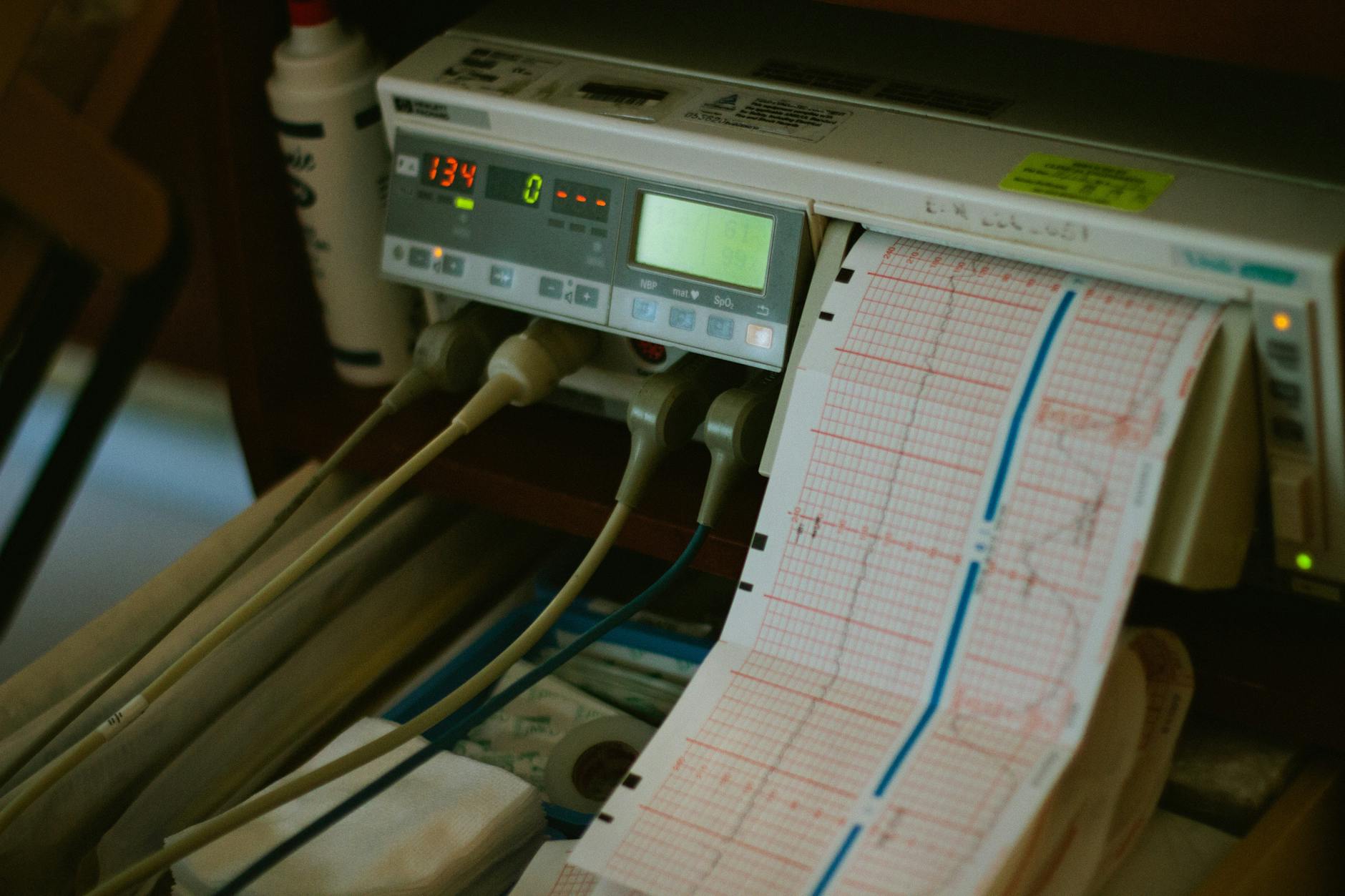
Once the stent is placed and blood flow is restored, patients enter a cardiac care unit equipped with technology that would be unrecognizable to a 1955 physician. Continuous telemetry tracks every heartbeat. Medications manage blood pressure, prevent clotting, and reduce the workload on the heart. Cardiac rehabilitation programs begin almost immediately, with patients walking within days rather than lying still for weeks.
The average hospital stay after a heart attack is now two to four days. Many patients return to work within weeks. Some resume athletic training. The contrast with the six-week bed-rest regimen of the mid-20th century is almost difficult to process.
A Lifetime's Worth of Progress
Here's what makes this story genuinely remarkable: almost all of it happened within a single human lifetime. Someone born in 1940 grew up in a world where a heart attack was likely a death sentence or a permanent disability. That same person, if they had a cardiac event today at age 84, would be treated with tools and techniques that simply did not exist when they were young.
American cardiovascular mortality has declined by more than 70 percent since the 1960s. That's not just a statistic — it's millions of people who came home from the hospital, watched their grandchildren grow up, and lived years they wouldn't have had in an earlier era.
Your grandfather's heart attack may have defined the rest of his life. Yours doesn't have to define yours. That's not luck. That's decades of relentless medical progress — and it's worth knowing about.