Wall Street Used to Be a Members-Only Club. Your Phone Just Opened the Door.
Wall Street Used to Be a Members-Only Club. Your Phone Just Opened the Door.
In 1995, if you wanted to invest in the stock market, you faced a gauntlet of obstacles that seem almost absurd by today's standards. You needed to find a stockbroker—not by scrolling through an app, but by asking around, reading newspaper ads, or walking into a physical office. Once you found one, you'd learn about minimum account balances that could range from $2,500 to $25,000 or higher, depending on the firm. Then came the fees: commissions of $50, $100, sometimes more per trade. Want to buy 10 shares of Microsoft? That single transaction might cost you $50, eating away at any gains before you even started.
The entire system was built around scarcity and gatekeeping. Ordinary Americans didn't invest in individual stocks—that was what wealthy people did with professionals. Most working families had their money in savings accounts earning minimal interest, or they relied entirely on employer-sponsored pensions if they were lucky enough to have one.
The Old World of Wealth
The investment world of the 1980s and early 1990s operated on a principle that seems almost feudal now: access required connections and capital. Brokerage firms occupied gleaming towers on Wall Street and in financial districts across major cities. The people who worked there—mostly men in suits—controlled information flow. If you wanted to know how your stocks were doing, you called your broker during business hours. If you wanted to make a trade, same deal. The professionals held all the cards: they decided what information you got, when you got it, and how much it would cost you.
Stock tickers moved at the pace of human operators. Real-time pricing? That was a luxury for institutional investors and the wealthy. Regular people got their stock quotes from the newspaper, which meant the information was already hours or days old by the time they read it.
Educating yourself about investing wasn't simply a matter of reading. There were no apps with built-in educational features. There was no YouTube. There were no Reddit communities where thousands of people discussed individual stocks in real time. If you wanted to learn, you bought expensive books or took courses that cost hundreds of dollars. Many people simply didn't bother. It felt too complicated, too expensive, too exclusive.
The Crack in the Foundation
The first real disruption came in 1997, when E-TRADE launched one of the first online trading platforms. Suddenly, you didn't need a phone call to a broker to execute a trade. You could do it yourself, from your home computer, at any time. But even this early version of digital investing still came with costs—commissions of $15 to $20 per trade were considered revolutionary savings at the time.
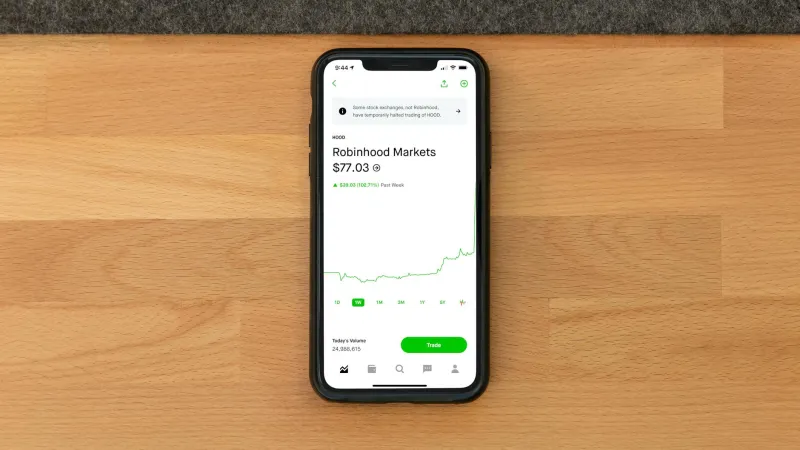
It wasn't until the late 2010s that the real transformation accelerated. Apps like Robinhood, launched in 2013, introduced commission-free trading. Fractional shares—the ability to buy a portion of an expensive stock instead of needing to afford the whole thing—made blue-chip companies accessible to people with limited capital. Robo-advisors like Betterment and Wealthfront automated the entire investment process, removing the need for human professionals altogether.
Today, the barriers that once seemed immovable have largely evaporated. A 16-year-old can open an investment account on their phone in minutes. A single share of a $3,000 stock can be purchased for $30. Educational content about investing is free and abundant. The playing field hasn't been leveled completely, but it has been tilted dramatically toward the ordinary person.
What Changed, and What Didn't
The shift from gatekeeping to democratization wasn't just about removing fees and minimum balances. It represented a fundamental change in how information flows and who gets to participate in wealth-building. The technology made it possible; the business model (venture capital funding, advertising-based revenue) made it profitable for companies to offer these services for free.
But the transformation also reveals something more complex about progress. Removing barriers to entry doesn't automatically mean better outcomes. More people investing doesn't mean more people making good investment decisions. In fact, the ease of trading has created new problems: overtrading, emotional decision-making, and a culture of quick speculation rather than long-term wealth building.
The old system was exclusionary and expensive, but it had friction. That friction—the cost of trading, the need to call a broker, the time required—sometimes protected people from their own worst impulses. Now, that protection is gone. Anyone can execute a trade instantly based on a hot tip from social media.
The Era Pulse Shift
What we're witnessing is a genuine transformation in how ordinary Americans can participate in wealth-building. The technology is real. The access is real. A person earning a modest salary can now build a diversified investment portfolio in ways that were literally impossible 30 years ago.
But the transformation also demands something new from individuals: self-education, discipline, and the ability to resist the constant noise of financial information and speculation. The barrier wasn't just about money anymore—it's about knowledge and temperament.
The phone in your pocket is genuinely more powerful than the tools Wall Street professionals had in 1995. The question is what you do with that power.