Kids Used to Disappear All Day and Nobody Called the Police
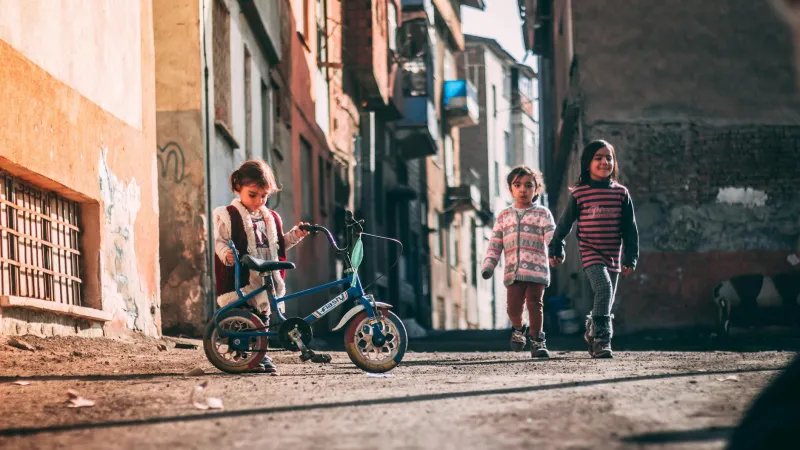
Summer mornings in 1985: Mom slides open the kitchen window and yells "Be home when the streetlights come on!" You grab your bike, maybe a friend or two, and vanish into the neighborhood for the next ten hours. No cell phone, no GPS tracker, no scheduled activities. Just you, your imagination, and an entire day to fill however you wanted.
Try that today and someone's calling Child Protective Services.
The Great Outdoor Childhood
For most of American history, childhood meant freedom. Real freedom. Kids as young as six or seven would leave the house after breakfast and not return until dinner, roaming territories that stretched for miles from home. They built forts in vacant lots, caught tadpoles in drainage ditches, and organized elaborate games of kick-the-can that could last for hours.
Parents didn't just tolerate this independence — they encouraged it. "Go outside and play" wasn't a suggestion; it was a gentle eviction. Kids were expected to entertain themselves, solve their own problems, and navigate social conflicts without adult intervention.
The neighborhood was your playground, and every kid knew the unwritten rules: don't go past the main road, stay out of Mr. Henderson's yard, and be home by dark. That was it. No permission slips, no liability waivers, no emergency contact forms.
When Danger Was Just Part of Growing Up
This freedom came with real risks that would horrify modern parents. Kids climbed trees without safety equipment, rode bikes without helmets, and played on playground equipment that was essentially medieval torture devices disguised as fun. The monkey bars were twelve feet high over concrete. Seesaws could launch you into orbit. Merry-go-rounds spun fast enough to generate their own gravitational field.
And somehow, most kids survived just fine. They learned to assess risk, make quick decisions, and deal with the consequences of their choices. A scraped knee was a badge of honor, not grounds for a lawsuit.
Children navigated complex social hierarchies without adult mediation. They formed clubs, created their own rules, and worked out disputes through negotiation, compromise, or the occasional playground scuffle. These weren't problems to be solved by grown-ups — they were life skills to be developed.
The Slow Erosion of Freedom
The change didn't happen overnight. It started in the 1990s with a series of high-profile child abduction cases that dominated the news cycle. Suddenly, every stranger was a potential threat, every unsupervised moment a dangerous gamble.
The statistics never supported this fear — children were actually safer than they'd ever been — but perception trumped reality. "Stranger danger" became a cultural obsession, even though the vast majority of crimes against children are committed by people they know.
Parents began scheduling every moment of their children's free time. Soccer practice replaced sandlot games. Organized playdates substituted for spontaneous neighborhood adventures. The phrase "helicopter parenting" entered the lexicon as adults hovered constantly over their offspring.
The Digital Tether
Technology accelerated this transformation. Cell phones meant parents could — and did — track their children's every movement. What started as a safety tool became a digital leash. Kids couldn't cross the street without texting updates.
Video games and streaming services provided endless indoor entertainment, making the outdoors seem less appealing. Why explore the woods behind your house when you could explore entire virtual worlds from your bedroom?
Social media added another layer of complexity. Childhood mistakes that once disappeared into memory now live forever online. The freedom to fail privately — a crucial part of growing up — became nearly impossible.
The Scheduled Life
Today's children live lives that would exhaust most adults. Their calendars are packed with activities: piano lessons, soccer practice, tutoring, art class, coding camp, volunteer work for college applications. Every moment is optimized for future success.
This isn't necessarily bad — these kids are developing skills and talents that previous generations never had access to. But something fundamental has been lost in the process. The ability to be bored. The skill of self-direction. The confidence that comes from navigating the world independently.
Modern parents invest enormous amounts of time, money, and energy into enriching their children's lives. Paradoxically, this investment may have impoverished childhood itself.
The Unintended Consequences
Mental health professionals have noticed troubling trends among young people who grew up in this hyper-supervised environment. Anxiety rates have skyrocketed. Many teenagers and young adults struggle with basic life skills like conflict resolution, risk assessment, and independent decision-making.
College counselors report students who can't handle minor setbacks without calling their parents. Employers complain about young workers who need constant guidance and validation. The very safety we thought we were providing may have made our children less capable of handling life's inevitable challenges.
The "failure to launch" phenomenon — adult children living at home well into their twenties and thirties — might be partially rooted in childhoods that never taught independence and self-reliance.
Fighting Back Against the Tide
Some parents are pushing back against this trend. The "Free Range Kids" movement, started by author Lenore Skenazy, advocates for giving children more independence and responsibility. Some communities are creating "adventure playgrounds" with loose parts and calculated risks.
A few schools have brought back recess and unstructured play time. Some summer camps are going "screen-free" and emphasizing outdoor exploration. These efforts represent a small but growing recognition that something valuable was lost when childhood became a managed experience.
What We've Gained and Lost
Today's children are undoubtedly safer in measurable ways. They're less likely to be injured, more likely to develop specialized talents, and have access to opportunities that previous generations couldn't imagine.
But they've also lost something intangible: the confidence that comes from surviving on your own, the creativity sparked by boredom, and the social skills developed through unsupervised interaction with peers.
The irony is that in trying to protect our children from every possible harm, we may have deprived them of the very experiences that build resilience, independence, and emotional strength.
Finding the Balance
The solution isn't to return to 1985 — the world has changed, and some of those changes are positive. But we might benefit from remembering that children are remarkably capable when given the chance to prove it.
Maybe it's time to let them disappear for a few hours again. Not into danger, but into the kind of unstructured adventure that teaches lessons no adult can provide. The streetlights are still there, after all, marking the boundary between freedom and home.