Remember When 'I'll Call You Later' Actually Meant Something?
Remember When 'I'll Call You Later' Actually Meant Something?
Somewhere around 1987, making plans with a friend required a level of commitment that would feel almost foreign today. You'd call their house. If they were home, great — you'd talk, you'd figure out logistics, you'd agree on a time and a place. If they weren't home, the phone would ring until you gave up. No message. No notification. No way for them to know you'd called at all.
You'd try again later. Or you'd just show up and hope for the best.
That was the landline era, and for anyone who grew up in it, there's something almost dreamlike about remembering how it worked. For anyone who didn't, it probably sounds like a mild form of chaos.
The Landline Ran the Social Calendar
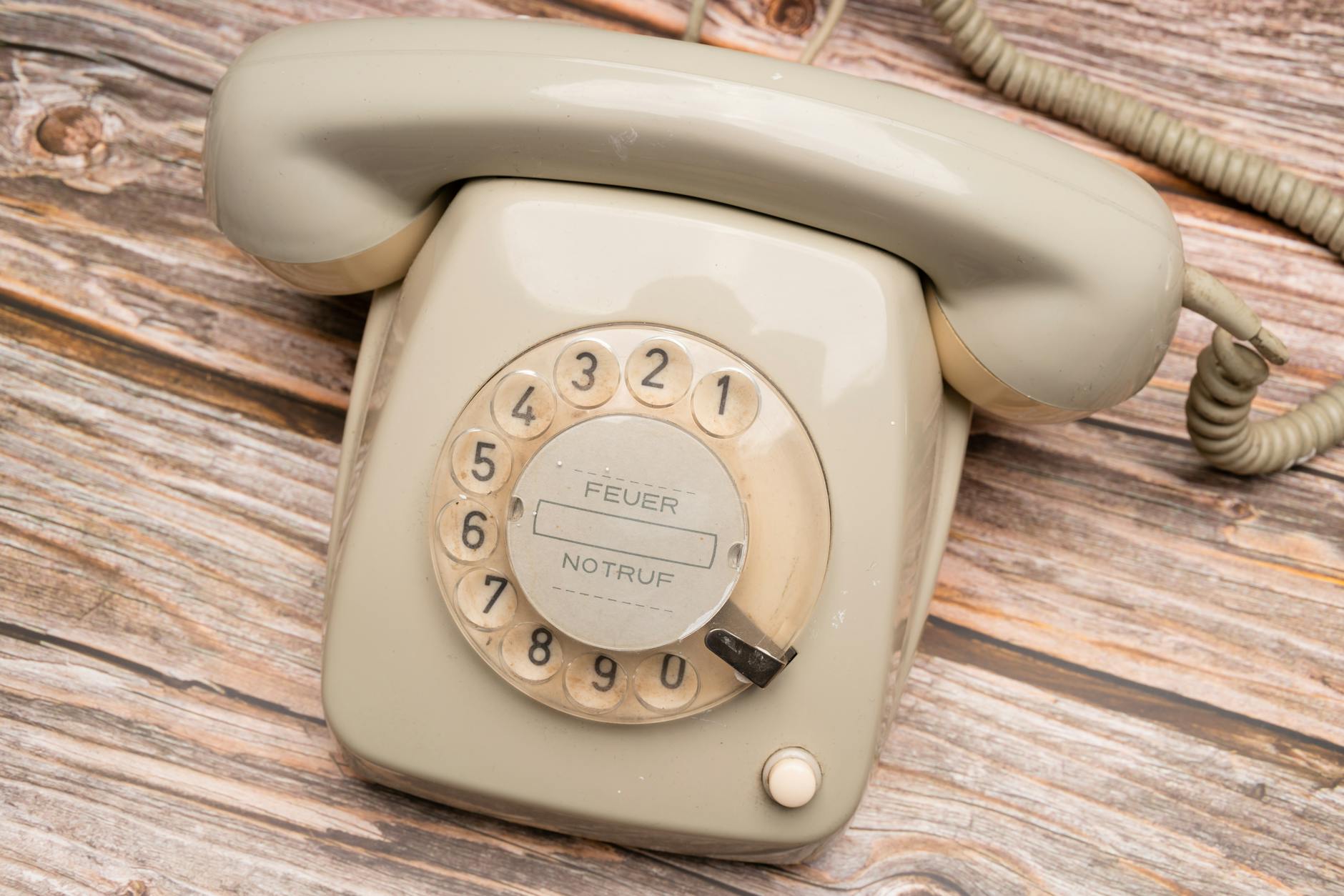
The household telephone was the command center of American social life from roughly the 1950s through the 1990s. It was usually mounted on the kitchen wall or sitting on a table in the hallway — a fixed object in a fixed location, which meant that communication itself was fixed. You couldn't take it with you. You couldn't check it while you were out. You were either reachable or you weren't, and the world adjusted accordingly.
Families shared a single line. Teenagers learned the particular frustration of needing privacy on a call while a parent moved conspicuously nearby. In households with multiple kids, the phone was a contested resource. The concept of "the phone is busy" — meaning someone in your house was already using it, making you entirely unreachable to the outside world — is one that younger generations have essentially no reference point for.
Then there was the answering machine, which arrived in American homes through the late 1970s and 1980s and felt genuinely futuristic at the time. Suddenly, a missed call could leave a trace. You could come home, see the blinking red light, and press play to find out who had tried to reach you. It sounds modest. At the time, it was a small revolution.
Long Distance Was a Financial Decision
One detail that tends to genuinely surprise younger people: calling someone in another state used to cost real money. Not a flat monthly fee, not an included-minutes plan — actual per-minute charges that showed up on your phone bill and caused arguments at the kitchen table.
Long-distance rates in the 1970s and early 80s could run anywhere from 25 cents to over a dollar per minute, depending on the time of day, the carrier, and how far the call was traveling. Calling a college friend three states away for an hour was a financial event. Families with relatives across the country rationed those calls carefully, saving them for birthdays, holidays, and emergencies.
This shaped behavior in ways that are hard to fully appreciate now. Letters were still a primary mode of keeping in touch with distant people — not as a charming affectation, but as a practical necessity. The arrival of a handwritten envelope carried weight. People saved them.
AT&T's famous ad campaign urging Americans to "reach out and touch someone" ran from 1979 onward, and it worked because calling someone far away felt like a meaningful act. It was.
Making Plans Required Actual Planning
Without the ability to send a quick text at 6:45 p.m. saying "running 20 minutes late," showing up on time carried a different kind of social weight. Plans made in advance were commitments. If you said you'd meet someone at the diner at noon on Saturday, you showed up at noon on Saturday, because there was no practical way to update them if you didn't.
This enforced a certain kind of reliability — and also a certain kind of anxiety. Standing at a meeting spot waiting for someone who was late, with no way to know whether they were five minutes away or had forgotten entirely, was a completely ordinary experience. You waited. You checked your watch. You made a judgment call about how long was reasonable before leaving.
Making plans also required more lead time. Spontaneity was possible, but it required catching someone at home. "Want to do something tonight?" as an 8 p.m. impulse only worked if you could reach someone at 8 p.m., which depended on them being home, the line not being busy, and the call actually going through.
Then the World Went Mobile
The shift from landline to mobile didn't happen all at once. Car phones appeared in the 1980s as a luxury item — large, expensive, and mostly the domain of business executives. By the mid-1990s, mobile phones were becoming consumer products, though they were still relatively large, call-only devices with limited battery life.
The real rupture came in the 2000s, when texting became habitual and smartphones began appearing. The iPhone launched in 2007 and within a few years had fundamentally rewritten the social contract around communication. Suddenly, everyone was reachable, all the time, through multiple channels simultaneously. A call, a text, an email, a direct message on any of several platforms — the options multiplied, and with them came an unspoken expectation: you should respond.
The concept of being "unreachable" became almost voluntary. Choosing not to check your phone felt like a decision, not a default state.
What We Traded Without Noticing
The convenience is undeniable. No one who regularly needs to coordinate with family, friends, or colleagues would seriously choose to go back to the landline world. The ability to send a quick message, share a location, reschedule in real time — these things genuinely make life easier.
But something quieter shifted alongside the convenience. The landline era created a kind of natural spacing in social life. You weren't expected to be available constantly. A missed call disappeared without judgment. Silence between friends wasn't a signal — it was just life happening.
There's a reason so many people describe a strange relief when their phone dies on a camping trip, or when they spend a day without checking messages. That feeling is, in part, the memory of what it used to feel like to be simply and unremarkably unreachable.
In 1985, calling a friend and getting no answer just meant they weren't home. You tried again tomorrow. The world didn't end. It waited — and so did you.