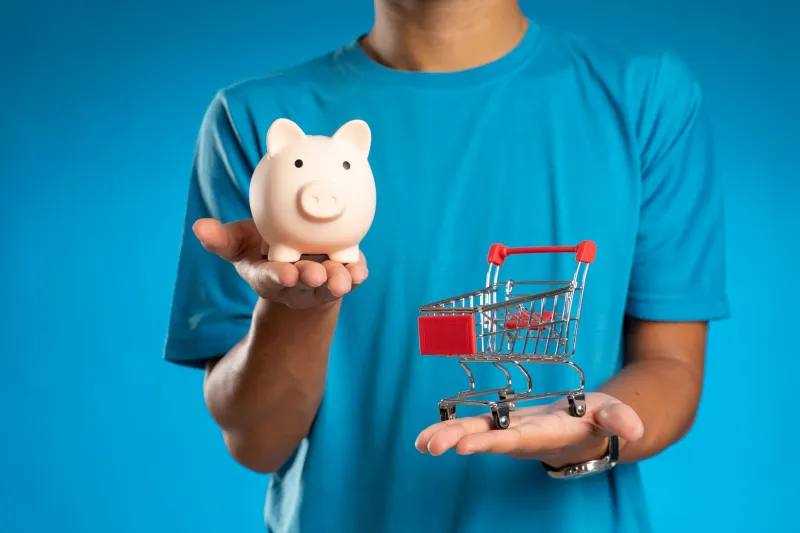
Saving Up Used to Be the Point. Now the Point Is Just Not Falling Behind.
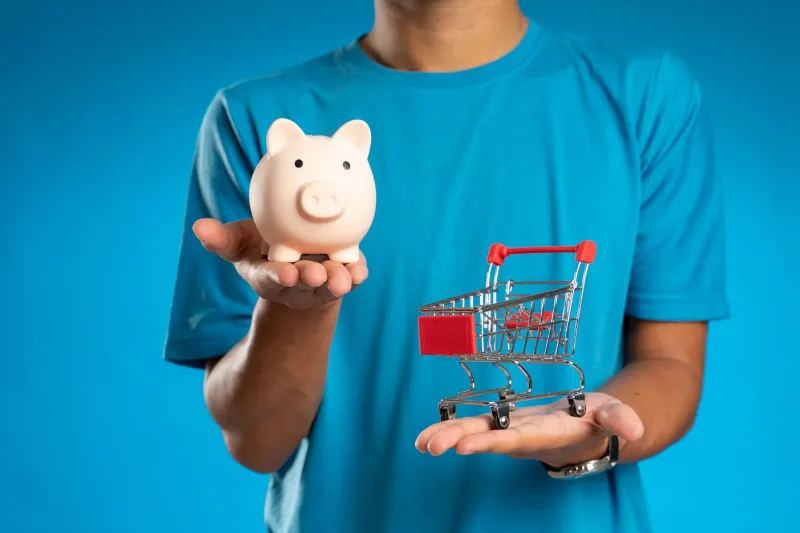
There's a scene that played out in millions of American households for most of the twentieth century. Someone wanted something — a new refrigerator, a television set, maybe a used car — and instead of pulling out a card or tapping a phone, they opened a drawer and started counting. Then they waited. Sometimes months. Sometimes longer. The thing they wanted sat in a store window while they saved toward it, and when the day finally came to bring it home, it felt earned in a way that's genuinely hard to explain to someone who grew up with one-click checkout.
That world didn't just change gradually. It flipped.
The Layaway Era: Patience as Financial Strategy
Before credit cards became standard household items, American consumers had a different relationship with desire. You wanted something, you planned for it. Department stores offered layaway — a system where you'd put a small deposit on an item, the store would hold it, and you'd pay it off in installments before ever taking it home. There was no debt. No interest. No algorithm calculating your creditworthiness. Just a receipt, a patient clerk, and a timeline.
Savings accounts were the other engine of this culture. Banks paid meaningful interest — sometimes 5 percent or more on basic savings accounts — which meant that waiting actually made financial sense. Your money grew while you held it. The discipline of saving wasn't just a virtue; it was literally profitable.
For bigger purchases like homes or cars, the expectation was a substantial down payment, often 20 percent or more. Families saved toward those numbers for years. The goal was to minimize what you owed, not to maximize what you could immediately access.
This wasn't a perfect system. It excluded people who couldn't save fast enough, and it left plenty of Americans locked out of opportunities that credit could have opened. But it did create a specific psychological relationship with money — one built around anticipation, planning, and the satisfaction of delayed gratification.
How Everything Became Financeable
The shift didn't happen overnight, but looking back, it feels like it did.
Credit cards expanded through the 1970s and 1980s, making impulse purchases frictionless. Auto financing became standard. Mortgage products multiplied. By the early 2000s, it was entirely normal to finance furniture, electronics, and even dental work. The cultural message was subtle but consistent: waiting is optional.
Then came the subscription economy. Instead of buying software, you subscribed to it. Instead of owning music, you streamed it monthly. Instead of purchasing a razor once, a new one arrived at your door on a schedule. Ownership itself started to feel slightly old-fashioned.
And then came Buy Now, Pay Later — BNPL — which took the financing model and stripped away even the friction of a credit card application. Apps like Afterpay, Klarna, and Affirm let consumers split purchases into four interest-free installments at checkout, often with a single tap. By 2023, an estimated 60 percent of American adults had used a BNPL service at least once. The average transaction? Around $130. Not a car. Not a refrigerator. A jacket. A pair of sneakers. A skincare set.
What Financing Everything Actually Costs
On paper, BNPL sounds harmless — and for disciplined users, it sometimes is. But the psychology behind it is worth examining closely.
When a $200 purchase becomes four payments of $50, it doesn't feel like $200 anymore. Research in behavioral economics consistently shows that breaking payments into smaller chunks reduces the perceived pain of spending. Retailers know this. That's precisely why the option is offered at checkout, not buried in a menu.
The result is that many Americans are now managing a quiet tangle of small financial commitments — a streaming service here, a BNPL installment there, a gym membership, a subscription box, a software plan — none of which feel significant on their own, but which collectively consume a meaningful portion of monthly income. A 2023 survey found that Americans underestimate their monthly subscription spending by an average of $133.
Meanwhile, personal savings rates tell an uncomfortable story. In the 1970s and 1980s, Americans saved roughly 10 to 15 percent of their disposable income. By the mid-2020s, that figure had dropped below 5 percent in several consecutive quarters. The tools for spending got faster. The habit of saving got slower.
The Feeling of Ownership Has Changed Too
There's something else worth naming, something less quantifiable than a savings rate.
When previous generations saved for something and finally bought it, they owned it completely — no ongoing payments, no subscription renewal, no fear of a service being discontinued. The thing was theirs. That sense of ownership carried a kind of security that's harder to replicate when you're technically licensing software, leasing a car, and financing a couch simultaneously.
This isn't nostalgia for its own sake. The modern system genuinely offers things the old one didn't — flexibility, access, the ability to spread costs across time in ways that can actually help households manage cash flow. For people living paycheck to paycheck, financing can be a lifeline, not a luxury.
But there's a real question worth sitting with: when everything is available immediately and nothing ever feels fully paid for, what happens to the experience of saving toward something and finally getting it? Does that satisfaction still exist anywhere in modern consumer life?
The Bigger Picture
The shift from saving to financing isn't just a financial trend. It's a reflection of a culture that increasingly optimizes for now over later, for access over ownership, for convenience over the slower reward of patience.
Previous generations weren't more virtuous. They just operated inside a system that made waiting the default. Today's system makes spending the default — and nudges you toward it at every checkout screen, every app notification, every "split this into four easy payments" prompt.
Understanding that nudge is the first step to deciding whether you want to follow it.