Your Smartwatch Knows You're Sick Before You Do
When Feeling Sick Meant Playing the Waiting Game
In 1985, if your heart started beating irregularly, you probably wouldn't know it. Unless the episodes were severe enough to knock you off your feet, that fluttering sensation might go unnoticed for months—or years. Even if you did feel something was wrong, the path to answers stretched like a medical obstacle course.
First, you'd wait two weeks for an appointment with your family doctor. After describing your symptoms, they'd refer you to a cardiologist—another month-long wait. The cardiologist would order an EKG, which you'd take on a Tuesday morning when you felt perfectly fine. "Everything looks normal," they'd say, because irregular heartbeats are sneaky that way.
Next came the Holter monitor—a bulky device you'd wear for 24 hours, hoping your heart would misbehave on command. More often than not, it wouldn't cooperate. Blood work meant another appointment, another week of waiting for results, and another follow-up visit to discuss what the numbers meant.
By the time you had any real answers, seasons had changed. That nagging worry about your health had become a constant companion, and the medical bills were piling up faster than the insights.
The Revolution Hiding on Your Wrist
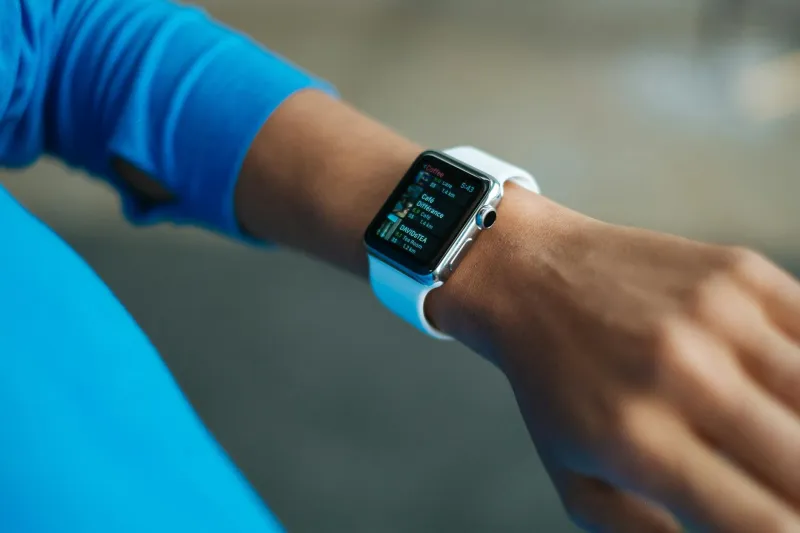
Fast-forward to today, and your Apple Watch just pinged you with a notification: "Irregular heart rhythm detected." It's 2:47 PM on a Thursday, you're sitting in a coffee shop, and you feel completely fine. But your watch has been quietly monitoring your heart rate for weeks, analyzing patterns that would have required expensive hospital equipment just two decades ago.
This isn't science fiction—it's Tuesday afternoon in America. Wearable devices now detect atrial fibrillation with accuracy rates that rival medical-grade equipment. They catch sleep apnea by monitoring blood oxygen levels throughout the night. Some can even spot early signs of illness by tracking subtle changes in heart rate variability, skin temperature, and activity patterns.
The same technology that used to fill entire hospital rooms now fits comfortably around your wrist and costs less than a single specialist consultation from the 1990s.
From Guesswork to Instant Answers
The transformation goes far beyond wearable tech. At-home diagnostic tests have turned your bathroom into a mini-laboratory. That pregnancy test you can grab at any pharmacy? In 1960, confirming pregnancy required a doctor's appointment and a urine sample that got shipped to a lab, where technicians would inject it into rabbits or frogs. Results took days, and the process was about as pleasant as it sounds.
Today, you can test for everything from strep throat to COVID-19 in your kitchen. Blood glucose monitoring, once requiring painful finger pricks and lab visits, now happens continuously through tiny sensors that transmit data to your phone. Some people know their blood sugar levels better than their bank account balance.
Even more dramatic is the speed of lab results. What used to take two weeks now happens in hours. AI systems can analyze medical imaging faster than radiologists, spotting patterns in CT scans and MRIs that human eyes might miss. Your doctor might know you have pneumonia before you finish describing your symptoms.
When Patients Become Their Own Diagnosticians
This acceleration has created an interesting reversal: patients often arrive at doctors' offices with more data about their bodies than physicians had access to just a generation ago. Your fitness tracker has been monitoring your resting heart rate for months. Your sleep app knows exactly how much REM sleep you got last night. Your period-tracking app can predict your cycle more accurately than many gynecologists could in the 1980s.
Some people now catch their own medical conditions before experiencing symptoms. Heart rate variability data reveals stress patterns. Sleep tracking identifies breathing irregularities. Temperature sensors detect the subtle fever that precedes illness by days.
This shift has turned the traditional diagnostic timeline upside down. Instead of waiting for symptoms to become severe enough to seek help, we're catching problems in their earliest stages—sometimes before they become problems at all.
The Double-Edged Sword of Instant Information
Of course, having a diagnostic laboratory on your wrist comes with complications our grandparents never faced. Health anxiety has found new fuel in constant biometric monitoring. Every irregular heartbeat triggers a notification. Every dip in blood oxygen sends people to Google, where WebMD turns a stuffy nose into a life-threatening condition.
The flood of health data can overwhelm both patients and doctors. Primary care physicians now spend appointments explaining why a slightly elevated heart rate reading at 3 AM probably isn't cause for emergency room visits.
What It All Means
Thirty years ago, getting a medical diagnosis required patience, persistence, and often a bit of luck. Today, your watch might diagnose atrial fibrillation during your morning commute, your phone can analyze a suspicious mole through its camera, and a home test kit can detect dozens of conditions with a single drop of blood.
We've compressed months of medical detective work into moments of digital analysis. The question isn't whether technology can diagnose us faster than ever before—it's whether we're ready for a world where our devices know we're sick before we do.
For better or worse, the era of wondering what's wrong with your body is rapidly becoming the era of having too much information about what might be wrong with it. The waiting game has ended, but the real game is just beginning.