One Store Used to Know Your Name. Then Everything Changed.
One Store Used to Know Your Name. Then Everything Changed.
Somewhere in mid-century America, a Tuesday afternoon errand run looked nothing like it does today. You stopped at the butcher first — he already knew you wanted the chuck roast trimmed a certain way. Then the bakery, where the same woman had been pulling rye loaves since before your oldest kid was born. The fishmonger on the corner. The dairy supplier two blocks over. It wasn't efficient. It was just life.
Then the supermarket arrived, and it swallowed all of them whole.
A Neighborhood Built Around What You Needed
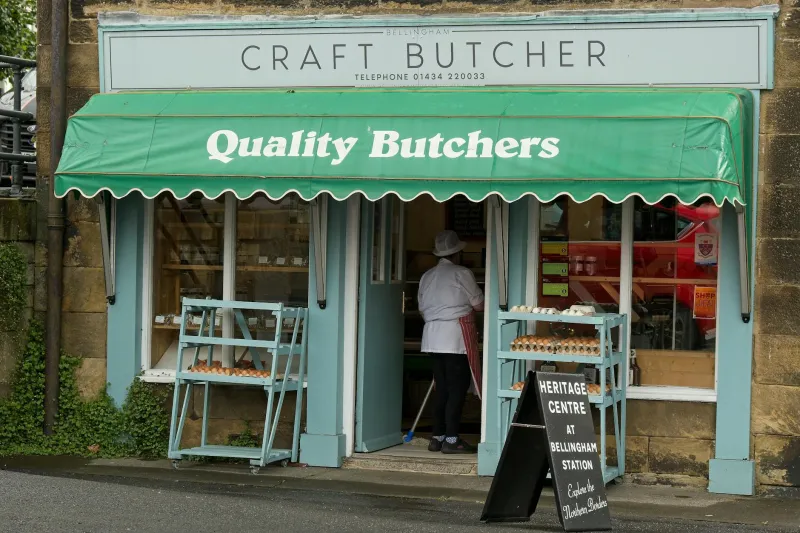
Through the 1930s and well into the 1950s, the American shopping experience was genuinely fragmented — and not in a bad way. Specialty retailers weren't a novelty. They were the system. Independent butchers, greengrocers, fishmongers, bakers, and dairy delivery services each occupied their own slice of the local economy, and each one was typically run by someone who had done that single thing for decades.
The relationship between shopkeeper and customer was transactional on the surface but deeply personal underneath. Your butcher remembered that your mother-in-law didn't eat pork. Your baker saved the end loaves for you because you mentioned once that you liked them. These weren't loyalty programs or algorithmic recommendations. They were just people paying attention.
Small business ownership in these trades was also a genuine path to a stable middle-class life. A skilled butcher or baker could support a family, employ a few neighbors, and anchor a block. The store was often on the ground floor of the building where the owner lived. The line between commerce and community was barely a line at all.
The Supermarket Didn't Just Change Where You Shopped
The modern supermarket didn't appear overnight. Piggly Wiggly launched the self-service grocery model back in 1916, and chains like A&P had been expanding aggressively for decades. But the real consolidation happened in the postwar boom, when suburban development, widespread car ownership, and refrigeration technology made the large-format, everything-under-one-roof store not just possible but inevitable.
By the 1960s, the formula was locked in. Why make five stops when one store stocked everything? For busy families, the math was obvious. Supermarkets were faster, often cheaper, and undeniably convenient. The specialty shops that had anchored urban and small-town neighborhoods for generations couldn't compete on price or parking. They closed by the thousands.
What left with them was harder to quantify. The butcher who knew your order. The baker who told you when the good stuff came out of the oven. The informal social infrastructure of a neighborhood organized around small, expert-run businesses. None of that fits in a shopping cart.
Food quality expectations shifted too. When your meat came pre-wrapped and your bread arrived in a plastic sleeve, the baseline for what "normal" looked and tasted like quietly dropped. Not dramatically — just enough that a generation grew up not knowing what they were missing.
The Numbers Behind the Shift
The scale of what happened is worth sitting with. In 1950, there were roughly 500,000 independent grocery and specialty food stores operating across the United States. By 2000, that number had collapsed to fewer than 150,000, even as the population nearly doubled. Today, just four supermarket chains — Walmart, Kroger, Costco, and Albertsons — account for more than 40 percent of all grocery spending in the country.
The average supermarket stocks somewhere between 30,000 and 50,000 individual products. The average American buys around 300 of them regularly. The abundance is real. But so is the anonymity.
The Quiet Reversal Nobody Planned
Here's what's interesting: something is shifting again. Farmers markets in the US grew from roughly 1,750 in 1994 to over 8,000 by the early 2020s. Specialty butcher shops have been quietly staging a comeback in cities and suburbs alike, often charging premium prices to customers who are specifically willing to pay them. Artisan bakeries. Local fishmongers. Cheese shops. None of this is nostalgia for its own sake — it's people voting with their wallets for something the supermarket never quite offered.
Whole Foods made "specialty grocer" a viable mainstream category again. Then a wave of independent operators realized there was an audience for the thing that came before even that — the single-focus expert who does one thing exceptionally well.
Whether this represents a genuine cultural realignment or just a premium-tier trend for people with disposable income is a fair question. Farmers markets are wonderful, but they're not accessible to everyone in terms of time, location, or price. The supermarket democratized food access in real ways that shouldn't be glossed over.
What We're Actually Circling Back To
The most honest read on where we are is probably this: Americans gave up something genuinely valuable when the specialty store era ended, and the supermarket gave us something genuinely valuable in return. Neither trade was purely a loss or a gain.
But the fact that craft butchers and local bakeries are finding eager customers again — that people are willing to make an extra stop, pay more, and wait in line — suggests that the old model had something in it that a 50,000-item megastore still can't fully replicate.
Maybe it was the expertise. Maybe it was the accountability — someone who staked their livelihood on the quality of one thing. Or maybe it was just the simple experience of walking into a place where somebody already knew what you wanted.
That turns out to be worth more than we realized when we stopped doing it.