The Symptoms You Described Used to Be All a Doctor Had to Go On
The Symptoms You Described Used to Be All a Doctor Had to Go On
Imagine sitting across from a doctor in 1950. You've been feeling tired. Maybe there's a dull ache somewhere. Your appetite has been off.
The doctor listens carefully. They ask questions. They press on your abdomen, look at your eyes, check your reflexes. Then they make their best judgment based on experience, observation, and what you've told them — because that, for most of medical history, was essentially all they had.
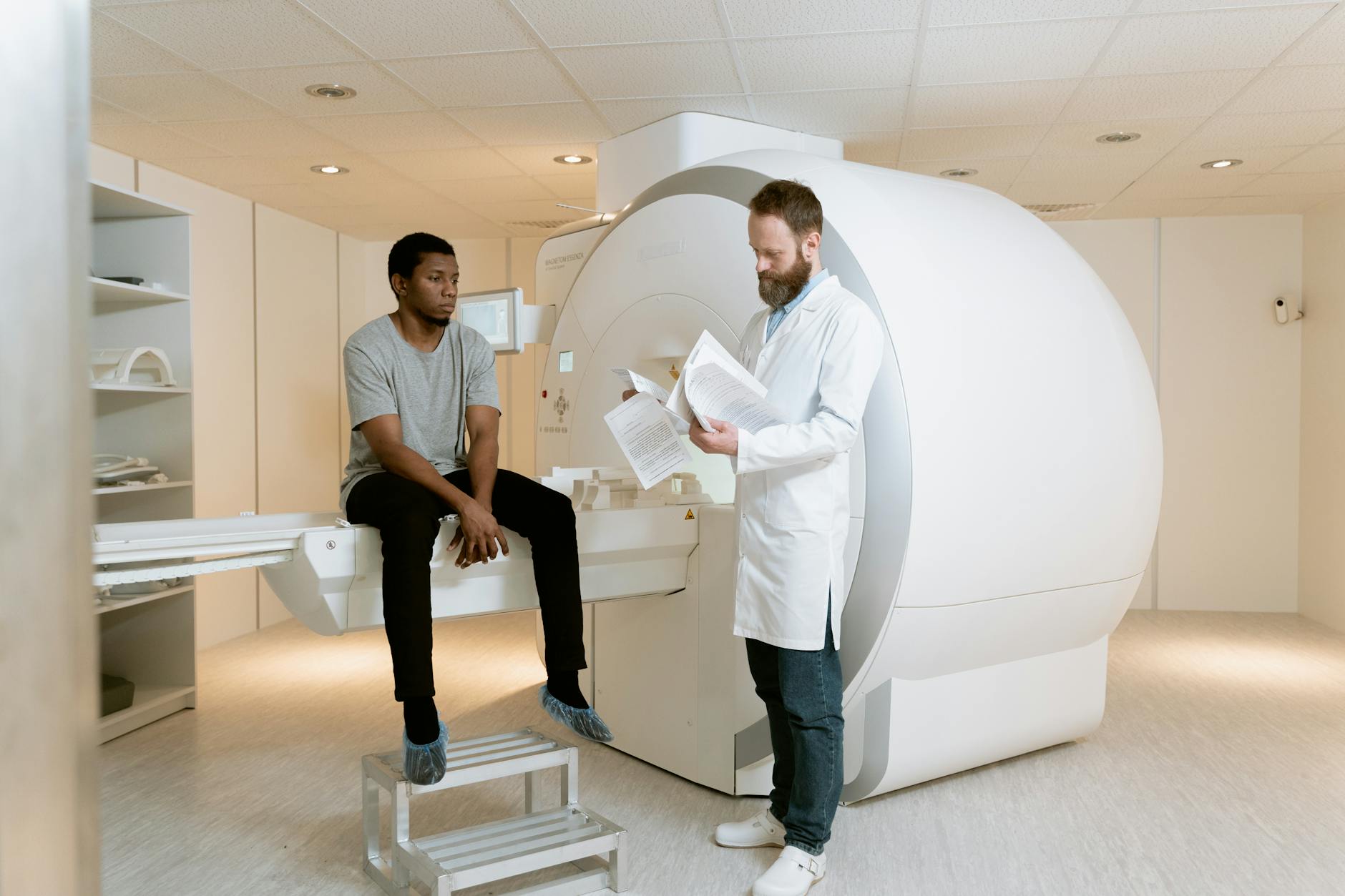
Now imagine the same appointment today. Before the doctor even enters the room, a machine has already measured your blood oxygen, your resting heart rate, and flagged an irregular rhythm your smartwatch detected three weeks ago. A blood panel ordered in the morning comes back the same afternoon. An AI algorithm has already cross-referenced your imaging results against millions of similar scans.
The gap between those two appointments is one of the most consequential shifts in American healthcare — and most people don't fully appreciate how recent, or how dramatic, it really is.
When Medicine Was Mostly Guesswork
This isn't a criticism of earlier physicians. The doctors of the 19th and early 20th centuries were often brilliant, and many worked with extraordinary dedication under severe limitations. But those limitations were real.
Without reliable laboratory testing, without imaging technology, without the ability to look inside a living body, diagnosis was an art built on inference. A doctor might suspect tuberculosis from the sound of a cough and the pallor of a patient's skin. Heart disease might only become apparent after a major event. Cancer was frequently discovered at a stage when treatment options were already limited — not because physicians were careless, but because there was simply no way to see it earlier.
Diabetes offers a striking example. For centuries, physicians diagnosed it by tasting a patient's urine for sweetness — a practice that sounds alarming today but was, at the time, one of the few reliable indicators available. The condition often wasn't caught until a patient was already seriously ill. The concept of catching elevated blood sugar before symptoms appeared was essentially science fiction.
The Diagnostic Revolution, Piece by Piece
The transformation of medical diagnosis didn't happen overnight — it unfolded in waves across the 20th century and has accelerated sharply in the last two decades.
X-ray technology arrived in the early 1900s and gave physicians their first real window into the body without surgery. Blood testing expanded through the mid-century, allowing doctors to detect infections, organ dysfunction, and metabolic disorders with increasing precision. The CT scan, introduced in the 1970s, was genuinely revolutionary — suddenly, physicians could see tumors, clots, and structural abnormalities that would previously have remained hidden until they caused catastrophic symptoms.
MRI technology followed, offering even more detailed soft-tissue imaging without radiation. Genetic testing emerged in the latter half of the century and opened an entirely new dimension of diagnosis — the ability to identify not just what was wrong, but what a person was statistically likely to develop years or decades in the future.
Each of these advances moved the moment of detection earlier and earlier in the progression of disease. And in medicine, earlier almost always means better.
What Earlier Detection Actually Means for Survival
The statistics here are stark enough to be worth sitting with.
For breast cancer, the five-year survival rate for a localized tumor — one caught before it has spread — is approximately 99 percent. For cancer that has metastasized to distant organs, that figure drops to around 28 percent. The disease hasn't changed. The difference is almost entirely about when it's found.
Colon cancer tells a similar story. When caught at its earliest stage, survival rates exceed 90 percent. Found at stage four, the odds shift dramatically. Colonoscopy screening, now routine for adults over 45, catches polyps before they become cancerous at all — effectively preventing the disease rather than just treating it.
For heart disease, the ability to measure cholesterol, blood pressure, and inflammatory markers years before a cardiac event has enabled preventive interventions that have genuinely reshaped mortality statistics. Death rates from cardiovascular disease in the United States have fallen significantly since the 1970s — not primarily because treatment improved, though it did, but because risk was identified and addressed earlier.
The Wearable Frontier
The most recent chapter in this story might be the most surprising: the diagnostic tools are now on our wrists.
Modern smartwatches can detect atrial fibrillation — an irregular heart rhythm that significantly raises stroke risk — with enough accuracy that the FDA has cleared several devices for this purpose. Continuous glucose monitors, once available only to people already diagnosed with diabetes, are increasingly being used to track metabolic health in people with no diagnosis at all. Blood oxygen sensors flagged early warning signs of respiratory distress during the COVID-19 pandemic, prompting people to seek care before their condition became critical.
We are, for the first time in history, generating real-time health data outside of clinical settings. The implications of that are still unfolding.
Seeing What Was Always There
It's tempting to frame the history of medical diagnosis as a story of discovery — of finding new diseases and new problems. But that's not quite right.
Diabetes, cancer, heart disease — these conditions existed long before we could detect them reliably. People died of them, often without knowing what had taken them. What changed isn't the diseases themselves. What changed is our ability to see them.
Every blood panel, every scan, every irregular rhythm flagged by a wearable sensor is medicine doing what it has always tried to do — just doing it earlier, more accurately, and with far better outcomes on the other side.
The doctor in 1950 was doing their best with what they had. What they had just wasn't very much.