When Buying Groceries Meant Knowing Everyone Who Sold Them
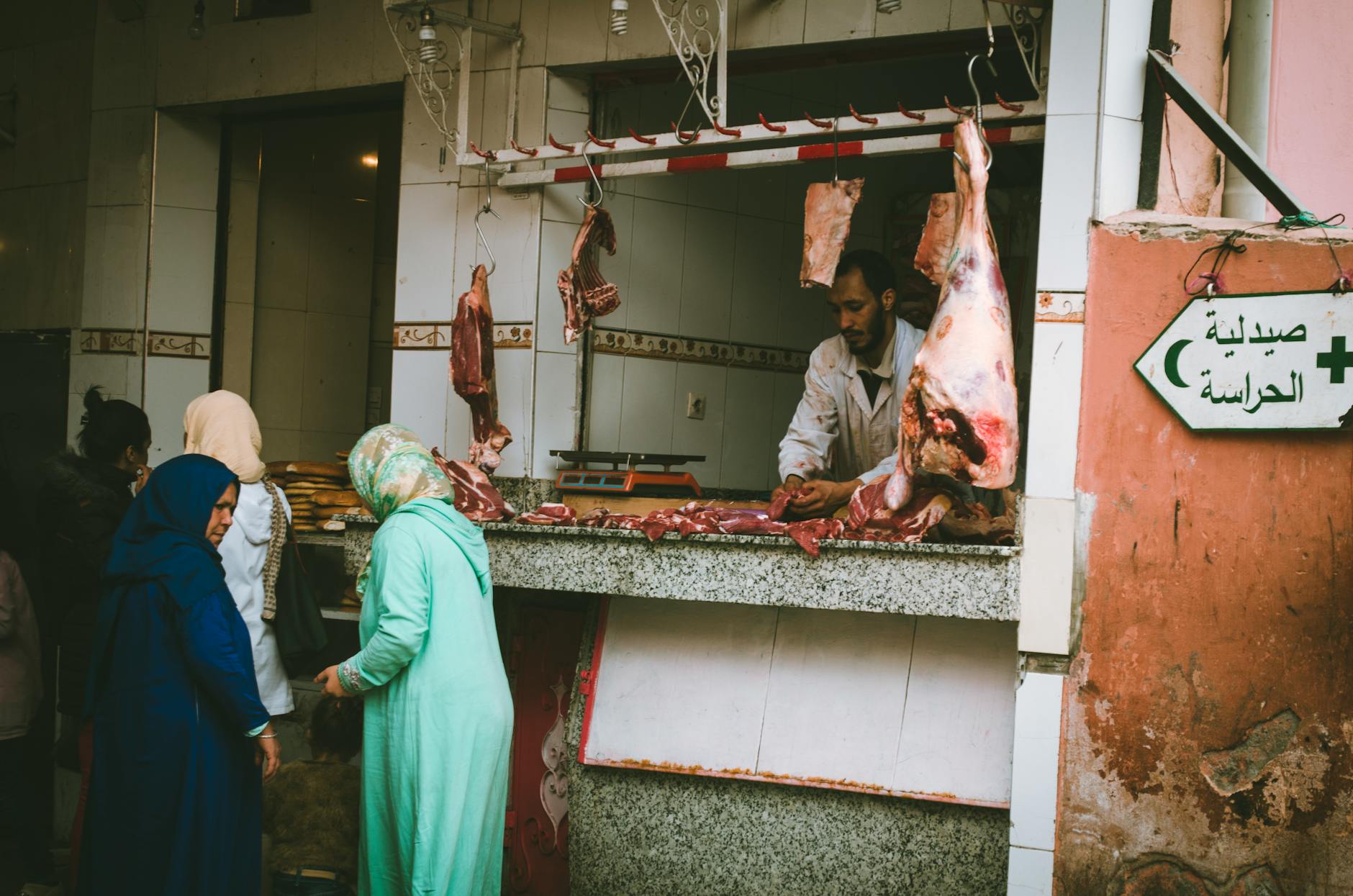
When Buying Groceries Meant Knowing Everyone Who Sold Them
Somewhere between the end of World War II and the rise of fluorescent lighting, America made a deal. We handed over the butcher, the baker, the fishmonger, and the greengrocer — and in exchange, we got everything under one roof, open seven days a week, with a parking lot the size of a football field.
It seemed like a fair trade at the time. Looking back, it's worth asking what exactly we gave up.
The Way It Used to Work
For most of American history, feeding a family meant building relationships with a handful of specialists. The butcher knew your name, knew how you liked your pork chops cut, and would tell you honestly when the beef wasn't worth buying that week. The greengrocer stocked what was actually in season, because that's all there was. The fishmonger could tell you where the catch came from and how long ago it arrived.
These weren't quaint traditions — they were functional systems. Each shop owner had deep knowledge of a single category of food. They competed on quality and reputation within their specialty. If the bread was stale or the fish smelled off, word spread fast in a neighborhood, and that owner felt it immediately in their sales.
Shopping was slower, no question. You might visit three or four different stops on a Saturday morning. But those stops were woven into the social fabric of a neighborhood. You ran into your neighbors. You chatted while you waited. The market wasn't just a transaction — it was a reason to leave the house and talk to people.
How the Supermarket Changed Everything
The first true supermarkets appeared in the 1930s, but it was the postwar suburban boom that turned them into the dominant model of American food retail. By the 1960s and 70s, the one-stop grocery store wasn't just convenient — it was the new normal.
The economics made sense. Buying in massive bulk, centralizing operations, and cutting out the middlemen allowed supermarkets to offer lower prices than any individual specialty shop could match. For working families stretching a budget, that mattered enormously.
But consolidation came with trade-offs that weren't immediately obvious.
Specialty knowledge largely disappeared from the sales floor. The person stocking the meat counter wasn't a trained butcher with years of experience — they were an employee following a planogram. The produce section stopped reflecting what was in season locally and started reflecting what could survive a cross-country truck journey. Variety expanded in some ways and narrowed dramatically in others: you could now buy 14 kinds of breakfast cereal but only two or three varieties of apple, selected more for shelf life than flavor.
What It Did to the American Diet
This shift didn't just change where Americans shopped — it changed what they ate.
When food came from specialists, it tended to be fresher and less processed. The butcher sold meat. The baker sold bread made from actual ingredients. The greengrocer sold vegetables that hadn't been engineered for durability.
The supermarket model, however, created enormous shelf space that needed to be filled — and shelf-stable, heavily processed products filled it beautifully. Packaged foods with long expiration dates were ideal for this retail format. Over the following decades, the American diet shifted significantly toward processed and ultra-processed foods, a trend that public health researchers have spent decades untangling from rising rates of obesity, diabetes, and heart disease.
This isn't entirely the supermarket's fault. But the architecture of modern grocery retail — the way stores are laid out, what gets promoted, what gets shelf space — has consistently favored convenience over nutrition.
The Local Economy Took a Hit Too
The neighborhood specialty shop was more than a place to buy food. It was a small business, usually family-owned, employing local people and keeping money circulating within the community. When the supermarket arrived, many of those shops couldn't compete on price and eventually closed.
By the late 20th century, entire categories of retail — independent butchers, fishmongers, bakeries — had nearly vanished from most American neighborhoods. The economic activity didn't disappear; it just consolidated into fewer, larger businesses, often owned by national or multinational corporations.
Small towns felt this acutely. When a regional grocery chain opened on the edge of town, the downtown shops that had anchored the community for generations often didn't survive the decade.
Something Interesting Is Happening Now
Here's the twist: in the last ten to fifteen years, some of what was lost has started coming back — just in different forms.
Farmers markets have surged in popularity across the country. Specialty butcher shops have made a genuine comeback in urban areas, often with wait lists for their house-made charcuterie. Community-supported agriculture programs connect consumers directly with local farms in a way that would have felt familiar to a shopper from 1940.
The difference is that today, these options exist alongside the supermarket rather than instead of it. They tend to be more expensive, which means they're more accessible to higher-income households — a dynamic the original neighborhood shop system didn't have in quite the same way.
The Convenience We Chose
None of this is an argument for going back. The modern supermarket feeds millions of people efficiently, affordably, and reliably. That's not nothing — it's actually remarkable.
But it's worth pausing to recognize what the shift cost. The unhurried Saturday morning walk between shops. The vendor who knew your preferences without being asked. The bread that was baked that morning. The fish that came off a local boat.
We optimized for speed and price, and we got both. We just didn't fully account for everything else that was sitting on the scale.