When Buying a House Required a Small Army of Professionals
The Days When Your Mortgage Application Was a Small Novel
Picture this: It's 1965, and you've decided to buy your first house. You can't just open an app or visit a website. Instead, you'll need to take time off work—multiple times—to sit across from a stern-faced loan officer who will scrutinize your financial life with the intensity of a detective solving a murder case.
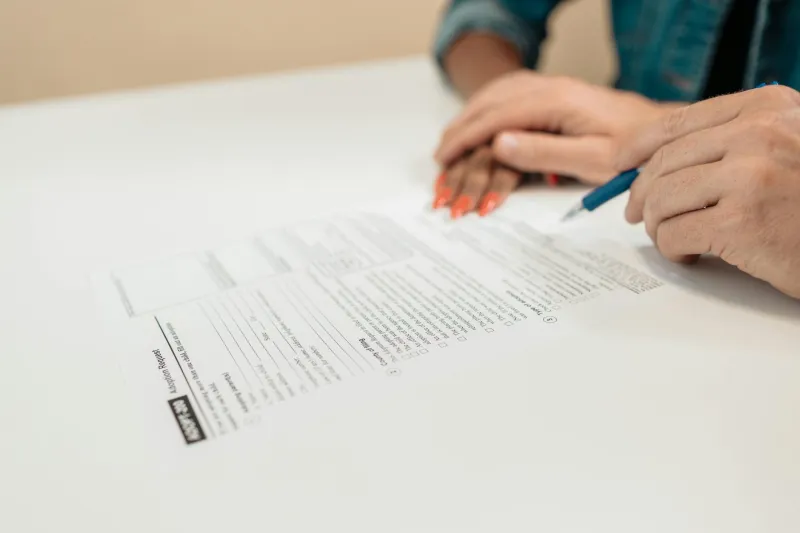
The mortgage application itself was a beast. We're talking about a document thicker than most magazines, requiring detailed employment history going back years, references from your boss, your pastor, and sometimes even your neighbors. Every line had to be filled out by hand, in pen, with no room for error. Make a mistake? Start over.
Your banker didn't just want to know your income—they wanted to understand your character. Did you change jobs too frequently? Were you the "right kind" of person for this neighborhood? These weren't just financial decisions; they were social judgments that could make or break your homeownership dreams.
When Title Searches Meant Dusty Courthouse Basements
While you were jumping through hoops at the bank, a small army of professionals was working behind the scenes. The title search alone was an archaeological expedition. A title examiner would spend days in courthouse basements, manually combing through decades of handwritten records, looking for liens, disputes, or any legal issues that might complicate your purchase.
These searches weren't just thorough—they were necessary. Without digital records, every transaction, every mortgage, every legal dispute had to be tracked down by hand. A single property might have a paper trail spanning multiple filing cabinets, and missing even one document could derail the entire sale.
The abstract of title that emerged from this process looked like a family tree crossed with a legal brief. It told the complete story of who had owned the property, when they bought it, how much they paid, and whether anyone else had a claim to it. This document alone could take weeks to compile.
The Lawyer Who Knew Everyone's Business
In most states, you couldn't buy a house without a real estate attorney present at closing. This wasn't just a formality—it was a necessity. The contracts were complex, the legal language was impenetrable to most buyers, and the stakes were enormous.
Your lawyer didn't just review documents; they often knew the other lawyer, the title company representative, and sometimes even the seller personally. Real estate was a relationship business conducted in small, interconnected professional circles. Deals were often made with handshakes and sealed with signatures over long lunches.
The closing itself was a formal affair. Everyone dressed up. The paperwork was signed with fountain pens. Documents were notarized, witnessed, and filed in triplicate. It felt momentous because it was—you were making the biggest financial commitment of your life, and everyone in the room understood the gravity of the moment.
When Appraisals Were Art, Not Science
Home appraisals in the mid-20th century were more art than science. An appraiser would spend hours walking through a property, measuring rooms with a tape measure, sketching floor plans by hand, and making notes about everything from the quality of the hardwood floors to the condition of the roof.
There were no automated valuation models or computer algorithms. Instead, appraisers relied on their knowledge of local markets, their understanding of construction quality, and their ability to compare the property to recent sales in the area—sales they had to research manually, often by calling other appraisers or real estate agents.
The final appraisal report was typed on a typewriter, complete with hand-drawn sketches and black-and-white photographs developed in a darkroom. It could take weeks to complete, and if the appraised value came in too low, you'd have to start the entire mortgage process over again.
The Digital Revolution That Changed Everything
Today's home buying process would seem like science fiction to buyers from the 1960s. You can get pre-approved for a mortgage in minutes using an app. Automated underwriting systems can analyze your creditworthiness faster than a 1960s loan officer could read your application.
Title searches that once took weeks now happen in hours, thanks to digitized records and automated systems. Electronic signatures have replaced the formal closing ceremony. Some buyers never meet their loan officer face-to-face, conducting the entire transaction through video calls and digital document sharing.
Virtual tours and online listings mean you can shop for homes from your couch, narrowing down your choices before you ever set foot in a property. Automated valuation models can estimate a home's worth instantly, though human appraisers still play a crucial role in the final decision.
What We've Gained and Lost
The transformation of home buying reflects broader changes in how we conduct business in America. We've gained efficiency, accessibility, and convenience. The barriers that once kept many people out of homeownership—from geographic limitations to social gatekeeping—have largely disappeared.
But we've also lost something in the process. The personal relationships that once defined real estate transactions have given way to algorithmic efficiency. The ceremony and gravity of homeownership have been replaced by the casual convenience of digital transactions.
The small army of professionals who once guided buyers through the process has been largely replaced by software and automated systems. While this has made buying a home faster and often cheaper, it's also made it easier to overlook important details or rush through decisions that deserve careful consideration.
For better or worse, buying a house has evolved from a community event involving trusted local professionals into a largely digital transaction that can be completed in isolation. The change reflects our broader shift toward efficiency and convenience—values that have reshaped not just how we buy homes, but how we live in them.