When Medicine Came With a Side of Adventure — And Why Your Pharmacy App Would Have Been Pure Magic
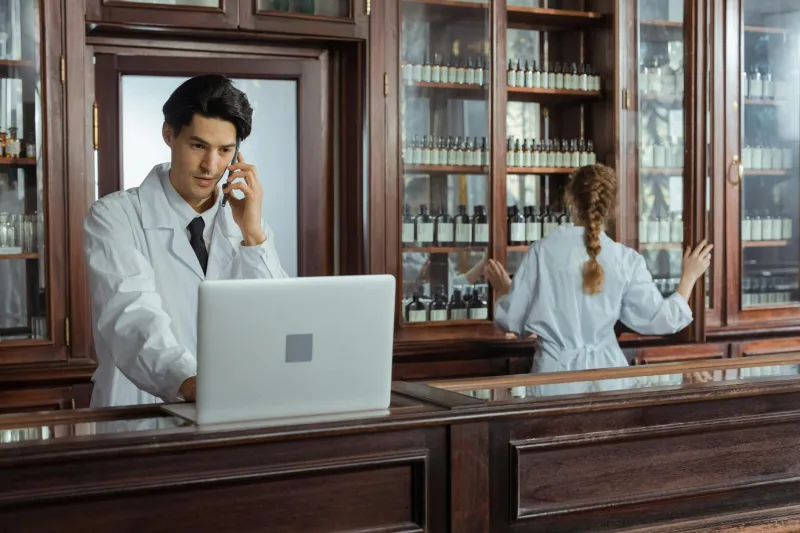
When Medicine Came With a Side of Adventure — And Why Your Pharmacy App Would Have Been Pure Magic
Your phone buzzes with a notification: "Your prescription is ready for pickup." You tap twice, and thirty minutes later, a delivery driver hands you a small white bag at your front door. Total time invested: maybe two minutes of actual effort.
To someone living in 1955, this scenario would have sounded like pure fantasy — the kind of medical miracle reserved for science fiction novels.
The Great Prescription Quest of Yesterday
Back in the mid-20th century, getting prescription medication was an expedition that required planning, patience, and a healthy dose of luck. The journey began with recognizing you were sick — no WebMD to consult at 2 AM, no symptom checkers to validate your concerns. You simply had to tough it out until symptoms became undeniable.
Once you admitted defeat to whatever was ailing you, the real adventure began. First stop: your family doctor's office, assuming you could get an appointment within the week. No online booking systems, no patient portals — just a phone call to a receptionist who kept appointments in a physical book with a pencil.
Doctors in those days practiced what we'd now consider detective medicine. Without blood tests that could be processed in hours, X-rays that appeared instantly on screens, or MRIs that could peer inside your body, physicians relied heavily on physical examination and educated guesswork. A diagnosis might take multiple visits, each requiring another day off work, another co-pay, another round of the prescription dance.
When Pharmacists Were the Gatekeepers
Assuming your doctor eventually figured out what was wrong and scribbled something illegible on a prescription pad, your journey was far from over. You'd drive to the local pharmacy — likely the only one in town — and hand over that precious piece of paper to the pharmacist.
Here's where things got interesting. That pharmacist might look at the prescription, shake his head, and deliver the news no one wanted to hear: "I don't have this in stock. Should be in next week, maybe Thursday."
Next week. Maybe Thursday.
Pharmacies in smaller towns carried limited inventory. Specialized medications might require special orders from suppliers in distant cities. Antibiotics that we consider routine today were often backordered. Birth control pills, when they became available in the 1960s, weren't stocked by many pharmacies due to local attitudes and regulations.
The Waiting Game
Even when your medication was available, filling a prescription wasn't the quick transaction we know today. Pharmacists hand-counted pills into bottles, typed labels on manual typewriters, and maintained handwritten records of every transaction. A simple antibiotic prescription might take 30 minutes to fill during busy periods.
Refills presented their own challenges. No automatic reminders, no apps tracking your pill counts. You simply ran out of medicine and started the entire process over again. Many people rationed their medications, taking pills every other day or splitting doses to make bottles last longer — a practice that would horrify modern doctors but was common economic reality.
The Digital Revolution Changes Everything
Today's prescription experience would seem like magic to previous generations. Telemedicine appointments happen from your couch. Electronic prescriptions travel instantly from doctor to pharmacy. Automated systems check for drug interactions and insurance coverage before you even leave the medical office.
Pharmacy apps track your medications, send refill reminders, and process renewals with a few taps. Same-day delivery services bring prescriptions to your door within hours. Some pharmacies offer drone delivery, turning medication pickup into something resembling a scene from The Jetsons.
The transformation extends beyond convenience. Prescription accuracy has improved dramatically thanks to electronic systems that eliminate handwriting interpretation. Drug interaction warnings pop up automatically. Insurance pre-authorization happens in the background, not through weeks of phone tag between your doctor's office and your insurance company.
What We've Gained (And What We've Lost)
This evolution represents one of healthcare's quiet revolutions. Medication adherence — actually taking prescriptions as directed — has improved significantly when the process is frictionless. People with chronic conditions no longer skip doses because refilling prescriptions was too complicated.
Yet something was lost in this transition. The neighborhood pharmacist who knew your entire family's medical history, who could spot potential problems before they became serious, who served as an informal healthcare advisor — that relationship has largely disappeared into the efficiency of modern systems.
The Bigger Picture
The prescription drug journey illustrates how dramatically American healthcare delivery has transformed in just a few decades. What once required multiple days, several trips, and considerable uncertainty now happens seamlessly in the background of our daily lives.
Your great-grandmother would have been amazed by your ability to video chat with a doctor at 11 PM and have antibiotics delivered before breakfast the next morning. To her, that level of medical convenience would have seemed like the stuff of dreams.
And in many ways, it is.