When Sending $20 to Your Friend Required a Notary and Three Business Days
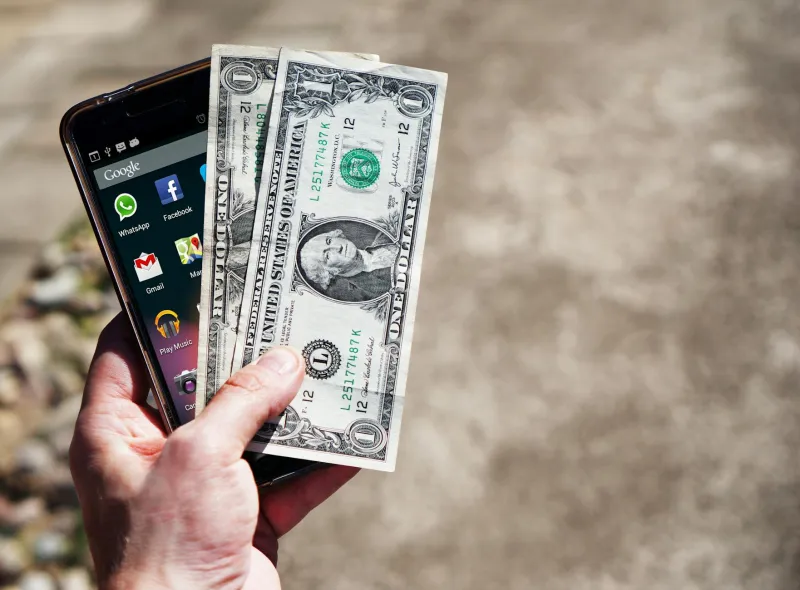
The Great Money Transfer Ordeal of Yesterday
Imagine owing your college roommate $50 for groceries, but they live three states away. In 1995, settling this debt would have required either mailing cash (risky), writing a personal check (which they couldn't cash easily without a local bank account), or visiting your bank to initiate a wire transfer that cost $25 and took three days to process. For many Americans, the cure was worse than the disease — that $50 debt often just... stayed a debt.
This wasn't some ancient history. As recently as the early 2000s, sending money to another person was so cumbersome that entire relationships were built around the assumption that small debts would remain forever unsettled. "I'll get you back" became a social contract that everyone understood would probably never be fulfilled, not out of dishonesty, but out of sheer logistical impossibility.
Banks as the Gatekeepers of Your Own Money
Before digital payments, banks operated like exclusive clubs that happened to hold your money hostage. Want to send $100 to your sister in Denver? You'd need to visit a branch during business hours — remember when banks closed at 3 PM? — and fill out forms that asked for information you'd never heard of. What's the recipient's routing number? Their full legal name as it appears on their account? The branch address where they opened their account in 1987?
Wire transfers were reserved for serious business: buying a house, settling an estate, or other transactions worth the $30 fee and bureaucratic hassle. For everyday money movement, you had three equally frustrating options: personal checks that took a week to clear, money orders that required a trip to the post office, or Western Union, which felt like something out of the Old West because it basically was.
The psychological barrier was enormous. People would drive across town to pay someone back in cash rather than navigate the banking system. The phrase "I don't have Venmo" didn't exist because nothing like Venmo was even imaginable.
The Social Economics of Inconvenience
This friction created an entire social economy built around workarounds. Friend groups developed elaborate systems of rotating who paid for dinner, not out of fairness, but out of necessity. The person with the credit card became the unofficial group treasurer, accumulating dozens of small debts that would be settled through a complex barter system of favors and future meals.
Businesses adapted too. "Cash only" wasn't just a tax avoidance strategy — it was often the only practical way to operate. Small vendors, freelancers, and service providers either demanded cash upfront or simply absorbed the cost of unpaid invoices rather than chase customers through the banking maze.
Splitting bills at restaurants required mathematical precision that would impress NASA engineers. Groups would spend ten minutes calculating exact change, down to the penny, because the alternative — one person paying and eight people somehow repaying them — was too complicated to contemplate.
The Trust Problem Nobody Talks About
Behind all this inconvenience lay a fundamental trust problem. Banks didn't trust their customers to move money responsibly, customers didn't trust banks to handle transfers efficiently, and individuals didn't trust each other enough to complicate their banking relationships. Personal checks were essentially IOUs backed by the hope that someone had money in their account and the threat of criminal prosecution if they didn't.
The system was so unreliable that "the check is in the mail" became a punchline. People would hold onto checks for days or weeks, not out of forgetfulness, but because depositing them was its own ordeal involving bank visits, hold periods, and the constant fear of bounced check fees.
The Smartphone Revolution That Changed Everything
Then came the iPhone in 2007, and within a decade, everything changed. Not immediately — the first mobile banking apps were barely functional — but gradually, then suddenly. PayPal, originally designed for eBay transactions, became a bridge to peer-to-peer payments. Venmo launched in 2009 and turned money transfers into social media. Zelle emerged as banks' answer to losing customers to fintech startups.
Today, sending money is easier than sending a text message. Venmo processes over $200 billion annually. Zelle handles $500 billion. Cash App has become a verb. The average American now makes multiple digital payments every week without thinking about routing numbers, business hours, or wire transfer fees.
What We Gained and Lost
The transformation has been so complete that younger Americans can barely comprehend the old system. Asking someone to "Venmo me" is as natural as asking for their phone number. Restaurant servers now carry QR codes for tip payments. Street performers accept digital donations.
But something was lost in the transition. The friction of the old system created natural boundaries around financial relationships. When paying someone back required genuine effort, people thought more carefully about borrowing money. Debts felt weightier because settling them demanded intention and planning.
Today's frictionless payments have created new social anxieties. The expectation of immediate repayment can strain relationships in ways that the old "I'll get you next time" system never did. The ease of digital tracking means every financial interaction leaves a permanent record, turning casual friendships into detailed accounting ledgers.
The Speed of Change
Perhaps most remarkable is how quickly this transformation happened. The gap between "I'll write you a check" and "I'll Venmo you" spans less than 15 years for most Americans. An entire generation has grown up never knowing the anxiety of wondering whether their rent check cleared or the embarrassment of asking a friend to wait until payday to cash a personal check.
The next time you split a dinner bill in thirty seconds using your phone, remember that this simple act would have been impossible for most of human history and impractical for most of American history. We've compressed centuries of financial evolution into a single generation, and most of us barely noticed it happening.