You Used to Listen to Your Body. Now You Wait for the Notification.
Somewhere between the invention of the stethoscope and the launch of the Apple Watch, the primary source of health information shifted. It used to come from inside — from the ache in your chest, the drag in your step, the slow creep of something not quite right that made you finally call the doctor. Now it comes from outside, from sensors and algorithms and dashboards that track things you couldn't have named a decade ago.
Neither approach is perfect. But the distance between them is worth understanding.
The Body as Its Own Warning System
For most of human history, the body was the only diagnostic tool available. And people got surprisingly good at reading it.
Previous generations developed what you might call body literacy — an intuitive fluency with their own physical signals. A grandmother who'd never heard of inflammation could tell you she was coming down with something before any fever appeared. A farmer who'd never taken a biology class knew his back was going to give him trouble before it actually did. This wasn't mysticism. It was the product of paying close attention over a lifetime, without the noise of constant data competing for attention.
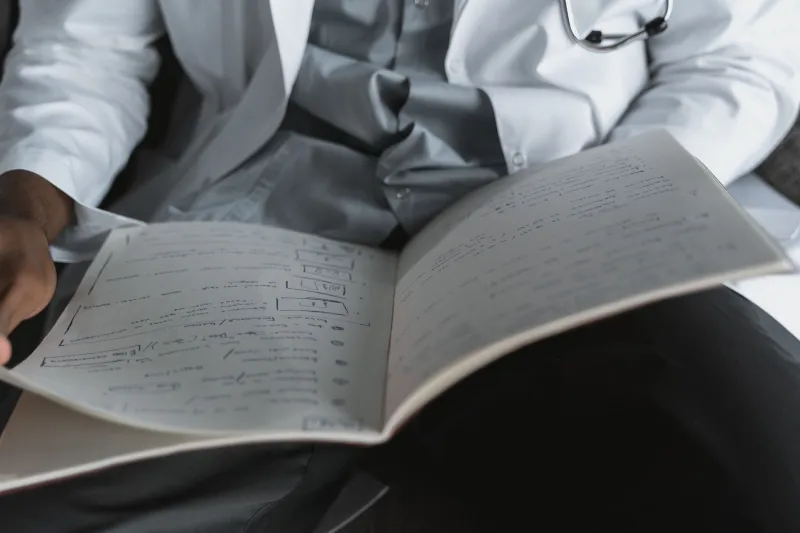
Doctors of earlier eras worked from the same framework. Before blood panels and imaging, clinical medicine was largely about observation and conversation. Physicians were trained to read the body the same way their patients did — looking at skin tone, listening to breath patterns, noting the way someone moved or held themselves. The patient's own account of how they felt wasn't just useful background information. It was the primary evidence.
When the Machines Arrived
The transformation didn't happen overnight. Medical technology improved gradually through the twentieth century, and each advancement was genuinely valuable. Blood pressure cuffs, EKGs, cholesterol panels, imaging machines — each of these tools caught things that human observation alone would have missed. The story of modern medicine is, in large part, a story of tools revealing what the body couldn't articulate on its own.
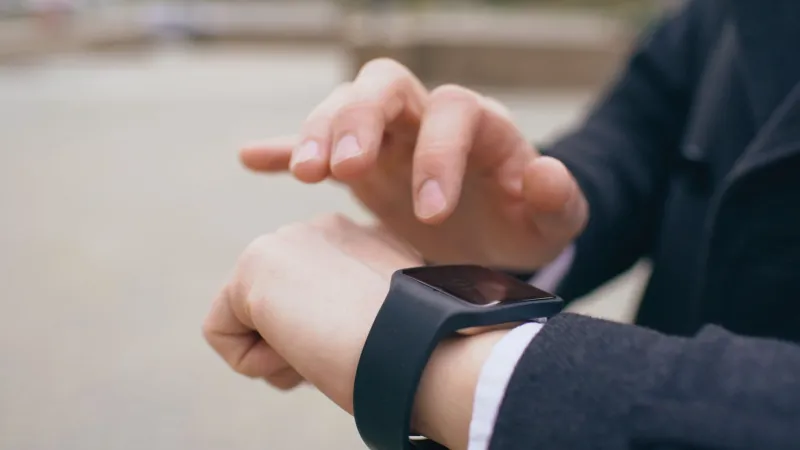
But the shift that's happened in just the last ten to fifteen years is something different in scale and character. It's not that diagnostic tools improved — it's that they moved out of the clinic and onto your wrist. The Apple Watch, Fitbit, Oura Ring, WHOOP band, continuous glucose monitors — these devices have turned ordinary Americans into round-the-clock data generators.
Today, a person with a mid-range smartwatch can track their heart rate variability, blood oxygen levels, sleep stages, stress scores, respiratory rate, and step count before they've had their first cup of coffee. Platforms like Apple Health and Google Fit aggregate this data and flag anomalies. AI-driven apps offer interpretations, predictions, and suggestions. Some systems now alert users to irregular heart rhythms before they've felt a single symptom.
That last part is genuinely extraordinary. Atrial fibrillation caught by a wearable before it causes a stroke is not a small thing. The technology has real, documented value.
The Anxiety That Comes With the Data
But something else comes with it too.
Cardiologists and primary care physicians have noted a meaningful uptick in patients arriving at appointments not because they feel unwell, but because an app told them something looked off. Many of these visits turn out to be false alarms — normal biological variation misread as a warning sign, or a metric flagged as abnormal that's perfectly typical for that individual. The number is within range. The algorithm just didn't know that person's baseline.
This is sometimes called the nocebo effect — the harm caused not by illness but by the belief that something is wrong. When your watch tells you your heart rate variability dropped last night, your sleep score tanked, and your recovery is poor, you may start the day feeling anxious about your health regardless of how you actually feel. The data becomes the experience.
Researchers have a term for the extreme end of this: orthosomnia — a preoccupation with achieving perfect sleep scores that actually disrupts sleep. People lie awake worrying about their sleep tracker. The tool meant to improve rest is interfering with it.
What Body Literacy Actually Looks Like
The generation that came before wearables wasn't flying blind. They were operating on a different kind of intelligence — one built through direct, unmediated experience of their own bodies over time.
This kind of awareness is harder to develop when you're outsourcing interpretation to an algorithm. If your watch tells you you're stressed before you've noticed feeling stressed, you start to lose confidence in your own internal signals. You learn to trust the device more than yourself. And there's a real cost to that — not just psychologically, but practically. Doctors increasingly report patients who can describe their metrics in detail but struggle to articulate how they actually feel.
"My HRV is low" is not the same thing as "I've been exhausted and something feels off." One is a number. The other is information.
The Honest Middle Ground
The goal here isn't to argue that wearables are bad or that we should go back to diagnosing illness by instinct alone. The technology has caught real problems and saved real lives. That matters.
But there's a version of health monitoring that serves you, and a version that quietly takes over — replacing your internal awareness with an external one you don't fully control and may not fully understand. The healthiest relationship with this technology is probably one where the data informs your attention rather than replacing it. Where a flagged metric prompts you to check in with how you actually feel, rather than overriding what your body is already telling you.
Your body has been running longer than any app. It's still worth listening to.