Your Doctor Once Carried Your Whole Health Story in His Head. Today It Lives in Seventeen Different Systems.
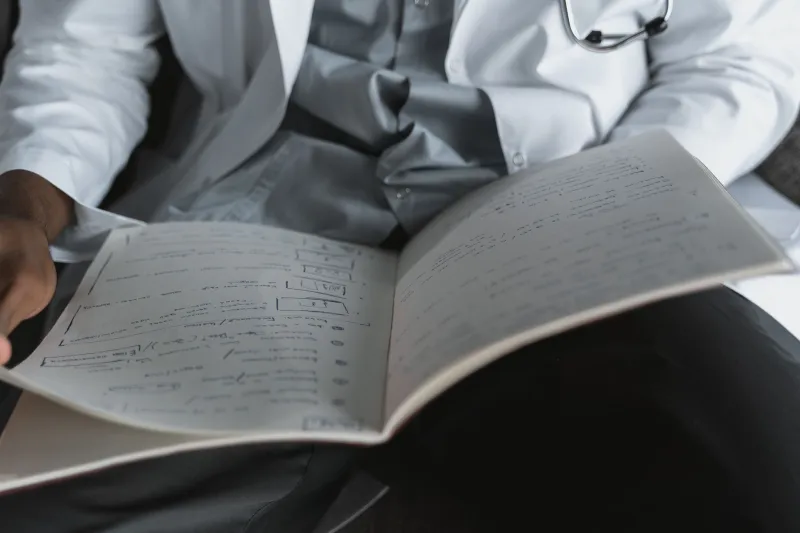
Somewhere in a filing cabinet — or more likely a landfill — is a manila folder with your grandparents' entire medical history inside it. Handwritten notes in a doctor's script that was probably illegible to everyone except the nurse who worked alongside him for twenty years. Dates, diagnoses, medications, observations. Maybe a note about how your grandfather always downplayed his back pain or how your grandmother was nervous about needles. Personal details that no intake form would ever capture.
That folder represented something modern healthcare has largely moved away from: a single, continuous, deeply human record of one person's health, held by one person who actually knew them.
The Family Doctor as Living Medical Record
For much of the twentieth century, the family physician was the center of American healthcare. Not a specialist, not a hospitalist, not a rotating panel of providers — one doctor, often serving the same families for decades. In smaller towns especially, this relationship wasn't just professional. It was communal. The doctor knew your parents. He'd delivered your siblings. He remembered that you'd had rheumatic fever as a child and that your father had died of a heart attack at fifty-three.
This continuity wasn't just comforting. It was clinically valuable. A doctor who had watched you for twenty years could notice changes that no algorithm would flag — a subtle shift in your energy, a pattern in your complaints, the particular way you described pain that suggested you were minimizing it. Context mattered, and the family doctor carried that context in his memory and his notes.
Those notes were often handwritten, filed chronologically, and deeply idiosyncratic. They weren't standardized. They couldn't be easily shared or transferred. But they were complete in the way that mattered most: they told a story.
The Digital Revolution in Medical Records
The push to digitize medical records gained serious momentum in the early 2000s, and the 2009 HITECH Act effectively turbocharged the transition by tying federal incentive payments to the adoption of Electronic Health Records (EHRs). By 2021, nearly 90 percent of office-based physicians in the US were using some form of EHR system. The paper chart, for most practices, became a relic.
The benefits were real and significant. Digital records are legible — no more deciphering handwriting that looks like seismic data. They can be searched, sorted, and analyzed. They can flag drug interactions automatically. They can travel with a patient from one state to another, from a primary care office to a specialist to an emergency room, in ways that a manila folder never could.
Patients gained something too: access. Through patient portals, Americans can now view their own lab results, read their doctor's notes, request prescription refills, and download their health data. The information that once lived exclusively in a physician's office now lives on your phone. That's a genuinely meaningful shift in power.
What Got Lost in the Translation
But something happened in the transition that nobody fully anticipated.
The move to EHRs didn't just digitize the old system. It fundamentally changed how doctors interact with patients during appointments. Studies have found that physicians spend roughly half of their working hours on administrative tasks — much of it data entry into EHR systems. In many exam rooms today, the doctor's eyes are on a screen for a substantial portion of the visit. The note-taking moved from a quick scribble after the appointment to real-time typing during it.
Patients notice. In surveys, one of the most consistent complaints about modern healthcare is the feeling that the doctor isn't fully present — that the appointment is being experienced through a keyboard rather than a conversation.
There's also the fragmentation problem. Despite decades of promises about interoperability, American medical records are still frequently siloed across competing systems. A patient who sees a cardiologist at one hospital network, a dermatologist at an independent practice, and a therapist through a telehealth app may have three separate records that don't communicate with each other. The primary care doctor — if the patient even has one — may never see the full picture.
The information exists. It's just scattered.
You Own Your Data. But Do You Understand It?
One of the more quietly complicated aspects of the modern medical record era is the question of what patient access actually means in practice.
Yes, you can log into your portal and see your hemoglobin A1c result thirty minutes after your blood draw. But do you know what it means? Do you know how to contextualize it against your history, your medications, your lifestyle? The raw data is available, but the interpretation — the clinical judgment that turns a number into a recommendation — still requires a human being with medical training.
For engaged, health-literate patients with strong provider relationships, this access is empowering. For patients who are confused by medical terminology, overwhelmed by notifications, or simply don't have a consistent primary care provider to help them make sense of what they're seeing, it can create a new kind of anxiety: information without context.
Continuity Is the Thing We Haven't Replaced
The old system's greatest strength wasn't the paper. It was the relationship — the continuity of care that came from seeing the same provider across years and decades. That continuity meant your doctor held a mental model of you that no EHR has yet replicated.
Modern healthcare is objectively better in most measurable ways. Diagnoses are more accurate. Treatments are more effective. Information moves faster. The average patient today has access to tools and data that would have seemed extraordinary fifty years ago.
But the feeling of being known by your doctor — of walking into an office where someone already understands your story without you having to retell it — is something the digital revolution hasn't quite figured out how to preserve.
Your records are more complete than ever. The question is whether anyone is reading them the same way.