The Back Pain That Once Ruined Lives Forever — And the Quiet Revolution That Changed Everything
Somewhere in America right now, a 52-year-old warehouse supervisor is walking out of an outpatient surgical center, a foam pillow tucked under his arm, his wife pulling the car around. He had a procedure this morning. He'll be on his couch tonight watching football. By next week, he'll be complaining about something else entirely.
Sixty years ago, the same man would have been strapped to a hospital bed for three months, staring at a water-stained ceiling, wondering if he'd ever work again.
The transformation of spinal medicine is one of the most dramatic — and strangely underappreciated — revolutions in American healthcare. It didn't make the front page. There was no moon-landing moment. It happened gradually, procedure by procedure, and now millions of people are living fuller lives without ever fully registering what used to be on the other side of that equation.
What a Bad Back Actually Meant in 1955
Let's be honest about what a serious back injury used to cost a person.
A herniated disc, a compressed nerve, a fractured vertebra — these weren't just painful. They were life-altering in ways that rippled outward for years. The standard treatment for a bad back well into the mid-twentieth century was rest. Aggressive, prolonged, enforced rest. Patients were told to lie flat on firm mattresses, sometimes for weeks, sometimes for months. Movement was the enemy. Surgery existed, but it was brutal by modern standards — large open incisions, significant blood loss, long anesthesia times, and a recovery measured in seasons rather than days.
And even after all of that, outcomes were uncertain. Plenty of patients went through the whole ordeal and came out the other side still in pain, their spines fused at awkward angles, their mobility permanently reduced. Doctors of that era weren't incompetent — they were simply working with tools that were nowhere near adequate for the complexity of what they were trying to fix.
For working-class Americans especially, a back injury was a financial catastrophe. If your livelihood depended on physical labor — and for most Americans it did — losing your spine meant losing your income, your identity, and often your sense of self-worth. The phrase "threw out my back" used to carry a weight that younger Americans today simply don't feel when they hear it.
The Long Road to the Robot in the Operating Room
The shift began quietly in the 1970s and 1980s, when surgeons started experimenting with smaller incisions and better imaging tools. The introduction of the MRI in the early 1980s was a turning point that doesn't get nearly enough credit. For the first time, surgeons could actually see what was happening inside a spine without cutting it open first. That sounds obvious now. At the time, it was extraordinary.
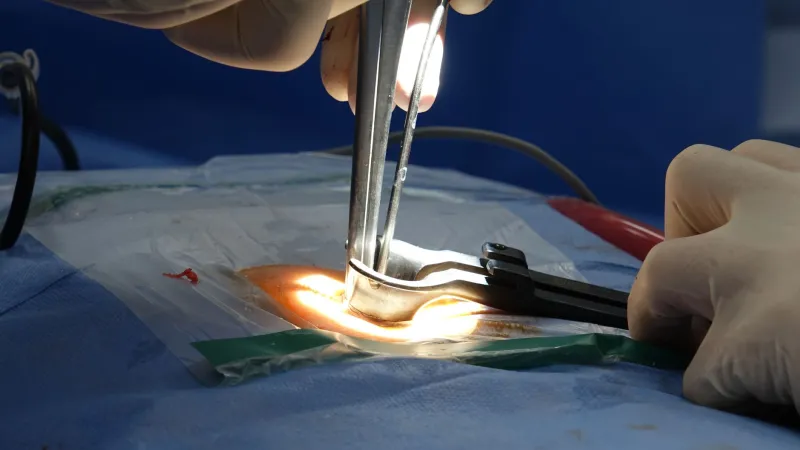
Minimally invasive spinal surgery started becoming viable in the 1990s. Instead of opening a patient's back like a book, surgeons began working through tiny incisions, guided by cameras smaller than your fingernail. The muscles that used to be cut away and retracted could now be gently moved aside. Recovery times dropped. Complication rates fell. Patients who would have spent a week in the hospital were going home the next morning.
Then came the robots.
Robotic-assisted spinal surgery has moved from experimental curiosity to mainstream practice over the last decade. Systems like the Mazor X and the ROSA Spine allow surgeons to pre-plan procedures in three dimensions, then execute them with a level of mechanical precision that human hands — however skilled — simply cannot match. Screws placed into vertebrae with sub-millimeter accuracy. Real-time imaging that catches problems before they become complications. Surgeons working in a kind of partnership with software that has processed thousands of similar cases.
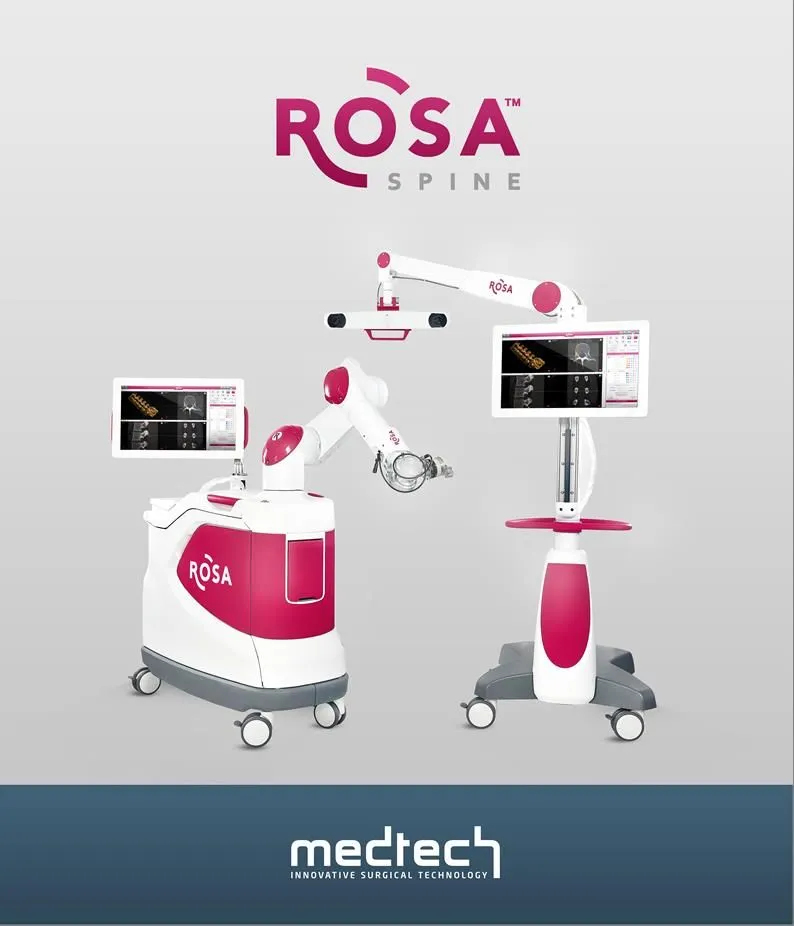 Photo: ROSA Spine, via i.pinimg.com
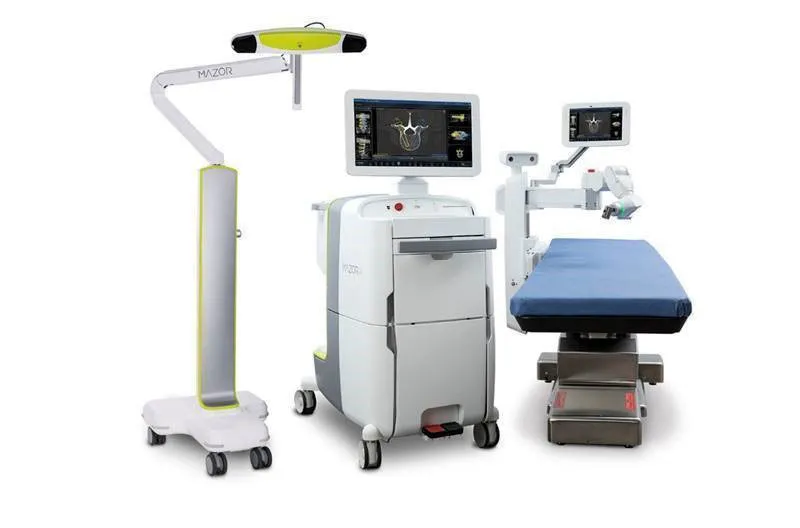 Photo: Mazor X, via media-ecn.s3.amazonaws.com
The result? Procedures that once required a five-day hospital stay and six weeks of recovery are now done outpatient. Same-day discharge. A small bandage where there used to be a long scar.
The Numbers Tell a Story Most People Don't Know
Back pain remains the leading cause of disability worldwide, and roughly 16 million American adults live with chronic back pain severe enough to limit daily activity. That number sounds alarming until you consider what it would have looked like fifty years ago — when far fewer of those people had any real treatment options at all.
Today, spinal fusion surgery has success rates that would have seemed impossible to a 1960s orthopedic surgeon. Lumbar disc replacement — where a damaged disc is swapped out for an artificial one that preserves natural movement — barely existed as a concept a generation ago. Spinal cord stimulators, which interrupt pain signals electronically, now offer relief to patients who failed every other treatment. Even non-surgical options have transformed: targeted steroid injections, physical therapy protocols built on actual biomechanical research, and regenerative approaches using platelet-rich plasma are giving patients options that didn't exist when their parents were their age.
The Thing Nobody Talks About
Here's what makes this story genuinely remarkable: most of the people whose lives were changed by these advances have no idea how different their experience could have been.
The 45-year-old teacher who had a microdiscectomy on a Thursday and was back in her classroom the following Monday — she didn't experience the alternative timeline. She didn't lie in a hospital bed for eight weeks. She didn't watch her career evaporate. She had a bad week and then she moved on.
That invisibility is actually a sign of how successful the progress has been. When medicine works the way it's supposed to, suffering disappears quietly. There's no dramatic before-and-after moment. There's just a person who got better and got back to their life.
But for anyone who wants to understand how radically American healthcare has changed — not in the loud, political, insurance-debate way, but in the quiet, operating-room, fiber-optic-camera way — the story of spinal medicine is one of the best examples there is.
Your grandfather's bad back was a potential life sentence. Yours is a Tuesday morning appointment.
That's not nothing. That's everything.