You Used to Check In for a Week — Now You're Home Before Dinner
You Used to Check In for a Week — Now You're Home Before Dinner
Picture your grandmother in 1965. She's scheduled for a hernia repair — a procedure that today takes about an hour and sends you home with a bag of ice and a prescription. Back then, she packed a bag. She kissed her family goodbye like she was heading somewhere serious. Because she was. The hospital stay for that same surgery routinely stretched seven to ten days. The recovery ward was her world for the better part of two weeks.
That wasn't unusual. That was just how medicine worked.
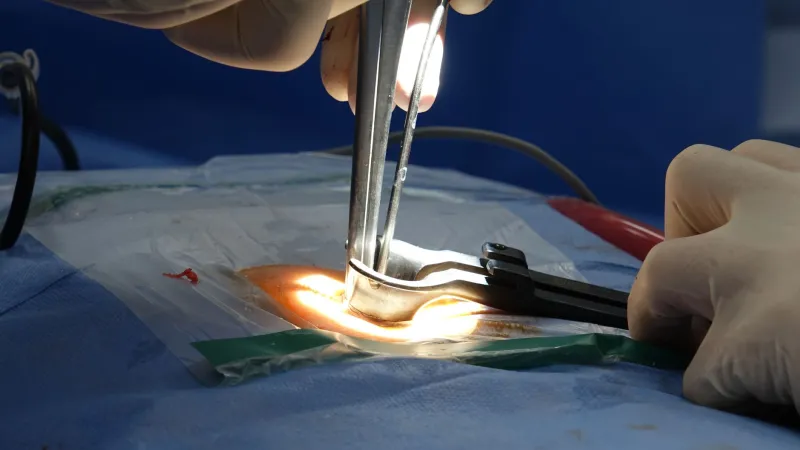
Today, more than 60 percent of all surgeries performed in the United States are outpatient procedures. You arrive, you get cut open (or lasered, or scoped), and you leave the same day. The transformation from inpatient to outpatient care is one of the most sweeping changes in modern American medicine — and because it happened gradually, most people don't fully appreciate just how radical the shift has been.
When Hospitals Were Places You Stayed
For most of the 20th century, the hospital wasn't just where you went to get treated — it was where you went to recover. The assumption baked into medical culture was that healing required supervision, rest, and professional oversight around the clock. Surgeons operated, and then patients convalesced under the watchful eye of nursing staff for days, sometimes weeks.
Cataract surgery is one of the most striking examples. Today it's practically a lunch-break procedure — local anesthesia, a small incision, a new lens implanted, and you're watching TV that evening. In the 1970s, the same surgery required patients to lie completely still in a hospital bed for up to ten days, their heads sandbagged to prevent movement, both eyes patched. The slightest wrong turn could undo everything. Patients were terrified to sneeze.
Appendectomies followed a similar arc. Remove an inflamed appendix today and you're likely going home within 24 hours, sometimes the same day if it's a straightforward laparoscopic case. Fifty years ago, the standard recovery was five to seven days in the hospital, followed by weeks of restricted activity at home.
Gallbladder removal? Once a major open surgery with a week-long hospital stay minimum. Now it's three small incisions, a laparoscope, and a same-day discharge for most patients.
What Actually Changed
The shift didn't happen because doctors suddenly got impatient. Several converging forces rewrote the rules of surgical recovery.
Anesthesia got dramatically safer and more precise. Early general anesthesia was a blunt instrument — patients took a long time to fully come around, and the risk of complications kept them hospitalized for observation. Modern anesthesia protocols allow patients to be alert, oriented, and eating within hours of a procedure.
Minimally invasive techniques changed everything. Laparoscopic surgery, which began gaining traction in the late 1980s, replaced large incisions with tiny entry points and a camera. Less tissue damage meant less pain, less infection risk, and dramatically faster recovery. Robotic-assisted surgery pushed that even further.
Pain management evolved too. Better regional anesthesia — nerve blocks that numb specific areas without sedating the whole patient — meant people could recover comfortably at home rather than requiring IV pain medication in a hospital setting.
And then there was money. The rise of managed care and Medicare cost controls in the 1980s and 1990s created powerful financial incentives to get patients out of expensive hospital beds as quickly as safely possible. That pressure, combined with genuine medical advances, accelerated the outpatient trend significantly.
The Numbers Are Staggering
Consider what's now routinely done on an outpatient basis in America:
- Knee arthroscopy — once a multi-day admission, now a two-hour procedure
- Tonsillectomy in adults — previously a hospital stay, now same-day in most cases
- Colonoscopy — diagnostic and therapeutic, in and out in under three hours
- Carpal tunnel release — 20-minute surgery, home the same morning
- Certain cardiac procedures — some ablations and valve interventions now done without overnight admission
Ambulatory surgery centers — freestanding facilities that handle procedures outside of traditional hospitals — now number over 6,000 across the United States and perform tens of millions of procedures annually. They didn't meaningfully exist before the 1970s.
What It Means for Patients
The upside is obvious. Less time in a hospital means less exposure to hospital-acquired infections, which remain a serious and underreported problem in American healthcare. It means less disruption to work, family, and daily life. For many patients, it means lower costs — outpatient procedures are almost always cheaper than equivalent inpatient admissions.
But the shift comes with a quieter trade-off. When patients go home the same day, the burden of monitoring recovery falls on them and their families. Instructions that once would have been delivered by a nurse over several days are now condensed into a discharge packet and a follow-up phone call. If something goes wrong at 2 a.m., you're not pressing a call button — you're calling a hotline or deciding whether to drive to the emergency room.
For patients with strong support systems and comfortable home environments, that's usually fine. For elderly patients living alone, or those in crowded or unstable housing, the same-day model can create real gaps.
A Quiet Revolution
Most Americans interacting with the healthcare system today have no personal memory of what it was like to spend a week in a hospital bed for a procedure that now takes 45 minutes. The change happened across decades, in operating rooms and recovery suites, driven by technology and economics in roughly equal measure.
Your grandfather's hernia surgery was a major life event. Yours is a Tuesday.
That's progress by almost any measure. It's also a reminder of how completely the infrastructure of medical care can be rebuilt — not through a single dramatic breakthrough, but through dozens of smaller advances that quietly add up to a different world.