One Mistake Used to Follow You Forever. Now There's a Button That Can Make It Disappear.
The Invisible Sentence Nobody Talked About
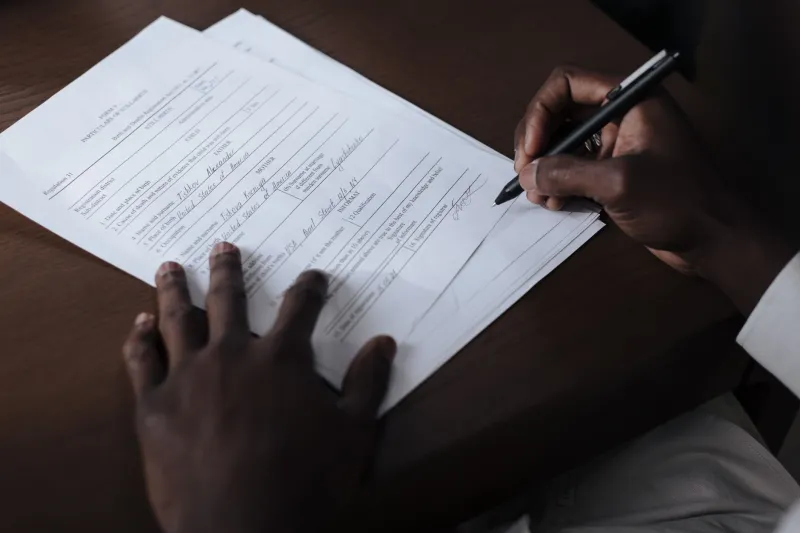
For most of American history, a criminal record wasn't just a legal document. It was a life sentence that never officially got handed down in court.
A man arrested for a bar fight at twenty-three — charges dropped, case dismissed — could still find himself turned away from a job at forty-five. A woman convicted of a nonviolent drug offense in the 1980s might spend the next three decades watching apartment applications get quietly rejected, never quite knowing why, never quite able to prove it. The record was always there, humming in the background like a broken appliance you couldn't fix and couldn't throw out.
There was no appeal process for that. No expiration date. No second act.
How Permanent Used to Mean Permanent
Before the internet, criminal records lived in courthouse filing cabinets and local police ledgers. They weren't exactly easy to access — but they weren't sealed either. Employers who knew where to look could find them. Landlords had their networks. The information moved slowly, but it moved.
Then background check companies arrived, and everything accelerated. By the 1990s and early 2000s, third-party screening services were aggregating public records at scale and selling them to anyone with a subscription. A single misdemeanor from 1987 could now surface in a two-minute online search conducted by a hiring manager who'd never meet you in person.
The practical effect was devastating. Studies from that era found that a criminal record reduced callbacks for job applications by nearly 50 percent for white applicants — and even more sharply for Black applicants, who already faced additional layers of discrimination. Housing was similarly brutal. Federal public housing rules barred people with certain convictions outright. Private landlords followed their own rules, which often meant no rules at all.
The system wasn't designed to rehabilitate. It was designed to remember.
The Cultural Weight of a Ruined Reputation
There's a social dimension to this that pure statistics can't fully capture. In small towns especially, an arrest — again, not even a conviction — was community news. Your neighbors knew. Your church knew. Your kids' teachers knew. The stigma spread through social circles the way rumors always do, and unlike rumors, this one had a paper trail.
For generations, the prevailing attitude was roughly Calvinist in its logic: you made your bed, you lie in it. Redemption was a concept for Sunday sermons, not courthouses. The idea that a person might genuinely change, grow, and deserve a clean slate was treated as dangerously naive at best and dishonest at worst.
This wasn't just a conservative position, either. The tough-on-crime consensus of the 1980s and '90s cut across party lines. Politicians competed to appear less forgiving, not more. The result was a culture that built elaborate machinery for recording mistakes and almost none for erasing them.
Something Started Shifting
The change didn't happen overnight, and it didn't come from the top down. It came from researchers documenting recidivism data, from advocates working case by case, and eventually from a broader reckoning with mass incarceration that began gaining mainstream attention in the 2010s.
States started revisiting their expungement laws — the legal process by which a conviction or arrest record can be sealed or destroyed. Some states had always allowed it for certain offenses. But the eligibility rules were often narrow, the paperwork was genuinely complicated, and the process required hiring an attorney most people couldn't afford.
Then technology entered the room.
Startups began building platforms that could walk users through expungement eligibility checks in minutes. Organizations like Code for America launched tools that automatically identified people who qualified for relief under existing laws but had never known they were eligible. Michigan used one such tool to clear over 100,000 old marijuana convictions after legalization — automatically, without requiring individuals to file anything at all.
 Photo: Code for America, via cdn.imgbin.com
Today, services like Expunge.io, RecordSeal, and various state-run legal aid portals let people at least begin the process from their phone. Some states — California, New Jersey, Pennsylvania — have dramatically expanded who qualifies. A handful have moved toward automatic expungement, removing the burden from the individual entirely.
The Gap That Still Exists
It would be dishonest to paint this as a solved problem. Expungement law remains a patchwork. What's available in Illinois may be completely unavailable in Alabama. Federal records are almost entirely off-limits. Even sealed records can sometimes resurface through data brokers who scraped them before the sealing order went through.
And the cultural shift, while real, is uneven. Some employers have genuinely moved toward "ban the box" hiring policies that delay background checks until later in the process. Others have quietly doubled down on screening. The technology that helps people erase records exists alongside technology that makes those records easier than ever to find and sell.
A Different Kind of Second Chance
What has genuinely changed is the conversation itself. The idea that a person deserves a realistic path forward — that a mistake at twenty shouldn't dictate life at forty — now has political support across ideological lines in ways it simply didn't thirty years ago. That's not nothing.
For most of American history, the system's memory was longer than any individual's ability to outrun it. The past was permanent, and permanence was the point.
We haven't fully dismantled that system. But for the first time in a long time, there are real tools — legal, technological, and cultural — that make it possible, for some people in some places, to close a chapter that once had no ending.
That's a change worth paying attention to.