Farmers Once Bet Their Lives on a Red Sky at Morning. Now a Satellite Texts Them the Answer.
What the Sky Used to Mean
Before radar, before satellites, before anything with a screen, a farmer's relationship with the weather was essentially a long, unequal negotiation with the unknown.
You watched the clouds. You checked which way the wind was moving the tops of the trees. You noticed whether your joints ached, whether the cattle were acting strange, whether the swallows were flying low. You consulted the almanac — that thick little paperback with the hole punched in the corner for hanging on a nail — and you made your best guess.
And then you hoped.
This wasn't superstition, exactly. It was centuries of accumulated folk knowledge, passed down through generations of people who had learned to read the landscape because the alternative was starvation. "Red sky at night, sailor's delight. Red sky at morning, sailor's warning." These weren't nursery rhymes. They were survival tools, imperfect and incomplete, but the best available technology for most of human history.
The Cost of Getting It Wrong
The stakes were almost impossible to overstate. A family farm in the 1800s or early 1900s wasn't a business in the modern sense — it was the entire foundation of a family's existence. The land, the equipment, the seed, the livestock: everything was invested in a single growing season that could be wiped out by weather events that arrived without warning and left without apology.
The Dust Bowl of the 1930s is the most famous American example of weather catastrophe colliding with agricultural vulnerability, but it wasn't an isolated event. It was a sustained, multi-year catastrophe that displaced hundreds of thousands of families across the Great Plains. Entire communities dissolved. The photographs of that era — gaunt faces, abandoned farmhouses half-buried in drifted soil — document what happens when farming families have no reliable information about what's coming and no tools to prepare for it.
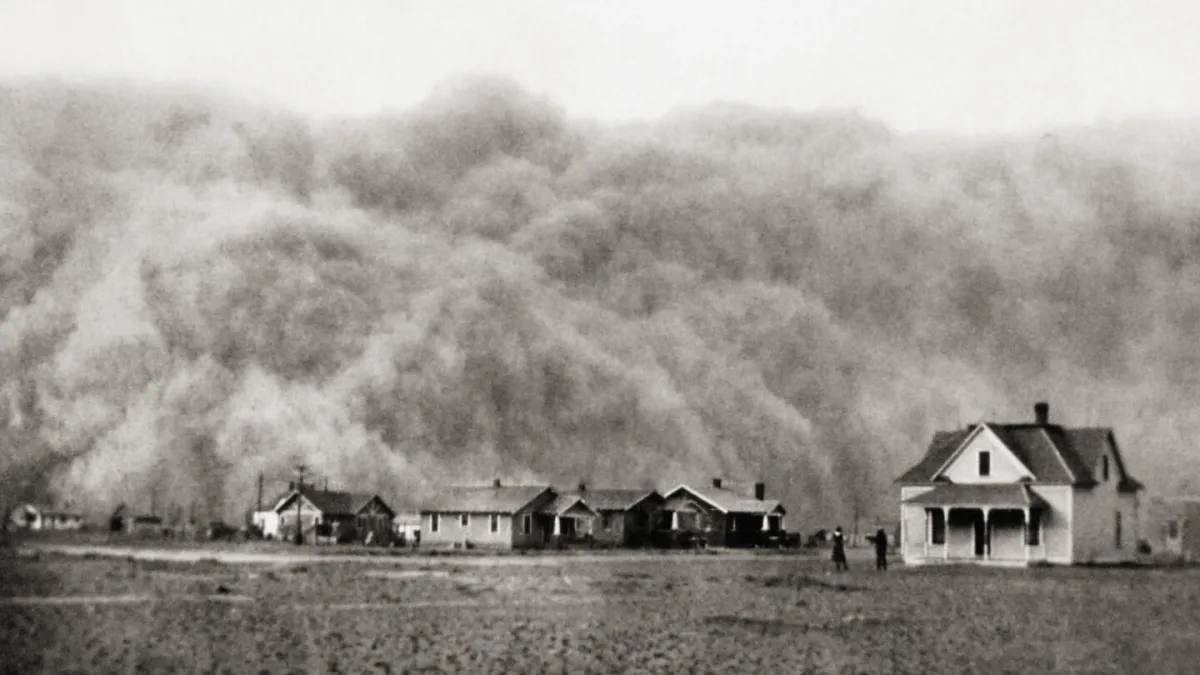 Photo: Dust Bowl, via cropper.watch.aetnd.com
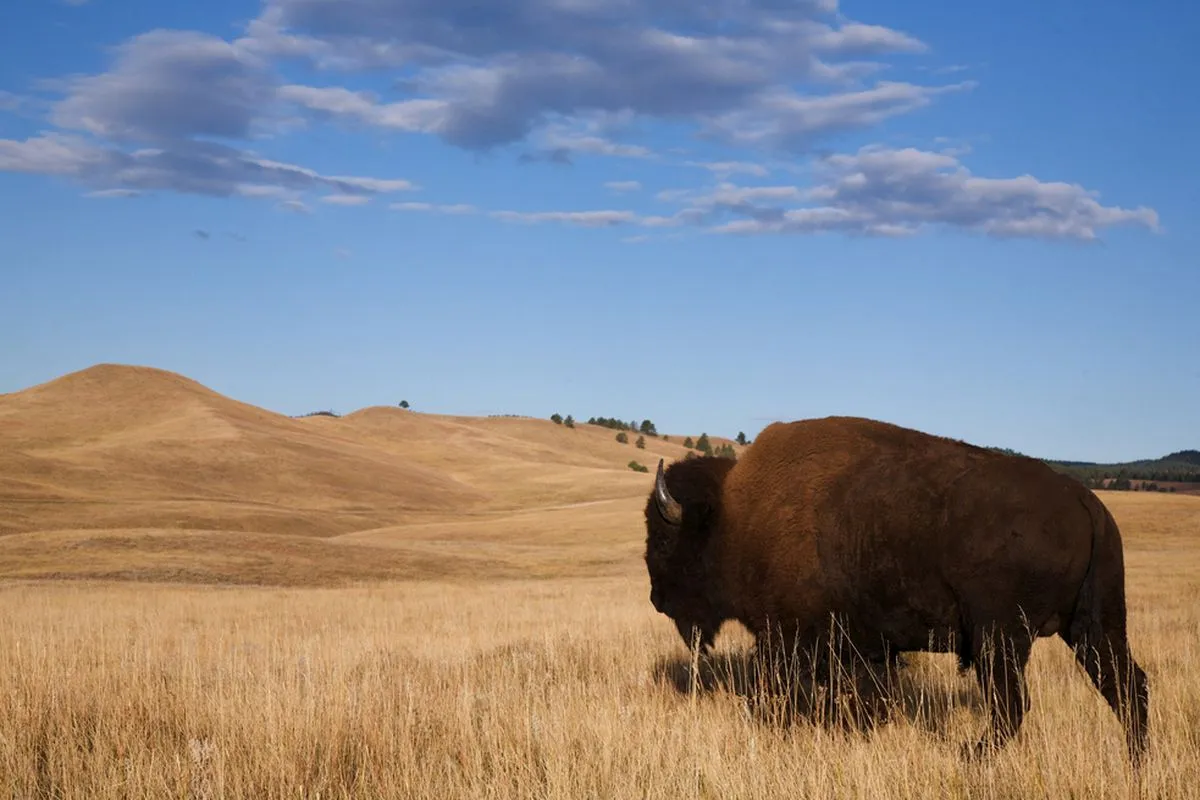 Photo: Great Plains, via cdn.vox-cdn.com
But even in ordinary years, weather uncertainty was a constant tax on rural life. A late spring frost could kill seedlings already in the ground. An early fall freeze could destroy a corn crop days before harvest. Too much rain at the wrong moment could rot a wheat field that looked healthy the week before. Every planting decision was a gamble, and the house always had weather on its side.
When Forecasting Became a Science
The first real shift came with the telegraph in the mid-1800s, which allowed weather observations from different locations to be collected and compared quickly enough to actually be useful. The U.S. Army Signal Corps began issuing weather forecasts in 1870 — the earliest version of what would become the National Weather Service.
Progress was slow but steady. Radiosondes — instrument packages carried aloft by weather balloons — began mapping the upper atmosphere in the 1930s. Radar systems developed during World War II were quickly adapted for weather tracking after the war ended. The first dedicated weather satellite, TIROS-1, launched in 1960 and sent back the first images of cloud patterns from space.
Each development added resolution to a picture that had previously been little more than a blur. Farmers in the mid-twentieth century had meaningfully better information than their grandparents, but "better" was still a long way from "reliable." A forecast for the week ahead was still closer to an educated guess than a confident prediction.
The Precision Revolution
What happened in the last two decades is something different in kind, not just degree.
Modern weather modeling runs on supercomputers that process billions of data points from satellites, weather stations, ocean buoys, commercial aircraft, and radar arrays. The National Oceanic and Atmospheric Administration's current forecast models update multiple times per day and can produce hour-by-hour predictions at resolutions of a few miles — or less.
For farmers specifically, this has been transformative in ways that go well beyond knowing whether to bring an umbrella. Apps like Climate FieldView, Farmers Business Network, and IBM's The Weather Company agricultural platform now deliver field-level forecasts that can tell a grower in central Iowa not just that rain is coming Thursday, but that the heaviest rain will arrive between 2 and 6 p.m., that soil moisture levels suggest the field can absorb it without flooding, and that planting conditions will be optimal the following Monday morning.
AI tools are now predicting optimal planting windows weeks in advance based on historical climate patterns, current soil conditions, and short-range forecasts layered together. Frost alerts go directly to a farmer's phone. Irrigation systems in some operations adjust automatically based on forecast data, watering fields only when the models indicate no rain is imminent.
The family that once stared at the horizon and prayed can now open an app over coffee and know, with reasonable confidence, what the next ten days look like at the county level.
What Hasn't Changed
None of this means weather has been tamed. Climate change is making extreme weather events more frequent and, in some respects, harder to predict at the local level. Tornadoes, flash floods, and late-season freezes still catch farmers off guard. The models are extraordinarily good, but they're not perfect, and agriculture operates on margins thin enough that "not perfect" still costs real money.
But the psychological shift is real. For most of human history, weather was something that happened to you — a force entirely outside human comprehension or control. The best you could do was read the signs and brace yourself.
From Prayer to Precision
The American farmer's relationship with weather is one of the most quietly dramatic transformations of the modern era. It didn't make headlines the way the space program did, or generate the cultural moment that the internet did. It happened gradually, through incremental improvements in sensors and satellites and computing power, until one day the thing that had broken families and erased harvests for ten thousand years became something you could track on your phone between breakfast and the barn.
Somewhere out there, a farmer is checking an app right now that would have looked like pure witchcraft to their great-grandparents.
And the forecast is good.