There Was a Time When Being Dead Was Just Somebody's Best Guess
The Moment Nobody Could Reliably Identify
Death seems like it should be obvious. You're alive, and then you're not. But for the vast majority of human history, the actual moment of transition was something people witnessed rather than measured — and witnessing turned out to be a profoundly unreliable way to confirm what you thought you were seeing.
A stopped heart. No visible breath. Pale skin. Unresponsive to touch or voice. These were the signs physicians and families relied on, and for most deaths, they were sufficient. But the human body has a complicated relationship with the appearance of death, and sufficient isn't the same as certain.
A Fear That Was Completely Rational
The fear of premature burial wasn't a Victorian-era neurosis or a literary device invented by Edgar Allan Poe, though Poe certainly made excellent use of it. It was a documented, recurring real-world problem that prompted genuine public health debates and some genuinely strange engineering solutions.
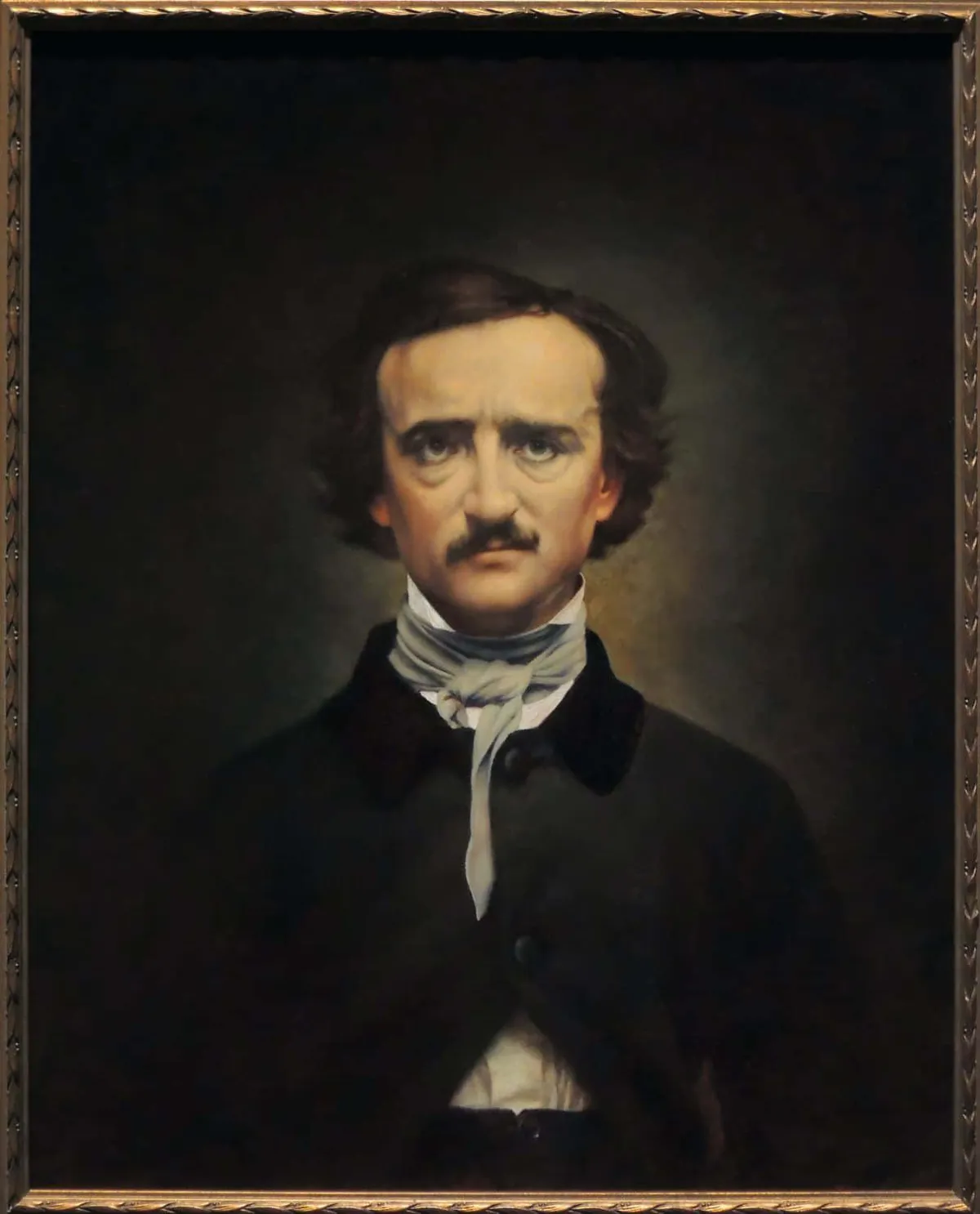 Photo: Edgar Allan Poe, via wallpapers.com
Historical records from the 18th and 19th centuries include documented cases of people being found alive in coffins before burial, or — in more disturbing accounts — exhumed and found in positions suggesting they had regained consciousness after interment. Cholera outbreaks were particularly associated with premature burial fears because the disease could produce a state of profound collapse that closely mimicked death, with minimal breathing and pulse too faint to detect by hand.
The response was not irrational. Waiting mortuaries became fashionable in parts of Europe — facilities where bodies would be held for several days before burial, with attendants watching for signs of life. Germany built elaborate versions of these, complete with strings attached to the fingers of the deceased that would ring bells if movement occurred.
The safety coffin industry emerged as a more entrepreneurial solution. Patents were filed — in the United States and Europe — for coffins equipped with bells, flags, air tubes, and speaking devices that would allow a prematurely buried person to signal for help. These weren't fringe inventions. They were responses to a real and recognized problem that the medicine of the time had no reliable way to solve.
The Tools That Didn't Exist
To understand why death determination was so unreliable, it helps to understand what physicians of the 18th and 19th centuries were actually working with. A stethoscope wasn't invented until 1816, and early versions were crude enough that a faint heartbeat in a deeply unconscious patient could easily be missed. There were no electrocardiograms, no blood pressure monitors, no oxygen saturation readings.
Physicians developed various tests to confirm death — holding a mirror to the mouth to check for breath condensation, applying flame or pins to test pain response, even attempting to induce circulation through various means. Some of these worked reasonably well for obvious cases. None of them worked reliably for the edge cases, which were exactly the cases that mattered.
The formal medical definition of death remained essentially observational well into the twentieth century. Death was when a doctor said it was, based on what they could see and feel. The idea that there might be meaningful biological activity continuing after the apparent cessation of heartbeat and breathing — that "death" might be a process rather than a moment — wasn't part of mainstream medical thinking.
When the Definition Had to Change
The modern reckoning with death determination arrived with an invention that, paradoxically, was designed to sustain life: mechanical ventilation.
As ICU technology advanced through the 1950s and '60s, physicians began encountering patients who could be kept breathing — and whose hearts continued beating — through mechanical support, even after their brains had suffered catastrophic, irreversible damage. These patients weren't recovering. They weren't going to recover. But by the old observational standards, they weren't dead either.
This created an urgent practical and ethical problem that the medical community couldn't avoid. In 1968, a Harvard Medical School committee published a landmark paper defining "irreversible coma" as a new criterion for death — what we now call brain death. The concept was controversial, debated, refined, and eventually codified into law. The Uniform Determination of Death Act, adopted in various forms across U.S. states starting in the 1980s, established that death could be declared either by the cessation of circulatory and respiratory functions or by the irreversible cessation of all brain activity.
 Photo: Harvard Medical School, via blog.cambridgecoaching.com
This wasn't just a legal update. It was a fundamental reconceptualization of what death actually is.
What Modern Medicine Can Now Determine
Today's death determination in a hospital setting involves tools that would have been incomprehensible to a 19th-century physician. An electroencephalogram can detect electrical activity in the brain at levels invisible to any external observation. Advanced neuroimaging can assess blood flow to the brain with precision. Cellular and molecular diagnostics can identify patterns of biological activity — or their absence — that exist well below any threshold a human observer could perceive.
Resuscitation technology has extended the boundary in the other direction as well. Patients arriving at emergency departments with no pulse and no breathing — people who would have been declared dead and prepared for burial in any previous era — are routinely brought back through CPR, defibrillation, targeted temperature management, and ECMO (extracorporeal membrane oxygenation), which can take over the function of both heart and lungs while the body recovers.
There are documented cases of patients surviving cardiac arrest after more than an hour of resuscitation efforts. People pulled from near-freezing water with no detectable pulse have been revived with full neurological recovery. The medical community now operates under a principle that would have sounded absurd two centuries ago: nobody is dead until they are warm and dead.
A Concept More Recent Than You Think
It's easy to assume that reliable death determination is ancient, settled medical knowledge — something doctors figured out long ago. The reality is that a scientifically rigorous, legally standardized, technologically supported framework for declaring death is, at most, a few decades old.
The safety coffin inventors of the 1800s weren't being morbid. They were being practical about a genuine failure in the medical system of their time. The fears that drove those inventions were grounded in real cases, real uncertainty, and real limitations that no amount of clinical experience could fully overcome.
What we have now — brain activity monitors, cellular diagnostics, resuscitation technology that can restart a heart that's been still for an hour — represents a genuine revolution in humanity's ability to answer the oldest and most consequential question medicine faces.
For most of history, death was what it looked like. Now we actually know.