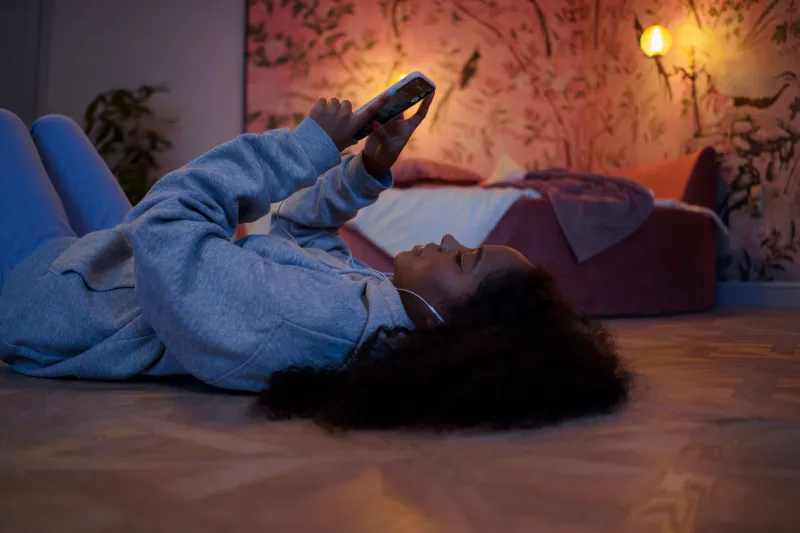
The Dinner Table Used to Be the Evening News. Now It's Where Silence Goes to Scroll.
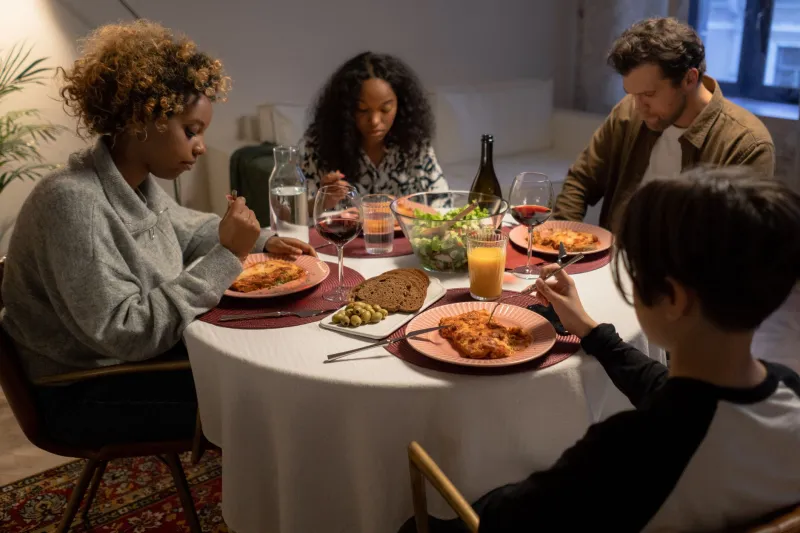
For most of American history, dinner wasn't just a meal. It was a debrief. It was the moment when a family — scattered across school, work, errands, and the neighborhood — reconvened to pool what they knew. Someone had heard something at the hardware store. Someone else had news from a cousin two towns over. The kids brought gossip from the schoolyard. Dad had an opinion about something he'd read in the paper. And for thirty or forty-five minutes, all of that information moved around the table in real time, person to person, face to face.
That ritual is now, in many American households, essentially gone. Not because families stopped eating together — plenty still do — but because the table is no longer the place where information lives. It lives in everyone's pocket, and it arrived there long before anyone sat down.
The Table as Information Hub
Before radio became a household fixture in the 1930s, and long before television arrived in the 1950s, the dinner table was genuinely one of the primary ways information traveled through a community. Newspapers existed, but they were morning reads, and they couldn't capture what happened that afternoon. If you wanted to know what was going on in your town, your family, your social circle — you talked to people. And the most reliable daily opportunity to do that was dinner.
This wasn't just true for news about the wider world. It was where family decisions got made. Where kids learned how adults talked about problems. Where parents modeled how to process bad news, celebrate good fortune, or sit with uncertainty. The table was a classroom that nobody called a classroom.
Even into the 1980s and early 1990s, the evening news on television was still a shared event that prompted conversation. Walter Cronkite, then Dan Rather, then Peter Jennings — these anchors were practically dinner guests in millions of American homes. You watched together, you reacted together, and then you talked about it over whatever was on the stove. The information was shared, and the processing of it was shared too.
When the Feed Replaced the Table
The transition happened gradually, then suddenly. The smartphone didn't arrive at the dinner table all at once — it crept in. First it was just checking a score. Then it was showing someone a photo. Then it was looking something up to settle an argument. And somewhere in that slow drift, the table stopped being a place of collective attention and became a place where individuals happened to be eating in proximity.
By the mid-2010s, researchers were documenting what parents were already feeling: that mealtimes had become quieter in a way that wasn't peaceful. The silence wasn't restful. It was the silence of people who were mentally elsewhere — scrolling feeds, watching clips, reading threads that had nothing to do with the person sitting eighteen inches away.
And here's the health angle that often gets overlooked: this isn't just a cultural loss. Research consistently links regular family meals — specifically ones involving conversation — to better mental health outcomes in children and adolescents, lower rates of depression and anxiety, stronger family cohesion, and even reduced risk of disordered eating. The table, it turns out, was doing a lot of quiet therapeutic work that nobody was measuring because nobody needed to.
Everyone Is Informed. Nobody Knows Anything About Each Other.
Here's the strange paradox of the current moment: we are arguably the most informed generation of humans who have ever lived. News is instantaneous. Information is everywhere. And yet family members can sit together for years and have only a shallow understanding of each other's inner lives, worries, and daily experiences — because they stopped sharing them at dinner.
Your phone knows your interests, your habits, your anxieties, your sleep patterns, and your location history. It has an extraordinarily detailed picture of you. Your family, eating six feet away three times a week, might know almost none of that — because you never told them, and they never asked, because everyone was looking at a screen.
The dinner table used to close the information gap between people who loved each other. Now it often widens it.
The Meal That Still Works Differently
Not every table looks like this, of course. Plenty of families maintain phone-free dinners, and the research on what that does for kids is quietly striking. Studies from the National Center on Addiction and Substance Abuse found that teenagers who had frequent family dinners were significantly less likely to use drugs or alcohol and more likely to report feeling close to their parents. The meal itself wasn't magic — the conversation was.
And it doesn't take much. Even fifteen minutes of actual back-and-forth conversation — not parallel scrolling, not half-listening while watching something on a tablet — seems to carry measurable benefits. The bar isn't high. It just requires putting the phone somewhere it can't be seen.
There's also something worth noting about what the old dinner table model did for kids specifically: it exposed them to adult conversation. Not curated content designed for their age group, not an algorithm that had profiled their preferences — just the unfiltered, sometimes boring, sometimes upsetting, often funny reality of how grown-ups talked about the world. That exposure was formative in ways that are hard to replicate through a screen.
Reclaiming the Thirty Minutes
We're not going back to a world without smartphones. We're not going back to a world where the dinner table is the only way to get the day's news. Those ships have sailed, and honestly, some of what they took with them wasn't worth keeping.
But the conversation — the actual, inefficient, sometimes awkward, human-to-human exchange of what happened today, what you're worried about, what made you laugh on the way home — that part isn't obsolete. It's just been displaced. And the place it got displaced from is still right there, in the middle of your home, every single evening.
The table hasn't moved. We just stopped showing up to it fully.