Sick and Still On Camera — How We Forgot What Rest Was For
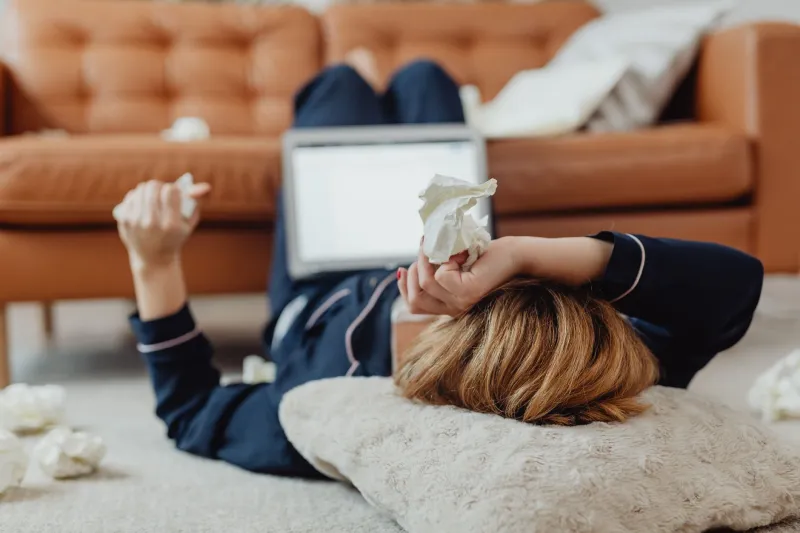
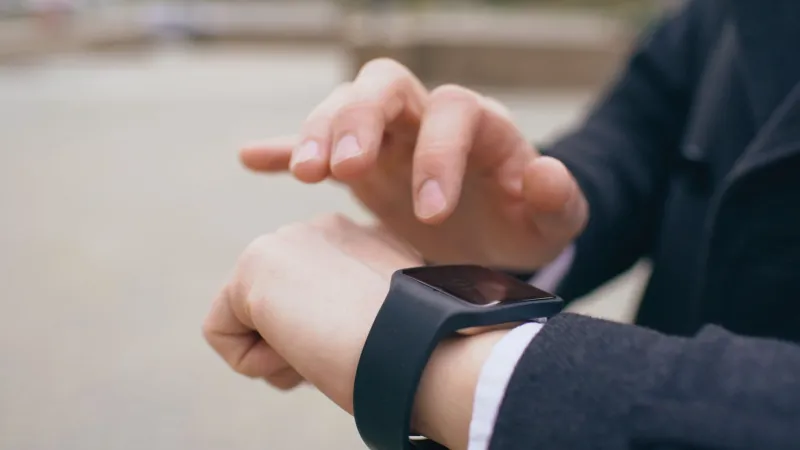
A generation ago, calling in sick meant the workday happened without you — full stop. Today it often means logging on from under a blanket, muted on a Zoom call, pretending you're fine. The line between unwell and functional has never been blurrier, and health experts are increasingly concerned about what we've traded away in the name of availability.
The Old Deal
For most of the twentieth century, being sick had a clear social script. You called your boss in the morning. Someone covered your desk. You stayed home, watched daytime television, drank soup, and felt guilty about it — but you stayed home. The physical separation between you and your workplace was enforced by geography. Your office was a place. If you weren't there, work didn't reach you.
This wasn't a perfect system. Plenty of people worked jobs with no sick pay, no flexibility, and no safety net — and they showed up anyway, sick or not, because missing a shift meant missing rent. That pressure has never fully disappeared. But for millions of workers in traditional office environments, illness created a genuine pause. Your body got the day.
What Remote Work Changed
The pandemic didn't invent remote work, but it scaled it faster than anyone anticipated. By mid-2020, roughly half of the American workforce was working from home. Many of them discovered real benefits — no commute, more flexibility, better work-life balance in some respects. But the same setup that made work more convenient also made it nearly impossible to step away from.
When your office is your bedroom, the psychological boundary between "at work" and "not at work" becomes a matter of willpower rather than physical space. And when you're sick, that boundary collapses almost entirely.
The logic is seductive: I'm already home. I don't have to commute. I can just handle this one thing, then rest. That one thing becomes three things. The morning turns into an afternoon. You've worked a full day on 101-degree fever, and you call it a light day because you stayed in your pajamas.
A 2023 survey by the Society for Human Resource Management found that remote workers were significantly more likely to work while sick than their in-office counterparts — not because they were more dedicated, but because the infrastructure for absence had essentially been removed.
The Pressure Nobody Talks About Out Loud
There's also a subtler dynamic at play, one that doesn't show up in surveys because it's rarely spoken directly: the fear of being seen as not committed enough.
Remote work made individual output more visible in some ways and less visible in others. You can't be seen arriving early or staying late. You can't demonstrate effort through physical presence. What you can do is respond quickly, stay online, keep your camera on, and never go dark during business hours — even when you're sick.
Many workers report feeling that taking a sick day while working remotely feels more conspicuous than it did in an office — as though disappearing from Slack for a full day requires more justification than simply not showing up at a desk. The always-on culture, already building before the pandemic, hardened into something closer to an expectation.
What Your Body Is Actually Trying to Do
Here's what medicine has known for a long time, even as workplace culture has moved in the opposite direction: rest isn't passive. When you're sick, your immune system is doing some of its most intensive work. Fever, fatigue, and the general desire to do absolutely nothing are not inconveniences — they're biological directives.
Dr. Matthew Walker, a sleep and recovery researcher at UC Berkeley, has written extensively about how the immune system and sleep are deeply intertwined. When you're fighting an infection, your body actively increases sleep pressure, slows your metabolism, and redirects energy toward immune function. Pushing through that — staying cognitively active, managing stress, fielding emails — doesn't just delay recovery. It can actively undermine it.
There's also the downstream effect on the people around you. Remote workers who power through illness may not be spreading germs in an office breakroom, but they are modeling behavior. When a manager sends Slack messages at noon on the day they said they were sick, the unspoken message to the team is clear: real commitment means staying reachable no matter what.
The Sick Day as a Radical Act
Something has been lost in the blurring of this boundary — and it's not just recovery time. It's the cultural acknowledgment that human beings have limits, that bodies break down and need tending, and that the work will survive a day without you.
There's a reason the concept of a sick day was fought for and codified into labor law. It wasn't sentimentality. It was a recognition that workers who never recover properly don't just suffer individually — they burn out, make more mistakes, and ultimately cost organizations more than a day off ever would.
The CDC estimates that lost productivity from presenteeism — showing up (or logging on) while sick — costs US employers over $150 billion annually. The irony is sharp: the culture of never fully stopping is making everyone less productive, not more.
Learning to Actually Stop
Recovering the ability to take a real sick day — one where you close the laptop, silence the notifications, and let the day pass without you — requires something that feels almost countercultural right now: the belief that your absence is survivable.
For most of us, it is. The emails will wait. The meeting can be rescheduled. The project will exist tomorrow.
Your immune system, on the other hand, is working on a tighter deadline. Give it the day.