The Wait That Used to Break You — And How Modern Medicine Ended It
There is a particular kind of dread that older Americans still remember vividly. You'd go to the doctor, describe your symptoms, get poked and prodded, give blood or submit to an X-ray — and then you'd go home. And you'd wait. Days would pass. Sometimes more than a week. The results were being processed somewhere you couldn't see, by people you'd never meet, on a timeline entirely outside your control.
For anyone who lived through it, that waiting period had a texture to it. A low-grade anxiety that followed you through the workday, kept you up at 2 AM, and made every phone call from an unknown number feel like a verdict.
That experience is largely gone now. And it happened faster than most people realize.
When Waiting Was Just Part of Being Sick
Through most of the 20th century, diagnostic medicine moved at the speed of the postal system — sometimes literally. Blood samples drawn at a community clinic might be sent to a regional laboratory for analysis. Results would come back in writing, mailed to the physician's office, who would then call the patient to schedule a follow-up appointment. The whole process, from blood draw to definitive answer, could take two to three weeks.
X-rays were developed on film and read by radiologists who might be located across town or in another city entirely. The images had to be physically transported or, later, mailed. Even in hospital settings, a chest X-ray taken in the morning might not have a formal radiologist's report attached until the following afternoon — if the patient was lucky.
Cancer screenings were particularly brutal in this regard. A biopsy result could take seven to ten days to come back from a pathology lab. For a patient sitting at home wondering whether a lump was benign or malignant, that was seven to ten days of a very specific kind of hell. Doctors of that era developed an almost ritualistic language around managing patient anxiety during the wait — because there was nothing else they could do.
The system wasn't cruel. It was just the limit of what the technology allowed.
The Revolution Hiding in Plain Sight
The transformation of diagnostic medicine happened in overlapping waves, and most patients absorbed it so gradually that they never fully registered how dramatic the change was.
Point-of-care testing arrived first. By the 1990s, rapid strep tests and basic blood glucose readings could be done chairside in a matter of minutes. Pregnancy tests that once required lab confirmation became reliable enough for home use. Influenza tests that used to take days came back in fifteen minutes. These felt like small conveniences at the time. In aggregate, they rewired patient expectations entirely.
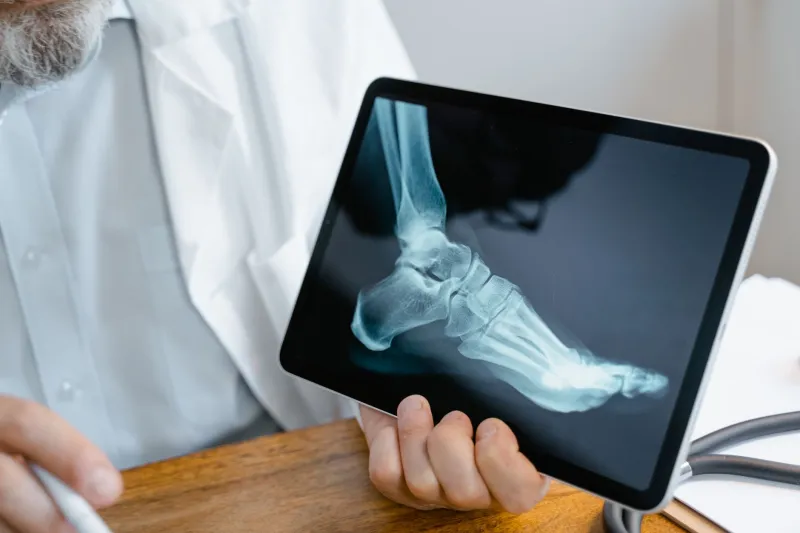
Digital imaging changed everything for radiology. When hospitals began transitioning from film to digital X-rays and CT scans in the late 1990s and early 2000s, images could suddenly be transmitted to a radiologist anywhere in the world within seconds. Teleradiology — where scans taken in a small regional hospital are read by a specialist in another state, or even another country — made same-day results standard in facilities that previously couldn't staff a full-time radiologist at all.
Blood panels followed. Modern automated analyzers can process a comprehensive metabolic panel, a complete blood count, and a lipid profile in under an hour. Many urgent care centers and hospital outpatient labs now offer results within two to four hours of the draw. Your primary care physician can pull those results up on a tablet before you've driven home from the appointment.
What Same-Day Means for Real People
The practical impact on patients has been enormous, and not just in terms of convenience.
Early detection rates for several cancers have improved significantly as rapid screening tools have made it easier for patients to get tested and for physicians to act quickly on results. Conditions like sepsis, where every hour of delayed treatment worsens outcomes dramatically, are now caught faster in emergency settings because bedside blood tests can flag infection markers in real time. Cardiac troponin tests — used to confirm or rule out a heart attack — now deliver results in as little as 15 to 30 minutes in most American emergency departments, compared to the multi-hour waits that were standard two decades ago.
For patients with chronic conditions, the shift has been equally meaningful. A diabetic patient whose A1C was once checked every few months and reported back at the next appointment can now walk into a lab, give blood, and discuss the results in the same visit. Kidney function panels, thyroid levels, cholesterol — tests that used to require scheduling, waiting, and a follow-up call now fit into a single appointment.
The anxiety quotient has dropped too, in ways that are harder to measure but no less real. Physicians who practiced medicine in both eras consistently note that the psychological burden on patients has shifted. The wait — that specific, grinding uncertainty between testing and knowing — has been compressed in most cases from weeks to hours.
The Speed We Now Take for Granted
It's worth pausing on just how recently all of this changed. A patient who got a biopsy result by mail in 1985 might well still be a patient today, now receiving the same kind of result digitally within 48 hours, often with an automated message through a patient portal before their doctor has even called.
The two experiences are almost incomparably different. One required sitting with fear in silence, trusting a system you couldn't see, and waiting for an envelope that might change your life. The other asks you to check your phone.
We didn't gain speed at the expense of accuracy — in most cases, faster tests are also more precise, handled by better equipment, and reviewed by specialists with more data at their fingertips than any physician a generation ago could have imagined.
What we lost was the wait. And that, it turns out, was no small thing to lose.