One Paycheck, One House, One American Dream — Where Did That Math Go?
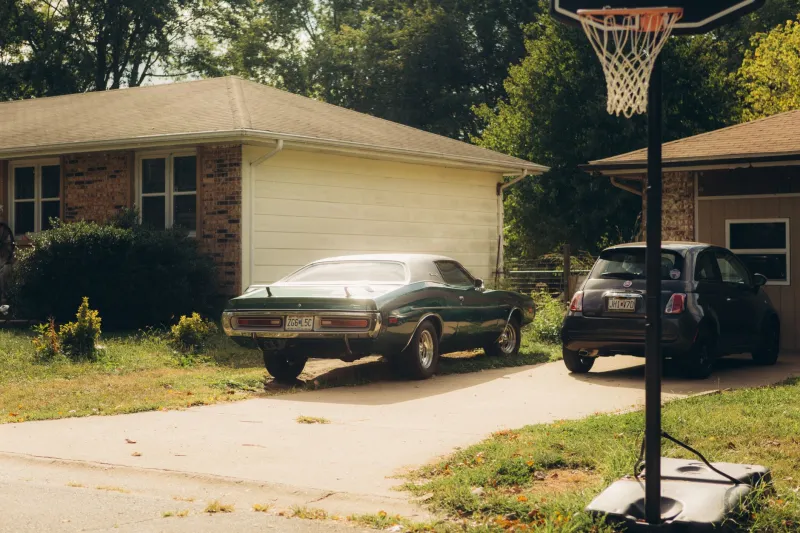
Somewhere in a photo album your parents or grandparents own, there's probably a picture of a house. A modest one, maybe with aluminum siding and a concrete stoop, on a tree-lined street in a mid-sized American city. Someone in that household worked at a plant, or a bank, or a school. They bought that house on that income. They raised children in it. They paid it off.
If you're between 25 and 45 and living in America right now, that story probably sounds less like your family history and more like a documentary about a country that no longer exists. And in some important ways, you're not wrong.
What the Numbers Actually Looked Like
In 1970, the median home price in the United States was roughly $17,000. The median household income that same year was around $8,700. That means the average home cost less than two years of household earnings. The standard rule of thumb for an affordable mortgage — that your home should cost no more than three times your annual income — was not just achievable. It was easy to beat.
By 1980, prices had risen, but so had wages. The median home price had climbed to around $47,000, while household income had grown to roughly $17,700. Still a manageable ratio, especially with 30-year fixed mortgage rates that, while high in absolute terms during that inflationary period, were being applied to a purchase price that remained within reach of a working-class budget.
Critically, one income was often enough. The postwar economic structure that shaped American life through the 1950s, 60s, and into the 70s was built around the assumption — and in many households, the reality — of a single earner supporting a family. That wasn't just a cultural norm. It was a functional economic arrangement that the housing market, the tax code, and the banking system were all quietly designed around.
When the Math Stopped Working
The divergence between wages and home prices didn't happen in a single dramatic moment. It crept up over decades, driven by a combination of factors that each seemed manageable in isolation but compounded into something genuinely transformative.
Zoning restrictions and land-use regulations, particularly in high-demand coastal cities, constrained supply while demand kept rising. The financialization of housing — the growing tendency to treat residential real estate as an investment asset rather than just a place to live — pushed prices upward in ways that bore little relationship to local wages. Corporate and institutional investment in single-family homes, which accelerated significantly after 2010, removed inventory from the ownership market entirely.
At the same time, the cost structure of American life was expanding. Healthcare, childcare, and higher education — none of which figured prominently in a 1970s household budget the way they do today — became significant line items. And student loan debt, which barely existed as a mass phenomenon before the 1990s, arrived as a new financial obligation that followed young buyers into the mortgage application process and quietly lowered what they could qualify for.
By 2024, the median home price in the United States had crossed $400,000. Median household income sat at roughly $80,000. That's a price-to-income ratio of five to one — and that's the national median, which means it dramatically understates the situation in markets like San Francisco, Seattle, New York, Miami, or Austin, where the ratio can reach ten, twelve, or fifteen times annual income.
The two-income household didn't become the norm because of feminism alone, though that was part of the story. It became the norm partly because the single-income model simply stopped penciling out.
The Psychological Shift Nobody Talks About
Beyond the raw numbers, something subtler has changed: what Americans believe is actually possible.
For the generation that came of age in the postwar decades, homeownership wasn't aspirational in the way it is today. It wasn't a milestone you celebrated with a social media post and a set of novelty keys. It was a baseline expectation — something that happened at a predictable point in a predictable life trajectory, like getting a driver's license or getting married. You worked, you saved for a few years, you bought a house. That was just what adults did.
Today's prospective buyers often describe homeownership the way previous generations might have described owning a vacation property. Something you work toward for a decade. Something that requires significant family help with a down payment, or a fortunate run in a different asset class, or a geographic compromise that puts you an hour from the city you actually want to live in. The emotional register has shifted from expectation to aspiration — and for many younger Americans, from aspiration to resignation.
Polling data reflects this. Surveys consistently show that large majorities of younger Americans want to own a home. Equally large majorities believe they probably won't be able to. That gap — between what people want and what they believe is accessible — is relatively new in the American story, and it carries a weight that shows up in everything from political attitudes to decisions about whether to have children.
What Got Left Behind
It would be too simple to say the old model was better in every way. The single-income household of the 1950s and 60s was built on an economic and social arrangement that excluded a lot of people from its benefits — women who wanted careers, families who faced discriminatory lending practices, communities that were systematically shut out of the neighborhoods where equity was being built.
But the core promise it represented — that ordinary work should be enough to build an ordinary stable life — resonated across lines of politics, race, and background. It was the material foundation of the American middle class, and its erosion has consequences that reach well beyond the housing market.
The picture in that old photo album wasn't just a house. It was evidence that the math once worked. And a growing number of Americans are spending a lot of time wondering why it stopped.