The Backyard Garden Was Once Basic Survival. Now It's a Hobby for People With Time on Their Hands.
The Backyard Garden Was Once Basic Survival. Now It's a Hobby for People With Time on Their Hands.
In 1943, the U.S. government ran advertisements urging Americans to plant victory gardens. The response was extraordinary — by the end of that year, an estimated 20 million home gardens had been planted across the country, producing roughly 40 percent of all vegetables consumed by Americans. Backyards, vacant lots, rooftops, school grounds, and city parks were all pressed into service. Growing food wasn't a hobby. It was a civic act, a survival strategy, and for millions of families, it was simply what you did.
Flash forward 80 years. The average American household spends more than $5,000 a year on groceries, purchases food that has traveled an average of 1,500 miles to reach the store, and could not identify which season their tomatoes actually grow in. The garden is gone. And most of us barely noticed it disappear.
When Growing Food Was Just Called Living
The victory garden campaign of World War II was dramatic in scale, but it wasn't introducing Americans to a new concept. It was asking them to do more of something they already knew how to do.
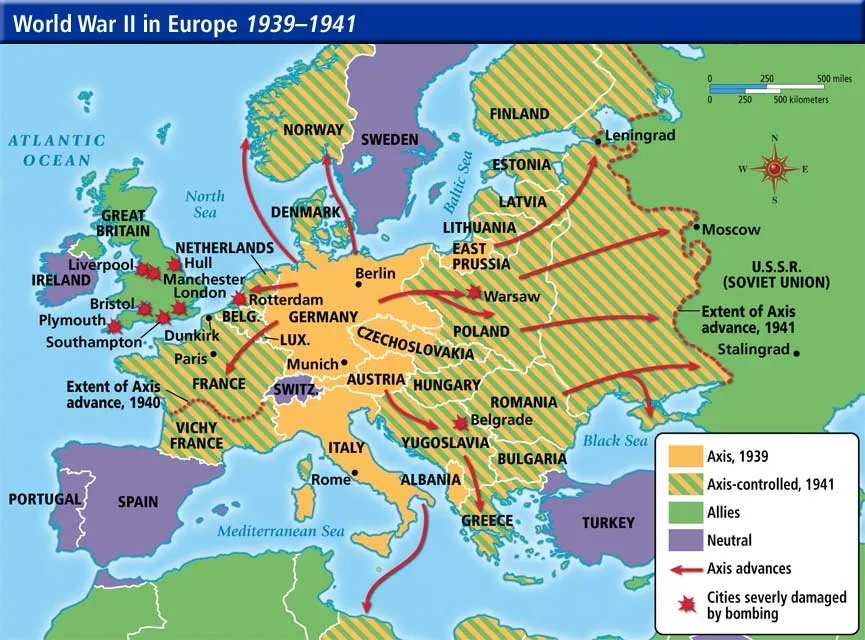 Photo: World War II, via msortegawwii.weebly.com
Through the late 19th and early 20th centuries, home food production was standard practice across income levels and geographies. Rural families maintained large kitchen gardens as a basic matter of household economics — vegetables you grew were vegetables you didn't have to buy. Urban and suburban households kept smaller plots, but they were common enough that seed catalogs were among the most widely circulated publications in the country. The Sears catalog sold vegetable seeds alongside furniture and tools.
For immigrant communities arriving in American cities, the garden was often a cultural anchor. Italian families grew tomatoes and basil. Polish families planted cabbage and beets. Greek families cultivated herbs that didn't exist in American grocery stores. The backyard plot was a connection to home, a source of familiar flavors, and a hedge against poverty.
Even in the 1950s, as suburbia expanded and supermarkets multiplied, the kitchen garden persisted widely. A vegetable patch behind a ranch house in postwar Ohio wasn't unusual — it was expected. Grandmothers canned tomatoes in August. Grandfathers argued about the best way to stake beans. Children were handed seeds and told to go do something useful.
How It Vanished
The disappearance of the home garden didn't happen overnight. It eroded gradually, pulled apart by forces that seemed entirely positive at the time.
Supermarkets made food cheap and effortless. Why spend a summer tending a garden when you could buy a pound of tomatoes for 40 cents at the A&P? Industrial agriculture scaled up to the point where the economics of home growing stopped making obvious financial sense for most families. The time cost of maintaining a garden — weeding, watering, fighting pests, harvesting, preserving — became harder to justify as more women entered the workforce and leisure time contracted.
Suburban lawn culture played a role too. The postwar American ideal was a smooth, green, uninterrupted expanse of grass — not a productive kitchen garden. Homeowners' associations in many neighborhoods actively discouraged or outright prohibited vegetable gardens in front yards. The lawn was status. The garden was work.
By the 1980s and 1990s, home food production had become associated primarily with either extreme poverty or extreme idealism. You grew your own food if you couldn't afford not to, or if you were a back-to-the-land type who made your own granola. For mainstream American families, the grocery store was where food came from. Full stop.
The knowledge began to disappear along with the practice. Skills that had been passed down through generations — how to start seeds indoors, when to transplant, how to read soil, how to preserve the harvest — stopped being transmitted because there was no longer an obvious reason to teach them. A generation grew up not knowing how to grow a carrot, and they raised children who had never considered the question.
The Pandemic Broke Something Open
In the spring of 2020, something unexpected happened at seed companies across the United States. They ran out of stock.
As COVID-19 emptied grocery store shelves and broke supply chains in ways that felt genuinely alarming, millions of Americans had the same instinct simultaneously: I should grow some food. Seed companies reported order volumes that rivaled wartime levels. Burpee, one of the country's largest seed suppliers, saw sales spike more than 300 percent. Bare-root fruit trees sold out across the country. Garden supply stores were treated with the urgency of hardware stores before a hurricane.
Some of that panic gardening didn't survive the summer. Seeds were planted and forgotten. Tomato plants died of neglect in July. But for a meaningful portion of those new gardeners, something stuck. The National Gardening Association estimated that approximately 18 million Americans became first-time food gardeners in 2020 — a number that represented the largest single-year increase in home food growing in decades.
The trend has been sustained, in part, by grocery inflation. As food prices rose sharply in 2022 and 2023, the economic logic of home growing started to reassert itself. A packet of tomato seeds costs three dollars and can yield 30 pounds of fruit. Even accounting for water, soil amendments, and the occasional lost plant, the math is compelling when a pound of tomatoes at the supermarket costs two dollars or more.
What the Garden Represents
There's something deeper going on beneath the practical economics, though. The renewed interest in home food growing is also a response to a particular kind of modern anxiety — the unsettling feeling of total dependence on systems you don't understand and can't control.
For most of human history, people had a direct, physical relationship with the food they ate. They planted it, tended it, harvested it, and preserved it. The connection between human labor and human survival was visible and immediate. That relationship didn't just provide food — it provided a sense of agency, competence, and groundedness that modern life has largely replaced with convenience.
When that supply chain anxiety surfaced in 2020, the garden wasn't just a practical response. It was a reach toward something that felt more solid. More knowable. More within human scale.
Your great-grandmother grew tomatoes because she had to. An increasing number of Americans are growing them now because, on some level, they want to feel like they could. That's a subtle but significant shift — and it's one of the more quietly revealing things the last few years have told us about how disconnected modern life has actually become.