We Used to Disappear on Vacation. Now We Broadcast It.
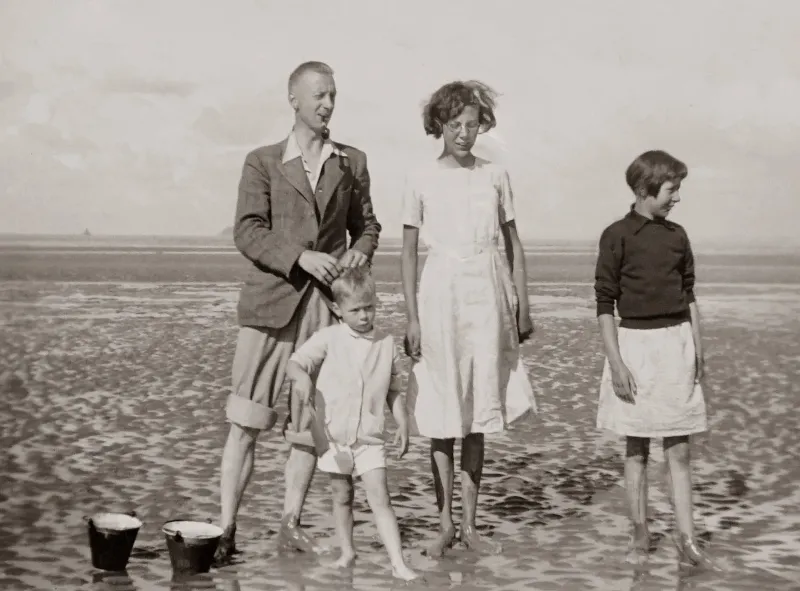
Picture your parents loading up the station wagon sometime in the late 1980s. Two weeks at a lake house in Michigan, or a road trip down to Florida, or maybe a package deal to somewhere warm in the Caribbean. They packed film — actual rolls of 35mm film — probably two or three, because film cost money and you couldn't just take forty-seven photos of the same beach chair.
Then they left. And for two weeks, they were essentially unreachable.
No one at work could find them. Friends didn't know exactly where they were. The most they'd see of the trip was a postcard, maybe, and then a slideshow three weeks later once the film came back from the drugstore. The vacation existed, fully and completely, in the moment it was happening.
That version of travel is so far from our current experience that it almost sounds like fiction.
When Distance Was Real
There's a word that used to apply to vacations that we don't use much anymore: escape. And it meant something literal. You escaped your daily life because your daily life genuinely could not follow you.
The office didn't have your number at the beach house. The news cycle wasn't something you could carry in your pocket. The social drama back home, the work emails, the low-grade ambient stress of being connected — none of it could reach you because there was no mechanism for it to do so.
This created something that sounds almost luxurious today: a genuine psychological break. The brain, deprived of its usual inputs, actually rested. Not the shallow, interrupted rest of a phone-in-hand afternoon, but a deep recalibration that happened because there was simply nothing else to attend to.
Researchers who study cognitive restoration — the process by which mental fatigue actually recovers — consistently find that the brain needs extended, low-stimulation periods to genuinely recharge. The two-week vacation of the 1970s and 80s, for all its limitations, delivered exactly that, almost by accident.
The Smartphone Changed the Physics of Travel
When the iPhone arrived in 2007, it didn't just change how we communicated. It fundamentally altered the relationship between a person and wherever they happened to be standing.
Suddenly, every location was a potential post. Every meal was a potential photo. Every sunset was content waiting to be captured, filtered, captioned, and sent into the world for an audience that would respond with small dopamine-triggering symbols of approval. The vacation didn't just happen to you anymore — you happened to the vacation, documenting it for external consumption in real time.
This shift happened so smoothly, so naturally, that most of us barely noticed. It just became what travel looked like. You take the photo. You share it. You check how it's doing. You take another photo.
What nobody stopped to ask was: what is this replacing?
The Performance Problem
Here's the part that's worth sitting with. When you're composing a shot of your lunch at a restaurant in New Orleans, you are not fully present at that restaurant in New Orleans. Part of your attention has already left — it's constructing a version of the experience for an audience, thinking about the caption, considering the angle, imagining the response.
Travel has, for a significant portion of us, become a form of performance. Not entirely — most people aren't only performing, they're genuinely experiencing things too. But the performance layer is always running in the background, shaping what we notice, what we prioritize, and how long we actually sit with any given moment before reaching for the camera.
The sociologist Erving Goffman wrote about how human beings manage impressions in everyday life — presenting versions of themselves to different audiences. He wrote that in the 1950s. He had no idea how far the technology would eventually take that impulse.
Today, a family at the Grand Canyon will often spend more time photographing themselves at the Grand Canyon than actually looking at the Grand Canyon. The documentation has become the point. The experience is the raw material for the content.
What We Gained — and It's Real
To be fair, something genuine was gained in this trade. The photographs from your parents' 1988 beach trip probably number around forty, taken across two weeks, many of them blurry or poorly lit. Your photos from a weekend trip to Savannah might number four hundred, many of them sharp, well-composed, and genuinely beautiful.
We have richer visual records of our lives than any previous generation. We can share experiences with people who couldn't be there. We can stay in touch with family across the country in ways that would have seemed miraculous thirty years ago. A video call from a hotel balcony in Hawaii to a grandmother in Wisconsin isn't nothing — it's actually something quite moving.
And for some people, travel content creation is a genuine creative outlet, even a career. The travel blogger or the thoughtful Instagram account that inspires someone to visit a place they'd never considered — there's real value in that.
But Something Got Left on the Plane
Still, if you've ever come back from a vacation feeling vaguely exhausted, vaguely unsatisfied, like you went somewhere but didn't quite arrive — this might be part of why.
The mental separation that used to happen automatically now requires deliberate effort. You have to choose to put the phone away. You have to resist the instinct to document. You have to let the moment exist without an audience. And that's hard, because the phone is designed — expensively, expertly designed — to make you want to pick it up.
Your parents didn't need willpower to disappear on vacation. The technology just wouldn't let them do otherwise.
There's something worth reclaiming in that. Not the inconvenience, not the blurry film photos, not the inability to reach anyone in an emergency. But the permission — the structural, built-in permission — to fully be somewhere without performing it for anyone.
The place you're visiting has been waiting. It's possible it deserves your full attention, not just your best angle.