We Used to Own Our Memories. Now We Just Scroll Past Them.
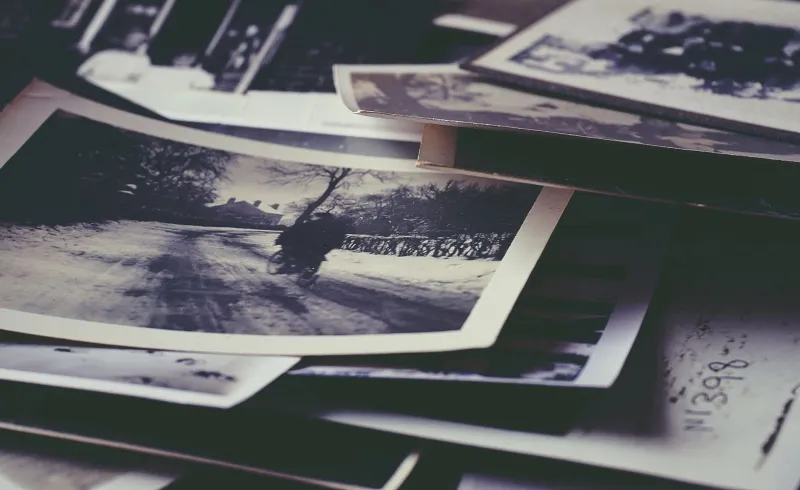
There's a shoebox in a lot of American attics right now. Inside it: a stack of 4x6 prints with rounded corners, slightly faded, some with dates stamped in orange on the back. A kid's birthday party from 1987. A Thanksgiving table that no longer exists. A dog that's been gone for thirty years. Nobody put those photos there by accident. Every single one of them survived a deliberate process — and that process changed everything about how much they meant.
We live in a completely different world now. Your phone probably has somewhere between two thousand and twenty thousand photos on it. How many of them have you printed? How many could you even find if someone asked?
The Cost of a Click Used to Be Real
If you were taking pictures in the 1970s, '80s, or even into the '90s, photography came with built-in friction. You bought a roll of 24 or 36 exposures. You loaded it carefully. You thought before you shot — because every frame cost money. When the roll was done, you dropped it at a drugstore or a dedicated photo lab and waited. Sometimes a few days. Sometimes a week or more, depending on where you lived and which service you chose.
When the envelope finally came back, you sat down and went through every print. Some were blurry. Some were dark. Some caught your cousin mid-blink and were quietly retired. The ones that made the cut went into albums with sticky pages, or into frames on the mantle, or into that shoebox. Either way, they were somewhere physical. They existed in the world.
The average American family in the 1980s probably took a few hundred photos a year — total. Each one represented a choice.
Then the Dam Broke
Digital cameras started appearing in the mid-1990s, but they were expensive and clunky. The real shift happened in the mid-2000s when camera phones became genuinely capable, and then again around 2010 when smartphones made high-quality photography something everyone carried in their pocket at all times.
The numbers are almost impossible to comprehend. In 2023, an estimated 1.4 trillion photographs were taken worldwide. About 93 billion of those were taken in the United States alone. The entire archive of printed photographs from the 20th century — every portrait, every vacation snapshot, every school picture — is dwarfed by what humanity now shoots in a single month.
Scarcity disappeared. And something else disappeared with it.
What Scarcity Actually Did for Us
Here's the thing nobody talks about: the friction wasn't just inconvenient. It was doing something important.
When you had 24 shots and you were at your kid's soccer game, you waited for the right moment. You watched. You were present, and then you captured. The photograph was a record of something you'd already experienced fully.
Now, the instinct is to photograph first and experience second — or sometimes not at all. Parents at school recitals hold up phones for the entire performance. Tourists at national parks spend more time composing Instagram shots than looking at the actual canyon. The image has become the point, rather than the memory it was supposed to preserve.
And paradoxically, because we take so many, we remember fewer of them. Psychologists have studied this. There's something called the "photo-taking impairment effect" — research suggests that when we outsource memory to a camera, our brains actually encode less of the experience. We trusted the photo to remember for us. Then we never looked at the photo again.
The Album Nobody Makes Anymore
Ask someone in their 30s or 40s where their childhood photos are. Chances are, they can point to a physical album on a shelf somewhere. Ask them where their kids' childhood photos are. Odds are: on a phone, backed up to iCloud or Google Photos, organized by the algorithm into something called "Memories" that occasionally surfaces on a Tuesday morning whether you wanted to feel nostalgic or not.
The photo album was a curated object. Someone — usually a mom, statistically speaking — sat down and made choices. This one goes in. This one doesn't. These years get two pages. This vacation gets four. The act of curation was itself a form of meaning-making.
Platforms have tried to automate this. Google Photos will make you a little movie with music. Apple will suggest a "memory" on the anniversary of a trip. But there's a difference between an algorithm deciding what was significant and a person deciding. One is convenience. The other is love.
Something Is Being Lost, Even If We Can't Quite Name It
This isn't a straightforward argument for going back. Nobody seriously wants to return to one-hour photo labs and $15 developing fees. The ability to photograph freely, to capture small unremarkable moments without cost, is genuinely wonderful. A kid's Tuesday afternoon. A random dinner that turned out to be someone's last. A dog being ridiculous in the backyard. These things get captured now that never would have been before.
But the abundance has created a different problem: we have everything and we've preserved almost nothing. Hard drives fail. Cloud subscriptions lapse. Phones get lost or destroyed. Formats become obsolete. The photos your grandmother kept in that shoebox are still perfectly viewable today. The digital files from your first digital camera in 2003 might already be in a format your current computer can't open.
Physical photographs survived wars, floods, and decades of neglect. A JPEG needs infrastructure.
The Quiet Comeback of Print
Interestingly, there are signs that some people are starting to feel the weight of all this. Services like Artifact Uprising, Chatbooks, and Shutterfly have built real businesses around the idea that people want their digital photos made physical again. Polaroid cameras are selling to Gen Z consumers who were never alive during their original peak. Film photography has developed a genuine following among younger Americans who find meaning in exactly the limitation that their parents were relieved to escape.
Maybe the lesson is that we never stopped wanting the shoebox. We just forgot we needed to build it ourselves.
The photos are there. Thousands of them, sitting in a cloud somewhere, waiting. The question is whether anyone will ever sit down, make the choices, and decide which ones actually mattered.